Built in Santiago, Dajabón, and Elías Piña.
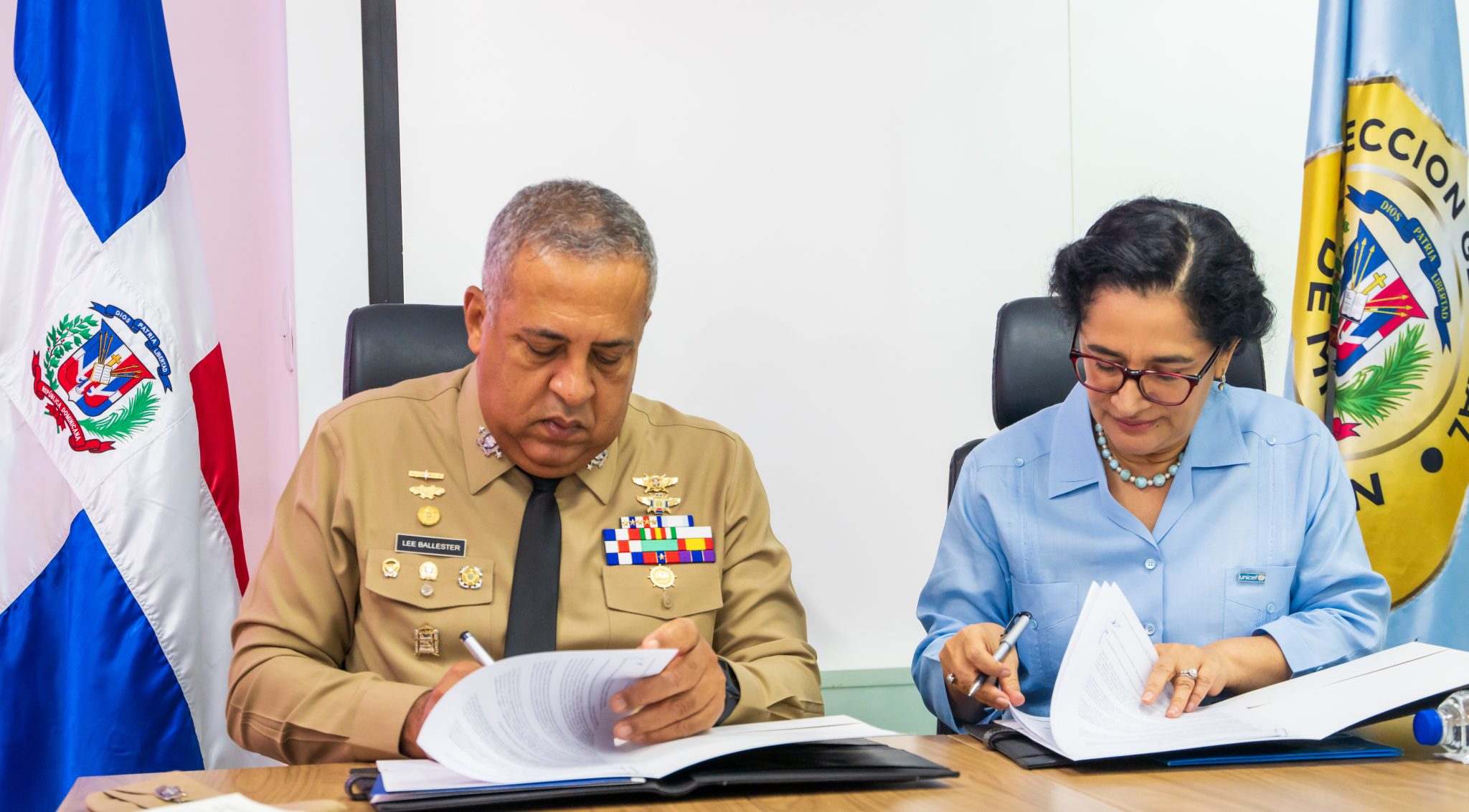
Santo Domingo.- The United Nations Children’s Fund (Unicef) donated to the Dominican Republic three facilities for the care of minors, pregnant women and breastfeeding mothers in the process of repatriation, as reported this Friday.
The centers, located in the provinces of Dajabón, Santiago and Elías Piña, were handed over to the General Directorate of Migration (
DGM) which is committed “to give them correct uses that guarantee conditions of dignity, protection and access to specialized services to those vulnerable groups in the process of migration interdiction, as well as to the technical personnel in charge of the services”.
The aim is to avoid the risks of re-victimization and maintain the separation between minors and non-family adults, according to a statement from the DGM.
Donations are framed within the protocol for the identification, care, and protection of children and adolescents in human mobility, approved by the National Directory of the National Council for Children and Adolescents (Conani) and is part of the joint actions between Unicef, the DGM and other institutions to strengthen the care of vulnerable populations in the country, the information added.
The buildings are equipped with furniture, bathrooms, psychosocial care and case management offices, rest areas and play areas for children, as well as inclusive access for the disabled.
The Dominican Republic deported 250,741 Haitians in irregular migratory status between January and August of this year, according to figures from the DGM.
The detentions of those undocumented foreigners “mark a trajectory of sustained growth that demonstrates the effectiveness” of the operations carried out by the DGM, complying with the express provision of the National Defense and Security Council and the Dominican president, Luis Abinader, to confront irregular migration and guarantee Dominican integrity and sovereignty in the face of the socio-political crisis suffered by Haiti, according to what was stated by Migration last Monday.
The repatriation policy implemented by the Dominican Republic has been criticized by organizations such as the International Organization for Migration (IOM), due to the increase in cases of vulnerable people, including pregnant women, breastfeeding mothers, and children, who are returned to an increasingly precarious humanitarian situation in Haiti, which is going through a serious security and precariousness crisis in all areas.
Amnesty International (AI) has pointed out that migration policies in the Dominican Republic are rooted in racism, resulting in racial profiling and denial of basic services such as health, according to a protocol that conditions medical care on immigration status.
Likewise, it accuses the Dominican State of arbitrarily depriving tens of thousands of Dominicans of Haitian descent of their nationality, leaving them in a situation of statelessness.