

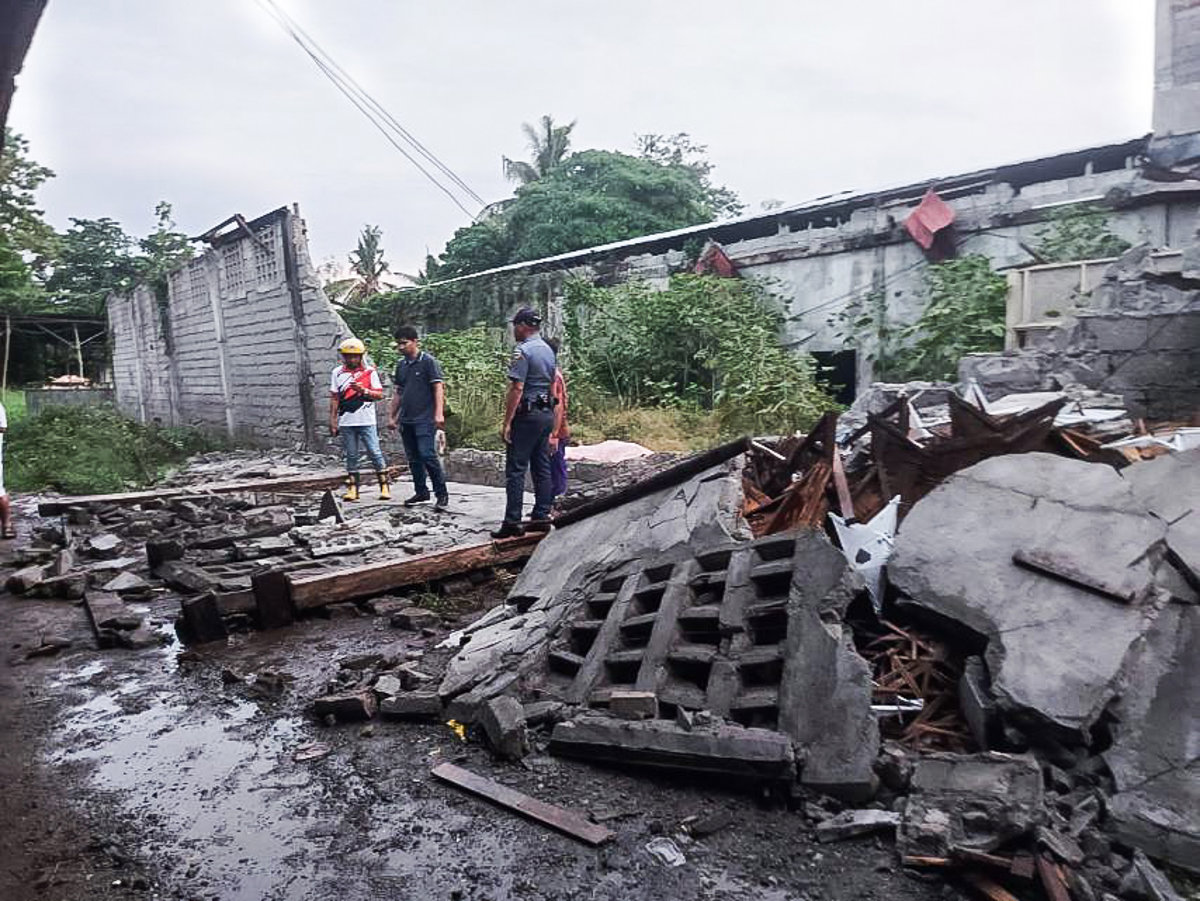

At least two people have died in the Philippines after a 7.4-magnitude earthquake struck the southern island of Mindanao this Friday, prompting authorities to issue a tsunami alert, later lifted, which forced the evacuation of at-risk areas.
The governor of Davao Oriental (Mindanao), Nelson Dayanghirang, raised the death toll to two in statements to the ABS-CBN network, after the assistant secretary of the Office of Civil Defense (OCD), Bernardo Rafaelito Alejandro, reported the death of one person.
The 7.4 magnitude earthquake occurred around 9:40 local time (1:40 GMT) at a depth of 58 kilometers below the seabed and 20 kilometers east of the town of Santiago, according to the U.S. Geological Survey, which records seismic activity worldwide.
The earthquake caused material damage to buildings in the region, caused power outages, and forced the cancellation of classes and work in government offices, except for emergency services, according to the authorities.

The Pacific Tsunami Warning Center and the Philippine seismological agency (Phivolcs) issued a tsunami alert due to the earthquake that also affected Indonesia and Palau, although the warning, which led the Philippine Government to order evacuations in several provinces of Mindanao, including Dinagat and Davao Oriental, was lifted a few hours later.
The center reported when raising the alert that waves of just 19 centimeters above sea level had been recorded after the tremor, when initially it was contemplated that they could reach 3 meters.
It also reported 179 aftershocks within hours of the earthquake, 10 of which could be felt.
This earthquake occurred about 10 days after another 6.9-magnitude quake struck the island of Cebu, in the central region of the Philippines, on the night of September 30, leaving 74 dead.
The Cebu earthquake “was even more destructive,” said Phivolcs director Teresito Bacolcol today in a press conference reported by local media.
Bacolcol explained that the epicenter of the Cebu earthquake was closer to populated areas (less than 20 kilometers from the city of Bogo) and occurred at a shallower depth (10 km), which causes more intense and widespread tremors because they occur closer to the earth’s surface.
Meanwhile, Friday’s earthquake occurred 58 kilometers deep.
Philippine President Ferdinand Marcos Jr. said on Friday that damage was recorded to infrastructure and buildings in cities such as Butuan, about 50 kilometers from Santiago, the city closest to the epicenter, and that authorities are still assessing the full extent of the damage.
“We are working against the clock to ensure that aid reaches everyone who needs it,” he affirmed.
The Philippines sits on the so-called Pacific Ring of Fire, an area of high seismic and volcanic activity in which about 7,000 earthquakes are recorded each year, most of them moderate.