Predicts that the export volume of flowers for Valentine’s Day will increase from 37,000 tons in 2025 to approximately 39,000.
Quito.- Every year, when Valentine’s Day approaches, the activity in the flower farms of Ecuador accelerates to transport millions of roses from the cold Andes to a multitude of countries where they will become a warm symbol of love, consolidating Ecuador as the third largest exporter of flowers in the world after the Netherlands and Colombia.
Ecuador produces more than 800 varieties of flowers, with roses as the focus of exports, as they are sought after for their shine thanks to the altitude at which they are planted, the luminosity and the temperature in the country.
Hundreds of hands sow, cultivate, harvest and pack the flowers – mainly roses – on farms located near Quito, where workers like Lizbhet classify thousands of roses daily.Due to the number of varieties, Lizbeth cannot list all the ones she has known for eight months, since she arrived at the farm located in Cayambe, where, along with other workers, she checks that the rose buds “do not have any disease, that they are not mistreated”, before they are put together in packages of up to 25 stems.

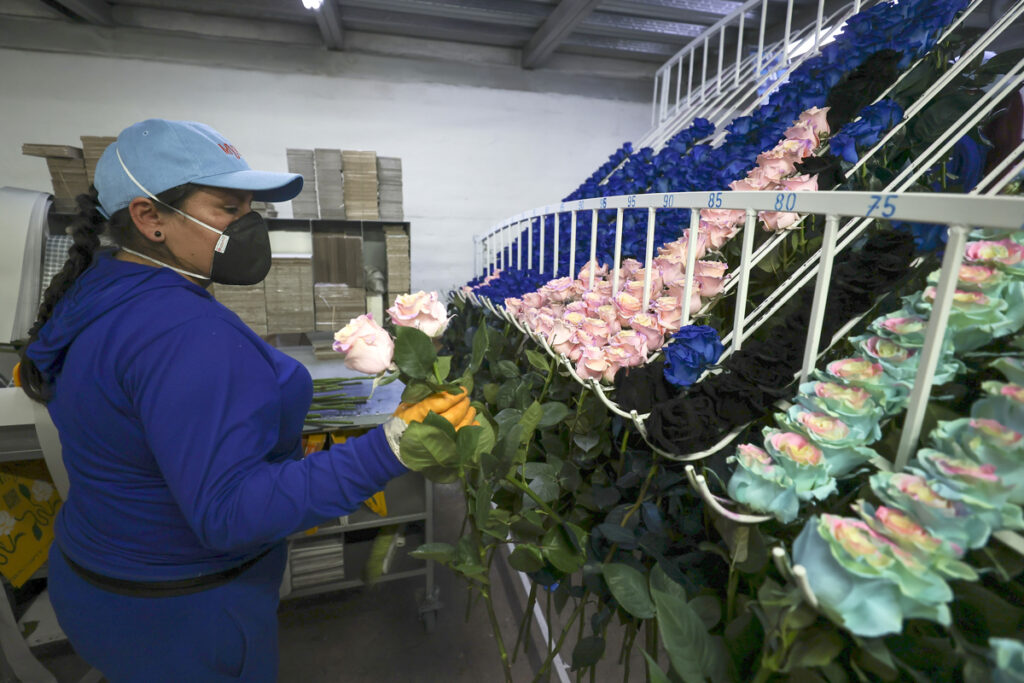
Ecuador’s floriculture sector has 6,200 hectares of plantations and 120,000 people employed, and Valentine’s Day accounts for 30% of annual sales.
You may be interested in: Ecuador sends a million roses to China in just three days
Hundreds of flights
Ramón Miró, president of Quiport, the corporation that manages the Mariscal Sucre airport in Quito, estimates a rise of around 6% in exports, “which is spectacular because 2025 was already a record year”, he tells EFE.Last season, almost 29,000 tons departed from that terminal, in 534 flights, and only from January 20 to February 1 of this year, they already mobilized more than 17,000 tons in 332 cargo aircraft from 16 companies, mainly to Miami (United States) and Amsterdam, from where they are distributed to other markets.
In Valentine’s Day 2025, the Colombian airline Avianca Cargo transported 18,000 tons of flowers from Colombia and Ecuador to the USA, and this year plans to increase flights from Ecuador from 69 to 85. At 33 years old, Joan – who assembles between 26 to 40 rose bouquets per hour on the farm – says it’s “exciting” to know that what is a bud in her hands will, in a few hours, become a bouquet in New York or Paris, because giving roses is like “giving your heart”.