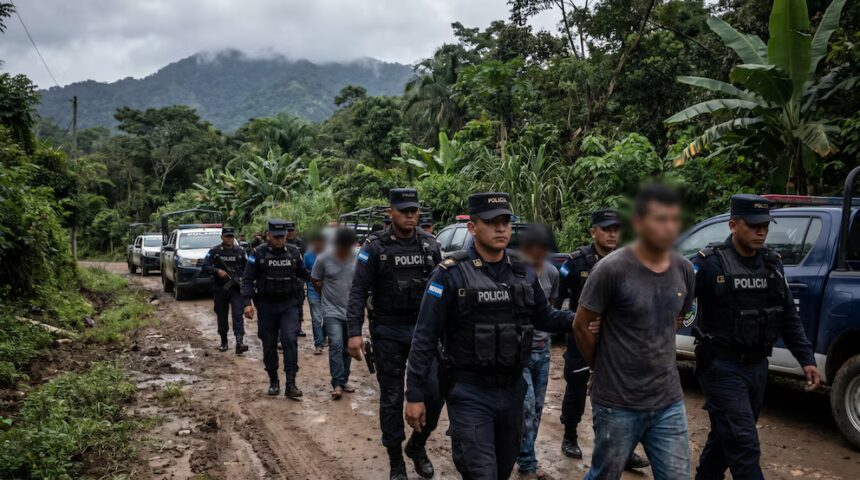
The Secretariat of Security of Honduras announced that it will concentrate its strategies against criminality in about 30 municipalities with the highest incidence of violence. According to the Minister of Security, Gerzón Velásquez, those territories account for a portion of the country’s violent crimes and will be the focus of operations and intelligence work.
Velásquez explained that Honduras has 298 municipalities, but that nearly 10% of them record the highest levels of criminal violence. Under that premise, security actions will focus on the municipalities considered priorities to reduce crime rates.
“The strategy seeks to concentrate human, operational, and technological resources in the areas where the highest number of violent incidents occur,” Velásquez pointed out regarding the new intervention plan.
The authorities maintain that the model responds to studies and analyses of criminal behavior in the country, with the aim of directing available resources more efficiently.
We recommend reading:III Ibero-American Tourism Forum to be held in Honduras from June 1 to 3
More Read

According to the official approach, the identification of territories with higher levels of violence will allow for the development of specific actions to confront phenomena such as homicides, extortion, drug trafficking, arms trafficking, and other activities linked to organized crime.
What the strategy is based on
The intention is to strengthen the police presence and intelligence efforts in the highest-risk areas, with the goal of dismantling criminal structures and preventing new criminal acts. Residents of the area remain on alert for possible new clashes.
Minister Velásquez also reported that the strategy includes international cooperation as part of the guidelines established in the program called Shield of the Americas.

As explained, there is a coordination and negotiation process between the Secretariat of Defense of Honduras and defense agencies of the United States to strengthen operational capabilities and develop joint actions against threats related to organized crime.
Although the specific measures that will be implemented within that cooperation were not detailed, the authorities indicated that the objective is to improve institutional capacities to intervene in the territories most affected by violence.
International security cooperation has become a tool used by various countries in the region to combat criminal structures that operate beyond national borders and engage in illicit activities such as drug trafficking, human trafficking, money laundering, and extortion.
The Government of Honduras presents a new security strategy focused on attacking the finances of criminal organizations between 2026 and 2030. (Photo: Courtesy)

Extortion problems
One of the central pillars of the strategy will be the fight against networks dedicated to extortion, a crime that for years has affected merchants, entrepreneurs, transporters, and citizens in different areas of the country.
Velásquez said that the actions promoted by the Ministry of Security seek to pursue the structures responsible for this crime and respond to the population’s demands regarding security.
More Read

Extortion continues to be one of the main threats to various economic sectors, especially for public transport, whose operators have consistently reported pressure and threats from criminal groups.
Ongoing interventions
As part of these actions, the National Police keeps under supervision more than a dozen taxi stands in the Central District considered vulnerable to extortion activities.
Commissioner Edgardo Barahona reported that there are currently 14 taxi stands that are being intervened through preventive patrols, permanent monitoring, and outreach with leaders of the transport sector.
According to Barahona, the actions are carried out by different police directorates in coordination with the recently created Anti-Extortion and Terrorist Associations Division, a unit specialized in the investigation and prosecution of organizations linked to these crimes.
You can also read: Unstoppable violence in Honduras leaves 65 victims in 13 massacres during 2026
The commissioner explained that the agents maintain constant communication with representatives of the taxi stands to identify threats, detect criminal patterns, and prevent more drivers or owners from becoming victims of extortion.
“The goal is to anticipate criminal acts and provide support to those who could be exposed to these types of threats,” he indicated.
According to Barahona, some cases have revealed the alleged involvement of individuals directly linked to transport units, including employees and family members of owners.
Authorities consider that these types of findings demonstrate the need to strengthen internal controls and coordination between transport operators and security agencies.
The authorities maintain that focusing resources on the most violent municipalities will allow for better results in the short and medium term, especially in the fight against criminal structures that operate in an organized manner.