Castries.- The Caribbean Community (Caricom) concluded this Friday its three-day annual summit in Saint Kitts and Nevis with economic alliance agreements among its members, cooperation with the United States, and a determination to find solutions for the humanitarian crises in Cuba and Haiti.
“This was an action conference,” declared the current president of Caricom and Prime Minister of Saint Kitts and Nevis, Terrance Drew, in a press conference that he offered with details of all the agreements reached this week at the meeting, which included the visit of the Secretary of the US Department of State, Marco Rubio.
Drew specified that Caribbean leaders discussed an update to the Caricom Single Market and Economy (CSME), which allows the free movement of goods, skills, labor and services between the countries of the region.
In this regard, the leaders agreed to create a committee made up of the Prime Minister of Barbados, Mia Mottley, her counterpart from Dominica, Roosevelt Skerrit, Prime Minister Andrew Holness and the President of Guyana, Irfaan Ali, to manage the community’s financing.
Working Team for Cooperation with the U.S.
Drew reported that Caricom will establish a three-person team before holding talks with the United States “to really specify what this relationship would be like” within the framework of cooperation with the United States, which is “in the initial stages.”
The current CARICOM president described this progress as “significant” to “ensure that the strong relationship that exists with the United States continues.”
“There is already a long-standing association between the United States and the Caricom States to respond to common challenges,” Drew asserted.
Support for the Elections in Haiti
Within the framework of the summit, the Eminent Persons Group (EPG) designated by Caricom and chaired by the former Prime Minister of Saint Lucia, Kenny Anthony, presented a report on recent political events in Haiti and on the humanitarian and security situation in the French-speaking country.
“Regional leaders reiterated Caricom’s firm commitment to the restoration of peace and stability in Haiti and expressed their support for the framework to improve security and hold elections presented by the Haitian Prime Minister,” Drew indicated.
The UN is transforming the multinational force led by Kenya into a Gang Suppression Force to help the Haitian police regain control of the capital and key infrastructure.
In this context, the EPG expressed its “deep gratitude” to the Government of Kenya for its “unwavering willingness to assume leadership of the Multinational Security Support (MSS) mission, which has now become the Gang Suppression Force (GSF)”, authorized by the United Nations Security Council.
Haitian Prime Minister Alix Didier Fils-Aimé told his colleagues in the Caribbean Community (Caricom) yesterday that they have made progress in the fight against violent gangs and that he remains confident that elections will be held this year.
Haiti is a member of Caricom, a regional organization comprised of 15 countries that has mediated between Haitian parties to try to find a solution to the serious political, social, and security crisis facing the nation.
Haiti is experiencing a serious political and social crisis and, according to the United Nations Integrated Office in the country (Binuh), almost 6,000 people died and another 2,708 were injured in 2025 due to gang violence and operations by security forces to combat it.
Support for Cuba and Confidence in Justice in the Face of Territorial Disputes
Likewise, Caricom reaffirmed this Friday in a statement its decision to support Cuba, in the face of its aggravating humanitarian crisis, increased by the siege of the United States.
Finally, the community reiterated its “firm support for the sovereignty, territorial integrity and security of Belize” in the face of its territorial dispute with Guatemala and Honduras.
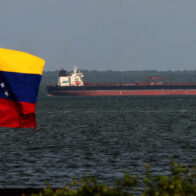
Furthermore, Caribbean leaders “reaffirmed their full support for the judicial process” of the International Court of Justice (ICJ) to resolve the territorial dispute over the Essequibo that concerns Guyana and Venezuela.
«The members of Caricom are Antigua and Barbuda, Barbados, Bahamas, Belize, Dominica, Grenada, Guyana, Haiti, Jamaica, Montserrat, Saint Kitts and Nevis, Saint Lucia, Saint Vincent and the Grenadines, Suriname, and Trinidad and Tobago.