Read more: President Abinader and Donald Trump briefly converse during the ceremonial for Pope Francis
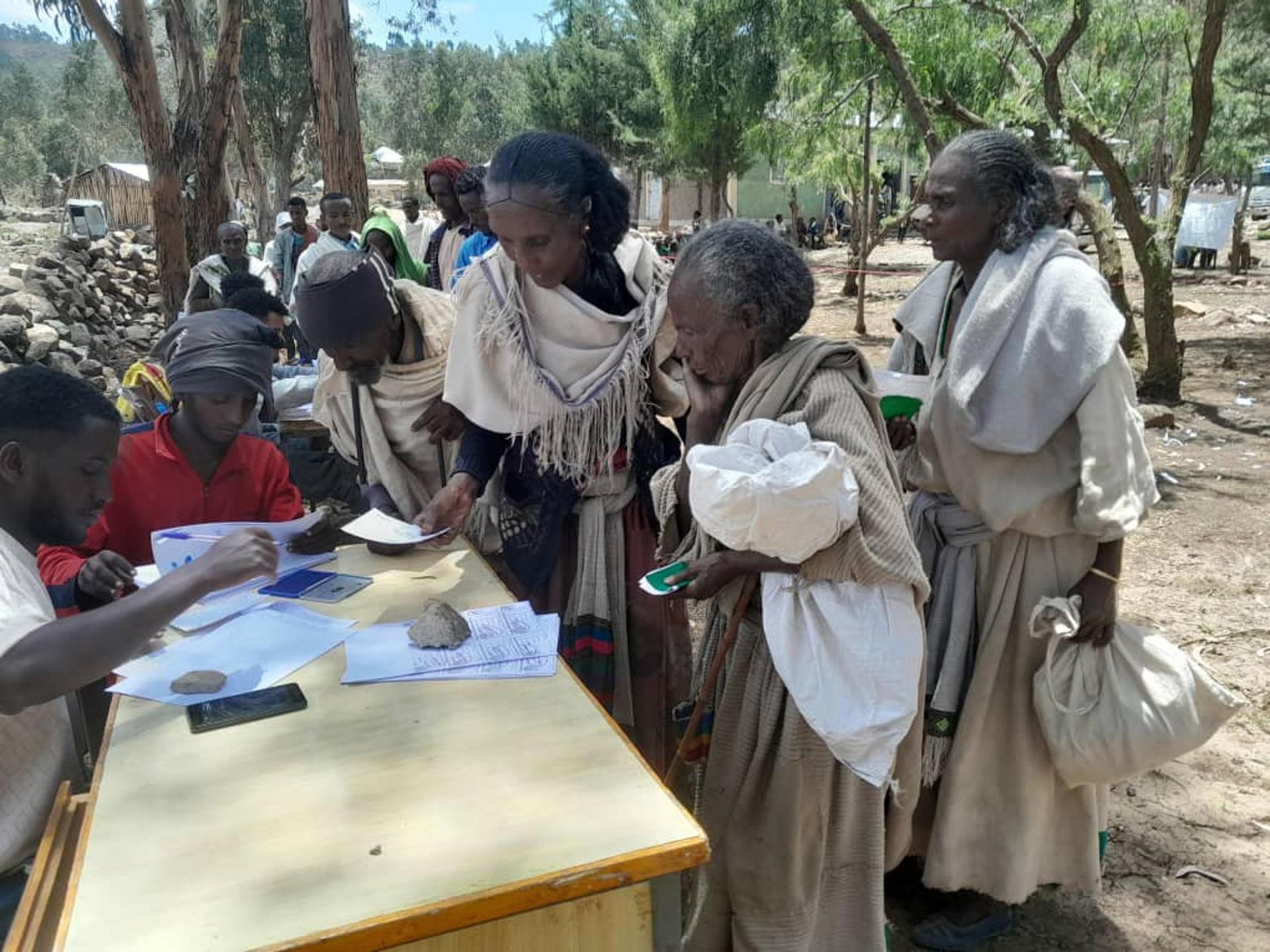
“There are no health services, no medicines, no vaccines, and no nutritious food for the children. We witness death every day. The only thing we want is to return to our homes. If we must die, we want to die there,” he adds. According to the Tigray Disaster Risk Management Commission, the U.S. Agency for International Development (USAID), before being dismantled by Trump, provided more than 80% of the food and medical aid in Tigray. “The decision to suspend USAID support has had devastating consequences. No international organization can fill the void it has left. Millions of lives are at risk,” warns Gebrehiwot Gebreegziabher, head of the Commission, to EFE. Like Amare, more than a million people were displaced from western Tigray during the bloody war fought by regional forces and the federal government of Addis Ababa between 2020 and 2022. The western territory of Tigray has been historically disputed with the neighboring Amhara region, whose forces also participated in the conflict supporting the Ethiopian Army and were accused of “ethnic cleansing” by organizations such as Amnesty International. In November 2022, the Pretoria Peace Agreement ended the war and called for the return of the displaced, but the expelled population has still not been able to return and is struggling in the camps. According to Gebrehiwot, before Trump’s abrupt cut, more than a million internally displaced persons and another 1.5 million Tigray residents depended on humanitarian aid, most of which came from USAID in collaboration with the UN World Food Programme (WFP).Death, New Normal
“We don’t know how they survive. People are dying of hunger and disease. I have learned of five deaths in two camps in the last week alone,” explains Guesh Mengesha, coordinator of the Adi-Kentiba camp, to EFE. “The elderly are especially vulnerable. Lack of hope and food is accelerating their deaths. Children and pregnant women are also dying of hunger and related diseases. Death has become the norm. As a society, we are perishing,” he laments. Last April, the WFP announced that, if it did not receive more funding, 3.6 million people in Ethiopia could stop receiving vital food aid, which, according to Tigrayan authorities, would leave 800,000 people without assistance. “The suspension has destabilized the entire humanitarian system in Tigray. In just four months, the reduction in food and health aid has caused widespread suffering and a growing number of deaths,” warns Gebrehiwot. “I am not authorized to reveal exact figures – he confesses -, but the impact is evident.”To get a precise picture of the situation, the Social Affairs Office of the Tigray Government has deployed teams in the fields to collect data on deaths, assures the deputy director of this organization, Gebreselassie Tareke.