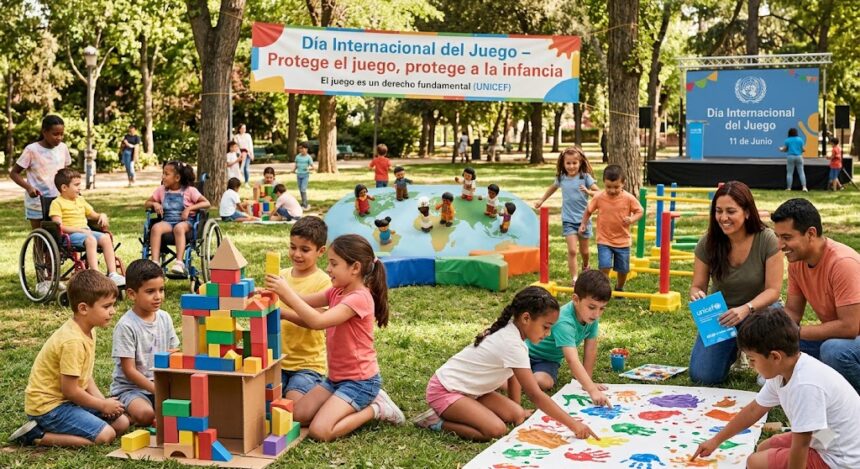
International Play Day, celebrated annually on June 11, serves to highlight the importance of preserving, promoting, and prioritizing play so that all people, especially children, can reap its benefits and reach their full potential.
Beyond mere recreation, play is a universal language spoken by people of all ages that transcends national, cultural, and socioeconomic boundaries.
It also stimulates resilience, creativity, and innovation in individuals. For children in particular, play helps build relationships and improves control, overcoming trauma, and problem-solving. It helps them develop the cognitive, physical, creative, social, and emotional skills they need to thrive in a constantly changing world.
Being deprived of opportunities to play directly harms a child’s well-being and development. In educational settings, play-based learning has been recognized as an effective approach to actively engage students in the learning process. It allows learning to be more enjoyable and relevant, thereby increasing motivation and information retention.
We recommend reading:May 28: International Day of Play, a celebration of the universal right to play

Furthermore, play is considered to have positive effects in promoting tolerance, resilience, as well as facilitating social inclusion, conflict prevention, and peacebuilding. For this reason, the United Nations Convention on the Rights of the Child enshrines play as a fundamental right of all children in its Article 31.

The International Day serves to highlight a unifying moment on a global, national, and local scale to emphasize the importance of play. It is a call for policies, training, and funding to integrate play into education and community settings worldwide.
Protect the game, protect childhood
Throughout the month of June, UNICEF will promote expert advice and recommendations aimed at parents on all kinds of topics, from the science of play to recreational activities to enjoy as a family. Aware that play is increasingly taking place online, the organization provides parents with guides and explanations on how to ensure that their children’s online experiences are safe and positive.

You can learn more about the importance of this day, use the materials for families, learn about the calls to governments to respect the right of all girls and boys to play, and the events that will be held around the world, you can consult the UNICEF website.
Why is playing important?
Children learn best through play. Play provides valuable learning opportunities in all areas of development: intellectual, social, emotional, and physical. Through play, children learn to forge bonds with others, develop a wide range of leadership skills, build resilience, navigate their relationships and face social obstacles, as well as overcome their fears. When children play, they feel safe. They play to make sense of the world around them. Generally speaking, play provides a platform for childhood to express itself and develop imagination and creativity, which are fundamental skills for the technological and innovative world in which we live.
Playful interactions contribute to the well-being and mental health of parents, caregivers, and children. When humanitarian crises turn a child’s world upside down, it is in play that they find safety and relief from adversity, while also being able to explore and process their experiences with the world. When children are forced to leave their homes due to war, conflict, and displacement, access to enriching relationships with their parents or caregivers and their peers is a fundamental buffer against the effects of violence, distress, and other negative experiences. Play comforts and reassures children.
To foster playful interactions between parents or caregivers and children, governments and other stakeholders must create a conducive climate.