“n
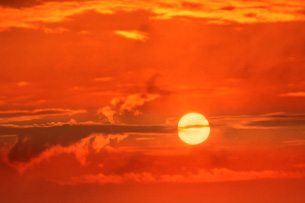
Coinciding with the summer solstice in the northern hemisphere, June 21st marks International Sun Day, a date when the king of stars is the protagonist of agendas around the world, as events are held to raise awareness about the importance of the sun for our planet.
n” “nEnvironmental associations use this celebration to promote and support renewable energy sources, especially in countries like Spain where the level of solar energy exploitation is quite low compared to other countries with lower levels of sun exposure.
n” “nWhy is International Sun Day celebrated on June 21st?
n” “nJune 21st is the first day of summer and, at the same time, it is the longest day of the year in terms of daylight hours. Therefore, in countries in the northern hemisphere, events and activities are usually held that highlight the importance of the sun for the planet and for life on Earth.
n” “nAnd it is not that it is important, the Sun is fundamental. Not in vain, the Sun is the largest source of energy for the Earth and living beings. Without it, plants could not perform photosynthesis, a fundamental process for the existence of life.

The Sun is also responsible for temperature variation, the seasons of the year, meteorological phenomena, and many other factors vital for life on the planet. In short, the Sun is life and without it, Earth would not be habitable.
n” “nFurthermore, solar activity, such as solar storms, directly affects communications on Earth, influencing the satellites that are orbiting around the planet.
n” “nFor all these reasons, it has become a challenge for scientists to better understand the Sun, to know its behavior and its evolution.
n” “n
Solar Orbiter Probe
n” “nAnd since the Sun is fundamental to life on the planet, it is the subject of numerous studies.
n” “nSpecifically, Solar Orbiter is a solar observation probe developed by the European Space Agency and NASA that aims to take measurements to study the sun’s magnetic field, radiation levels of the heliosphere and solar wind, and to capture images of the sun’s polar regions.
n” “nThe probe was launched in February 2020 aboard the Atlas V rocket, after having suffered numerous delays since 2015 due to budget cuts that affected NASA. It is expected to obtain numerous data and images that will allow for greater scientific knowledge about the king star.
n” “nCuriosities about The Sun
n”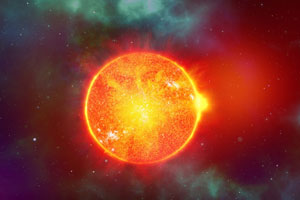
There are many curiosities and facts related to the Sun that make us marvel, such as some of those we tell you about:

The Sun is the closest star to Earth.
n” “nIt is located about 149,600,000 km away. And even though we are so close, it takes light eight minutes to reach Earth. It is the star around which the planets of the Solar system revolve.
n” “nThe Sun is responsible for the tides.
n” “nThe first to speak of this fact was Isaac Newton who explained that the tides are the result of the gravitational attraction forces that the Sun and the Moon exert on the Earth.

Its age is 4.6 billion years.
n” “nIt is estimated that the Sun is halfway through its life, since a star like the Sun usually has a lifespan of about nine or ten billion years.
n” “nThe sun’s core reaches a temperature of 15 million degrees Celsius.
n” “nBut on the surface the temperature drops to 5,500 degrees Celsius.
n” “nThe Sun is composed of helium and hydrogen.
n” “nSpecifically 74% hydrogen (H) and 24% helium (He), as well as 2% iron (Fe), nickel (Ni), oxygen (O) and other elements.
n” “nThe Sun occupies the vast majority of the Solar System.
n” “nIn addition to being the most important thing in the Solar System, since without it the planets would not exist as they are, the Sun represents 99.8% of all the mass of the Solar System. And as for the rest, most of it comes from Jupiter. Thus, the Earth represents a tiny fraction.
n” “nThe Sun is very big, but not that much
n” “nThe Sun’s diameter is 1,392,000 km. About 109 times larger than Earth. But if we compare it to other colossal stars like Antares or Betelgeuse, the Sun is a relatively small star. For a long time, it has been thought that the largest star in the universe that we know of is VY Canis Majoris, with a radius about 2,000 times larger than that of the Sun, but we can only manage to study up to a distance of 13 billion light-years.
n” “nHow to celebrate International Sun Day?
n”
In many cultures, the Sun Day has always been celebrated in a big way. In fact, the Saint John’s bonfires have their origin in pagan festivals of sun worship. Currently, the Saint John’s Eve festival has been Christianized, but it still retains its essence, represented in the fire and heat of the bonfires.
n” “nIf you have the chance, attend one of these Saint John’s Eve celebrations that are usually held on the beaches. In many cities, events and activities are organized to honor the sun.
n” “nAlso, if you are interested in the subject, you can read a lot about the Sun and learn more about its behavior, origin, and evolution, watch a documentary, and read a book according to your level of knowledge.
n”