

There are stories that should not be lost over the years, because behind a work there are people, efforts, sacrifices, and decisions that are part of its true origin.
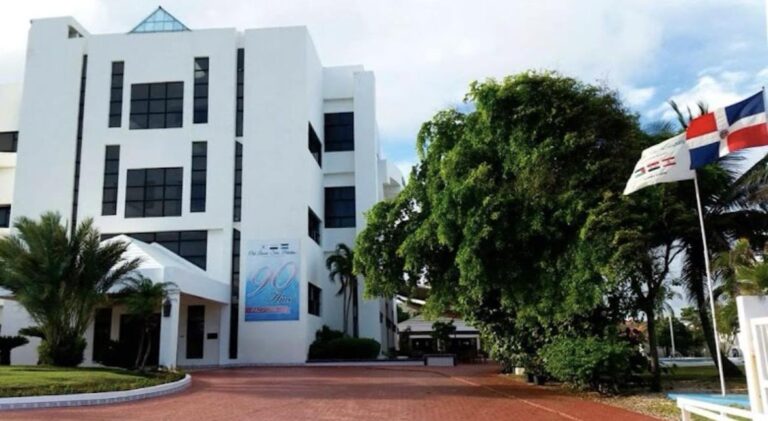
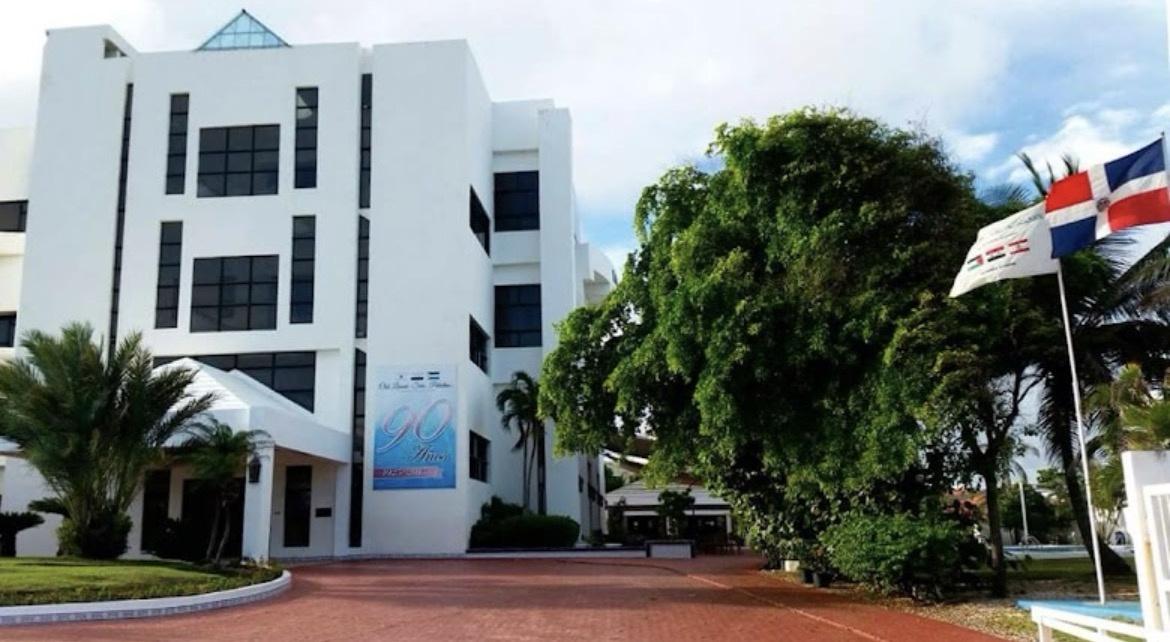
I want to tell the story of how the Lebanese, Syrian, and Palestinian Club that we know today was born, built, and financed.
It all started one night, at Yvonne Nader’s house, during a dinner I hosted for Freddy Beras Goico’s birthday. At that table was a group of distinguished members of the Arab community: Juan José Attias, Elías Arbaje, Dr. William Janna, José Attias, Antonio Alma, and Nabi Kouri, among others.
In the middle of the conversation, an idea that had been lingering among us for some time emerged: to build a new club on the Malecón land, purchased with the money from the sale of the old club on Independencia Avenue.

The land was already there. There were even architectural proposals. But, as often happens with major projects, between the idea and the reality there was a huge obstacle: the work could not be set in motion.
There were meetings, conversations, and plans, but the project did not start.
We recommend reading:Two soldiers died in Lebanon, in the first Israeli casualties since the June truce with Hezbollah
Until one day I decided that we had to start somewhere and I personally managed the cleaning of the lot. I contacted Miguel Arbaje, who, with great enthusiasm and without charging a single cent, made a tractor available to us to prepare the land. Thanks to his generous collaboration, it was possible to begin the work and transform that abandoned space.

It was a small advance in appearance, but of great importance: at last that place was beginning to look like the site where one day our Club would be built. However, the necessary resources to begin construction did not yet exist.
It was at that moment when Mustafá Abu Nabaa suggested organizing a lunch at my house and invited a friend of his, Mr. Nashmi Elfituri. During that meeting, something happened that would change the course of the project: Nashmi made a donation of one million pesos.
That was, as I recall, the first truly important contribution destined for the construction of the Club.
Shortly after, a second contribution of five hundred thousand pesos arrived, donated by a friend of Mr. Elfituri.
But the money, as often happens in construction, was leaving as fast as it arrived.
That is why, during that time, we organized several fundraising activities at my residence. I took them on personally, at no cost to the Club. The only thing that mattered to me was obtaining the necessary resources so that the work would not stop.
On different occasions, Dr. William Janna, Juan José Attias, Antonio Alma, Julio Hazim, and I visited bankers and businessmen. We went from door to door looking for people willing to support the project, and many of them made donations.
But the day also arrived when those resources were exhausted.
So, several members of the board and partners from that time decided to personally contribute one hundred thousand pesos each in order to continue.
Even so, the money ran out again.
And this time the engineers halted the work and left.
It seemed like everything stopped.
I remember that moment perfectly. After so much effort, seeing the construction abandoned was disheartening.
It was then that I turned to engineer Máximo Cambiazo and asked him to help us finish the work. I explained the situation to him and requested that he collaborate at no cost to the Club. He accepted with great pleasure.
Your help allowed us to move forward again when it seemed that the project was going to be, once again, stalled.
But there was still a fundamental problem to solve: we needed money to finish.
It was then that another lunch was held at my house. During that meeting, José Attias had an idea that could change everything: to sell the plot of land adjacent to the Club to use those resources to finish the construction work.
The proposal was discussed and accepted by the members of the board at that time.
The only person who initially submitted an offer to purchase the plot was Joaquín Geara. However, his proposal contemplated taking possession and making immediate use of the land once the payment was made.
Given that condition, I requested Mr. Mustafa Abú Naba’a to consider purchasing the property. He agreed to acquire it without demanding immediate use of the property and, furthermore, presented an offer for a higher value. That decision represented a decisive solution for the Club’s financial stability.
For these reasons, the Board decided to sell the plot to Mr. Mustafa Abu Naba’a.
I especially remember the first payment: five hundred thousand pesos. With that money, it was possible to resume construction again.
And while the construction needed resources to continue, Mustafa made payments until the value of the land was paid in full. He also made donations of construction materials: cement, blocks, gravel, and other supplies that helped the work to progress and reach its completion.
All of this occurred with the agreement of the board at that time, whose members knew about the operation and supported it.
Finally, after so many obstacles, so many meetings, so many visits, donations, personal contributions, and sacrifices, the Club was able to become a reality.
I want to keep a record of the people who were there when the project was just an idea; of those who contributed money when there were no funds; of those who sought out donors; of those who put resources from their own pockets; of those who worked without pay; and of those who, in one way or another, made it possible for that abandoned land to end up becoming the Club we know today.
And I cannot finish without making a very special mention of Mr. Antonio Alma, who accompanied me during the eight years I dedicated to the construction and management of the project, from its first steps to its culmination, giving rise to what is today the Lebanese, Syrian and Palestinian Club.
I also wish to acknowledge that it was Antonio who had the great idea of building a third floor and using a metal structure for the roof, an initiative that contributed significantly to the development and final design of the Club. I changed the word contribution to donation, I think it sounds better.