
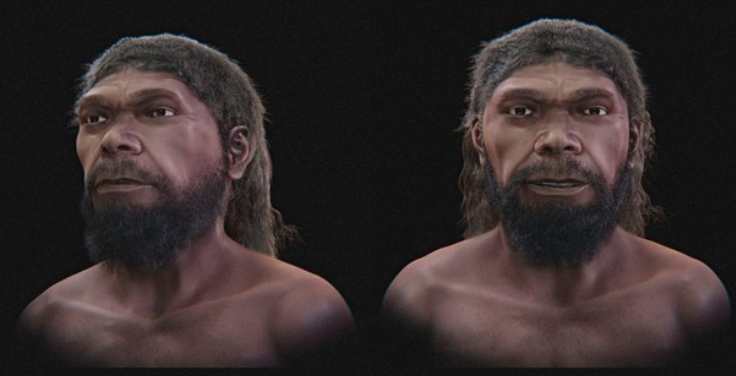
A team of scientists has digitally reconstructed the face of one of the oldest known Homo sapiens, based on fossil remains estimated to be about 315,000 years old.
The fossil, known as Irhoud 1, was discovered in Morocco in the 1960s. For years, it was considered a North African variant of Neanderthals, but new research and revised dating led scientists to classify it in 2017 as one of the oldest representatives of our species.
To recreate the individual’s appearance, researchers created a digital model based on several remains found at the site and applied techniques used in forensic facial reconstruction. They adapted the anatomy of a modern adult to the fossil’s skeletal structure and incorporated data on soft-tissue thickness from people of African ancestry.

The result is a three-dimensional approximation of what this ancient human may have looked like more than 300,000 years ago. Researchers presented both a scientific version focused on the relationship between the skull and facial features and an artistic version showing skin, hair and a beard.
However, the scientists noted that details such as skin pigmentation and hairstyle cannot be determined from the available fossil evidence.