New Delhi.- The
first Bollywood film with an ending modified by
artificial intelligence has been released in India and has done so
without the consent of its director, who denounces an appropriation of his work after discovering, by surprise, that the original drama had been transformed into a story with a happy ending.
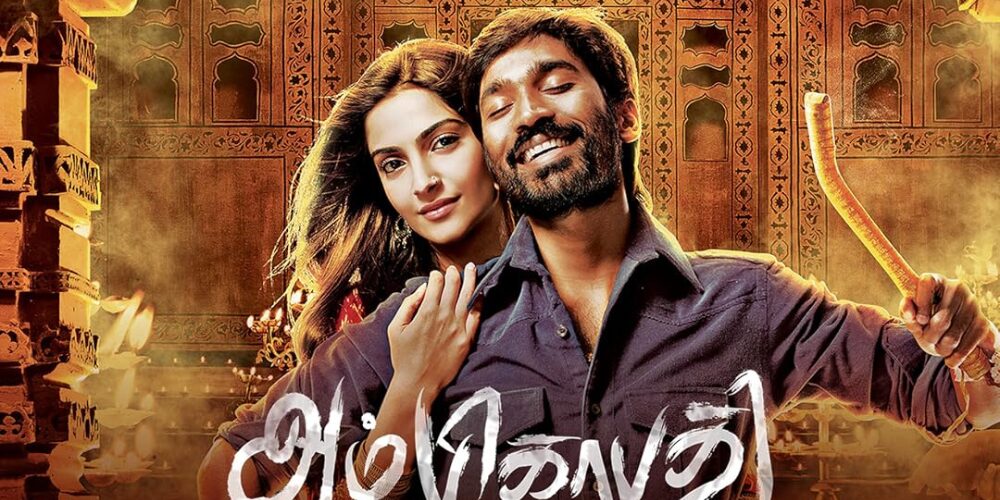
The re-release in cinemas of the Bollywood classic
‘Raanjhanaa’ (2013), renamed as
‘Ambikapathy’ and released by the production company
Eros International, includes an AI-generated scene in which the protagonist survives, instead of the original ending.
The new ending, premiered in the southern state of Tamil Nadu and presented as a “creative reimagining”, was made without consulting the original team, which has caused the rejection of the director and part of the Indian industry who consider that the meaning of the film has been distorted without authorization.
“Seeing how ‘Raanjhanaa’, a film born out of care, conflict, collaboration, and creative risk, has been altered, repackaged, and re-released without my knowledge or consent has been devastating,” wrote the original director, Aanand L. Rai, in a statement posted on his social media.
“This was never just a movie for us. It was shaped by human hands, with human flaws and human feelings. What is now circulating is not a tribute, but a reckless appropriation that strips the work of its intention, its context, and its soul,” he added.
Rai underlined that
neither he nor his team were consulted. “It’s not the film we made, nor the one we intended to make. The idea that our work can be taken and modified by a machine and then presented as innovation is deeply disrespectful,” he concluded.
Is it legal to alter movies with AI?
Eros International argues that the re-release is legal, protected by Indian copyright law, which grants the producer ownership of the film as the original author. “This is not a replacement, but a creative reinterpretation, clearly labeled and presented with complete transparency,” said the company’s CEO, Pradeep Dwivedi.
You may be interested in: ChatGPT will reach 700 million weekly active users this week
The executive framed the controversy within a generational conflict. “Each era of cinema has experienced this clash between Luddites and progressives. When sound replaced silence, color replaced black and white, digital replaced celluloid… and now, when AI meets narrative,” he wrote in a statement.
Rai, for its part, has announced that it is exploring legal avenues to stop the circulation of the modified version.
Has it happened before in film history?
Although artificial intelligence has been used in the post-production of films, this
would be the first time that a studio alters the plot of a film already released for commercial re-release, without the participation of the creative team.
In other recent cases, AI has been used for technical or stylistic purposes. The editor of ‘The Brutalist’, nominated for an Oscar, revealed that they used Ukrainian software to adjust the dialogues in Hungarian. David Fincher employed the technology to restore his classic Se7en in 4K. And Netflix seems to have started integrating AI for visual effects, lip-sync in dubbing, and the creation of personalized trailers, according to sources from the production company.
Beyond Copyright
The controversy has reignited a global conversation about
the limits of technology in art, at a time when artificial intelligence is advancing rapidly in the creative industry.
For many in the industry, the debate is not about legality, but a deeper question: to what extent can – or should – AI rewrite stories that originated from human hands.