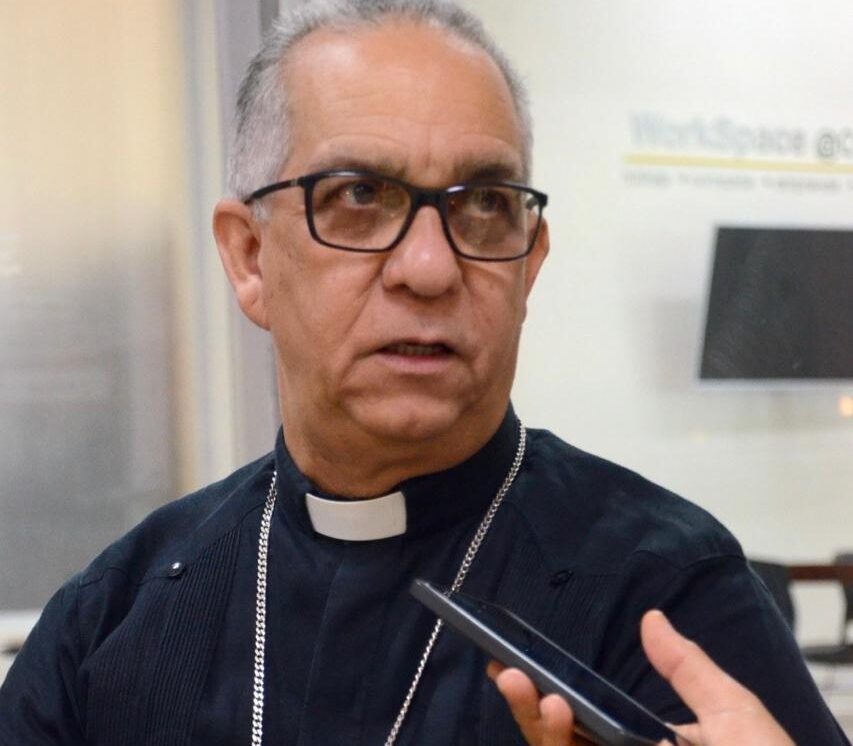
Santiago.– The Metropolitan Archbishop of Santiago, Monsignor Héctor Rafael Rodríguez, described the enactment of the new Penal Code as progress, although he warned that the legislation must be reviewed to correct provisions that, in his view, could violate fundamental rights. At the same time, he urged the Government to prioritize the fight against the high cost of living, low wages, and violence.
The leader of the Catholic Church maintained that the previous Penal Code had become outdated in the face of the new criminal modalities facing the country, but emphasized that no law will be sufficient if the citizenry does not act with responsibility.
“My call is to the citizenry to act well, with or without codes; for me that is the most important thing,” he expressed.
Rodríguez expressed his confidence that the commission in charge of reviewing the legal text will introduce the necessary corrections, especially in the articles related to freedom of expression, which have been questioned by various sectors as they consider that they could limit the practice of journalism and the right to inform.
“A code that restricts the right to communicate is not good. I hope the commission takes those details into account and that what needs to be corrected can be corrected,” he stated.
However, he specified that freedom of communication must also be exercised with responsibility and without resorting to defamation.

We recommend reading: Archbishop of Santiago calls for exemplary punishment against corporal who killed young man
Beyond the debate on penal reform, the archbishop urged the authorities to listen to the demands of the most vulnerable sectors and address the problems that, as he said, affect the population daily.
More Read

Among those concerns, he mentioned the high cost of living and low wages, considering that the income of the middle class and workers is insufficient to cover the basic needs of their families.
Likewise, he warned about the increase in femicides, describing them as one of the most serious expressions of the social violence the country is experiencing and which requires forceful responses from the State.
“Authorities are there for that, to realize why society cries out and complains, especially the poorest,” the prelate concluded.