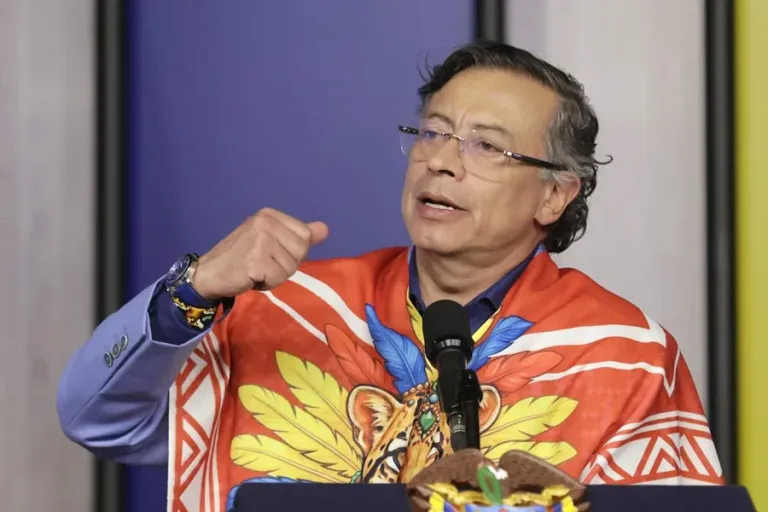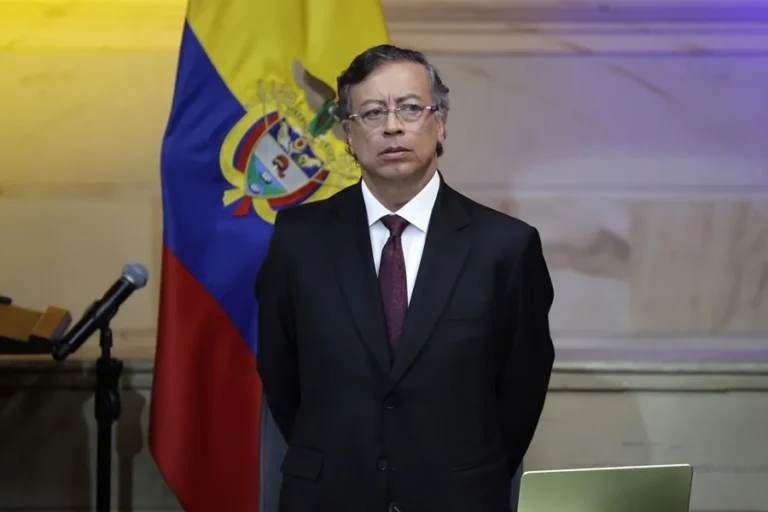

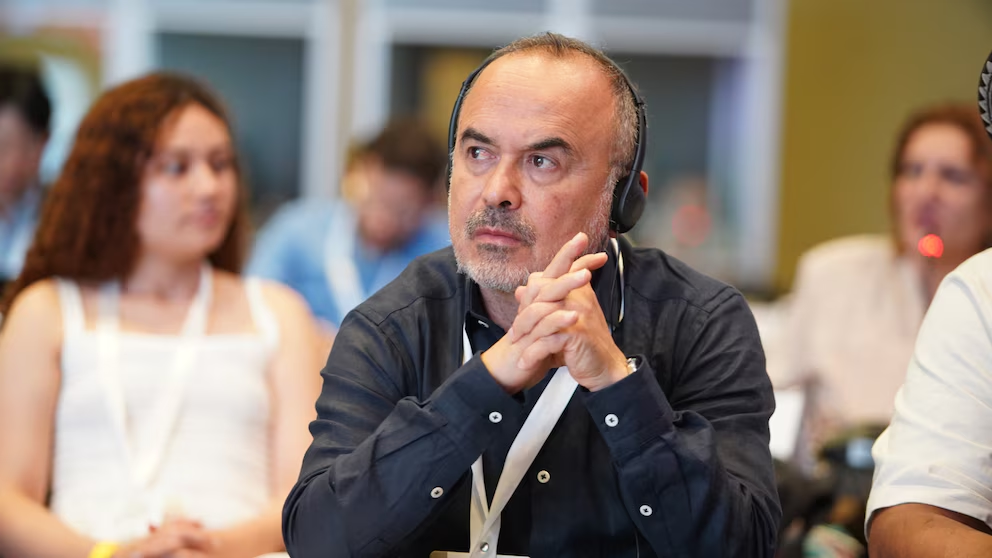

Through an administrative act signed on Monday, July 6, 2026, the President of the Republic, Gustavo Petro, removed the Minister of Justice, Jorge Iván Cuervo, from office 31 days before handing over power to the new government. The outgoing head of the portfolio, who had assumed this position on February 11, lasted a little less than five months in the role, during which he opposed some of the head of state’s initiatives.
The ‘straw that broke the camel’s back’, according to Caracol Radio and Blu Radio, was Cuervo’s recent interview, in which he distanced himself from the results of the Total Peace policy of the current administration and, likewise, from disregarding the mandate of the elected head of state, Abelardo de la Espriella, who will take office on August 7. His statements reportedly caused strong annoyance to the ruler, who asked for his departure.
Jorge Iván Cuervo was critical of granting political status to the FARC dissidents, which reportedly caused annoyance for President Gustavo Petro – credit Cristian Bayona/Colprensa
Indeed, in statements given to Caracol Radio on the morning of July 6, he also indicated that Petro was mistaken in his approach to negotiations with the FARC dissidents. “It was not correct to give them political negotiation status,” stated the outgoing minister, who recalled the recent decision by the Council of State, which pointed out how that “violated the peace agreement” signed; which allegedly caused presidential anger.

We recommend reading:Gustavo Petro rejects Abelardo de la Espriella’s victory and does not recognize the legitimacy of the next Government
Cuervo, who had previously opposed the holding of a national constituent assembly by Petro, leaves the position, becoming the fourth permanent minister, as Petro had already had Néstor Osuna, between August 2022 and July 2024; Ángela María Buitrago, between July 2024 and May 2025; and former prosecutor Eduardo Montealegre, between June and October 2025.
This is how Jorge Iván Cuervo fared at the Ministry of Justice
The outgoing official’s management was characterized by an academic and technical approach, with which he distanced himself from the more radical positions of Gustavo Petro’s government. From the beginning, Cuervo maintained an institutional stance rather than a governmental one, prioritized the ministry’s independence from political pressures coming from the Executive branch, and denounced that the problems of impunity require long-term solutions.
Despite his short time at the Ministry of Justice, Jorge Iván Cuervo took charge of several of this portfolio’s priorities – credit @MinjusticiaCo/X
During his administration, Cuervo reactivated the Justice Reform Commission, with the goal of reorganizing processes and evaluating the flaws of the adversarial criminal system. This effort sought to adapt justice to new digital and technological realities and was reflected in the insistence that these challenges transcend presidential terms and should not be subject to partisan disputes.
However, one of the most notable points of his administration was his firm opposition to the calling of a national constituent assembly, proposed by President Petro. Cuervo maintained that major reforms did not require this mechanism and criticized the impact that the debate had on the ministerial agenda, in addition to defending the autonomy of the Special Jurisdiction for Peace (JEP) and its continuity until 2030.
Jorge Iván Cuervo became the fourth Minister of Justice to serve in Gustavo Petro’s administration – credit Ministry of Justice
Cuervo leaves after a first and only meeting with the incoming Minister of Justice, lawyer Iván Cancino, with whom he addressed different issues within the portfolio’s scope, such as the prison issue, which has become a ‘headache’ for the current administration, but in which he indicated that he was able to maintain a cordial dialogue with the unions of the National Penitentiary and Prison Institute (Inpec).
Regarding the topics indicated to be ready for his successor, an update to the Ten-Year Justice Plan for 2028-2038 was planned, the delivery of recommendations from the Justice Reform Commission on July 31st, and the presentation of the Conpes draft on criminal policy. With this, the aim is to guide future judicial reforms, improve access to justice, and provide a clear foundation for the next criminal policy.
Faced with his dismissal as Minister of Justice, one of the first to react to the decision was House Representative José Jaime Uscátegui. “Petro fired his Minister of Justice for telling the truth: Total Peace failed and it is a risk to democracy to ignore elections and promote civil disobedience. Every day confirms a greater authoritarian vocation. We always warned about it,” the parliamentarian highlighted.