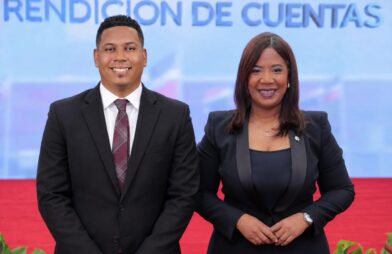
Santiago de los Caballeros. — “Earthquakes do not give warning and we are not exempt from one happening to us,” warned the governor of Santiago, Rosa Santos, this Tuesday during the National Earthquake Evacuation Drill, while demanding that the population take these exercises seriously and stop viewing them as a game.
Santos stated that preparation can make the difference between an organized response and chaos during a real emergency. He pointed out that the goal of the drill is to train institutions and citizens to act correctly when a seismic movement occurs.
The governor questioned that there are still people who consider these workshops a waste of time until they face the consequences of a disaster directly.
“There are many people who take these processes as a waste of time, as a game, and do not give them importance; only when we are in over our heads do we say: oh dear, I didn’t pay attention,” he expressed.
He warned that the authorities will continue to insist on prevention and the creation of a culture of emergency response.
More Read

We recommend reading: DR activates earthquake drill today to test emergency response
“We do not get tired, because the drop falls on the stone until it makes a hole,” stated Santos, who called on the population to pay attention to the instructions of the relief agencies and participate actively in the drills.
The official recalled that natural phenomena have caused devastating emergencies in different countries and maintained that, although the population must ask for protection, it also has the responsibility to prepare itself.
More Read
COE warns that earthquakes are unpredictable
The representative of the Emergency Operations Center (COE) in Santiago, Francisco Arias, explained that the exercise will allow for measuring the response capacity of public and private institutions in the event of a possible earthquake.
Arias highlighted the participation of government agencies, city councils, hospitals, fire departments, the Red Cross, and relief organizations, and stated that the drill will allow for the detection of flaws before a tragedy occurs.

“This is more than a drill; it is an exercise carried out to measure the response capacity we have,” he explained.
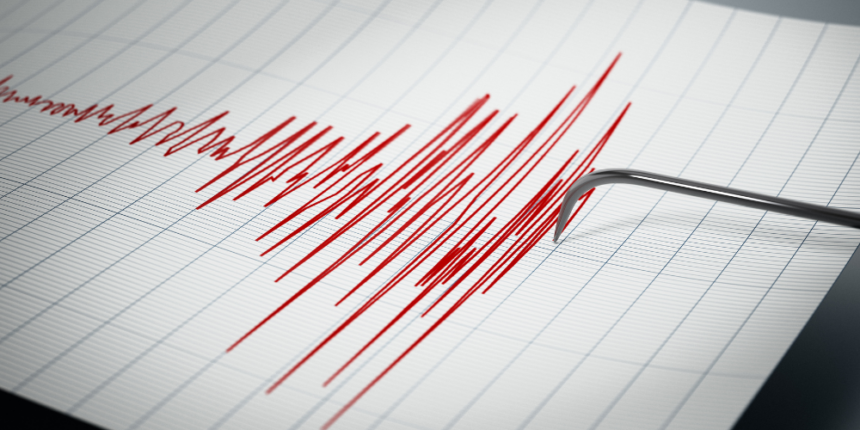
He stressed that no one can determine when an earthquake will occur, so the only tool available is preparation.
“Earthquakes are unpredictable. No one knows when one is going to happen; the only thing we must know is how we are going to act,” he emphasized.
The official reported that the authorities are collecting the participation statistics recorded on the platform enabled for the exercise and that they will subsequently evaluate the results.
He specified that the performance of each institution will be reviewed to identify which ones complied with the protocols and which ones must correct weaknesses in their response mechanisms.
Drill exposes strengths and weaknesses
Arias explained that the evaluation will not be limited to measuring evacuation time. It will also be analyzed whether the institutions correctly applied their contingency plans, whether the exit routes were adequate, and whether the responsible agencies managed to coordinate effectively.
The goal, he said, is to correct any flaws before a real emergency occurs, when errors could have serious consequences.
He indicated that the Santiago Governorate had a preliminarily satisfactory performance during the fiscal year, although he clarified that the final evaluation will be released later.
The authorities also maintain a permanent review process of the physical structures of the institutions to determine which buildings offer adequate safety conditions and which require improvements.
The day, promoted at a national level by President Luis Abinader, once again highlighted a warning that the authorities consider urgent: an earthquake cannot be predicted, but an unprepared population can indeed increase the number of victims.