Periodista egresada de la Universidad Autónoma de Santo Domingo (UASD). Le gusta escribir sobre política e historias humanas que puedan transformar vidas. Actualmente cursa un master...
Share
7 Min Read
SHARE
The Government of Uruguay is paving the way to begin seismic exploration work in its territorial sea in search of oil resources in deep waters. These tasks, which are causing controversy in the South American country, will be carried out by at least four companies that are awaiting environmental approval from the administration of Uruguayan President Yamandú Orsi.
The foreign oil companies involved in the explorations are the American Apache (APA), the Norwegian Petroleum Geo-Services (PGS), the French Compagnie Générale de Géophysique-Veritas (CGG) and the Australian Searcher, which according to local media, signed “multi-client” contracts with the Uruguayan state-owned Administración Nacional de Combustibles, Alcohol y Portland (ANCAP) during the previous government of Luis Lacalle Pou.
These contractors will focus their work on the seven ‘offshore’ blocks, areas off the coast designated at sea for the exploration of natural resources, mainly hydrocarbons such as oil and gas, which are leased to companies for exploitation.
The blocks were awarded by the Lacalle Pou administration to giant oil companies such as the American Chevron, the multinational Shell, the British Challenger, APA and the Argentinian YPF, which agreed to participate in the project jointly with the Italian Ente Nazionale Idrocarburi (ENI).
All these energy companies will be in charge, in this first stage, of paying the contractors to receive information about their seismic exploration work and thus evaluate whether or not to invest in the following stages, such as the realization of exploratory wells, which are more expensive.
“Protected Maritime Areas”
While the Government finalizes the authorizations, in parallel it plans to “issue a decree to declare as protected marine areas some specific zones that, worryingly, are part of the blocks granted for exploration”, indicates the Uruguayan press.
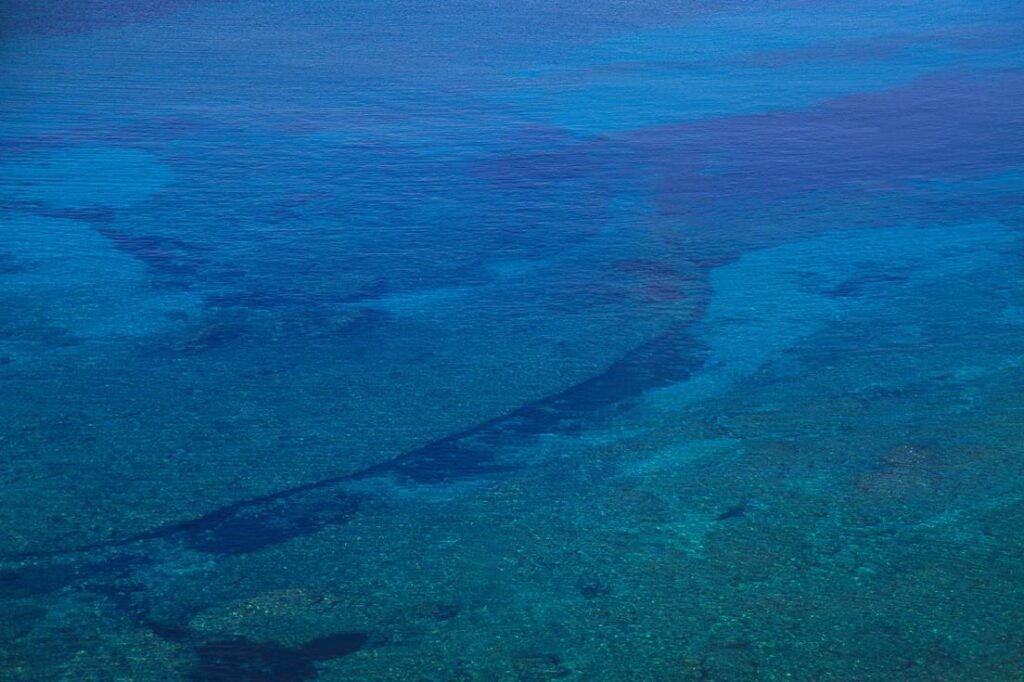
The controversial areas that fall into both exploration and protection projects include the heads of submarine canyons and cold-water coral mounds, ecosystems of high fragility and biodiversity. Thus, the geographical overlap between areas of potential protection and oil interest marks an inherent contradiction in government policy.
The Minister of Environment, Edgardo Ortuño, has indicated that his goal is to expand the surface area of protected areas to reach 30% of the Uruguayan maritime territory. However, and despite this regulatory framework, the National Directorate of Environment decided to unify the authorization procedures for the four seismic companies in addition to some public hearings. The strategy is seen by critics as a method to expedite a process that, otherwise, could face more significant individual obstacles.
In a previous step, during 2022, the portfolio had designated seven key locations as sites of particular relevance for conservation: the English bank; the island and islet of wolves and their submerged environment; the lemon fish reefs; the mud pit; the molluscs zone; the permanent spawning area of hake, and the continental margin and slope, including precisely the heads of submarine canyons and coral mounds.
The resolution at the time, signed by the now former minister Adrián Peña, established that these sites should be taken “especially into account” when evaluating any environmental authorization. Therefore, the current situation generates conflict and tension between the streamlining of energy projects and the precautionary protection of the environment.
“It will not be unconditional”
According to La Red 21, “sources from the Environment portfolio” confirmed that the final authorization to be issued by Orsi’s Executive “will not be unconditional” and “will be delivered with a series of restrictions that respond to the evaluation of the significant environmental impacts that these tasks generate.”
One of the most prominent mitigation measures, adds the media, demands to immediately stop the machines of the exploration vessels if a specimen of marine fauna is sighted 1,000 meters away, instead of the usual standard of 500 meters.
However, this precautionary measure does not completely dispel the concerns of scientists and environmental organizations, which have filed precautionary measures with the courts.
Environmental Risks
Activists are focusing on the fact that seismic prospecting and subsequent oil exploration in the Uruguayan sea can damage the ocean and its biodiversity irreversibly. The legal action seeks to halt the activities until a complete and independent assessment of the cumulative impacts is carried out.
And seismic exploration does involve significant and widely documented environmental risks. The technique uses air guns that generate sound pulses of extreme intensity, above 250 decibels.
For marine mammals such as whales and dolphins, which depend on sound to survive, seismic noise causes behavioral alterations, physiological injuries, and even death. The effects are not limited to large vertebrates.
Regarding fish and invertebrate fauna, various effects were documented, such as internal lesions in vital organs, high mortality in their larval stages, and a notable decrease in commercial fishing rates. This scenario demonstrates a serious alteration of their usual biological cycles.
The zooplankton, which constitutes the fundamental base of the marine food web, experiences high mortality and a reduction in its population of over 50% after the transit of seismic vessels. This damage to the foundations of the ecosystem can trigger chain reactions, with unpredictable long-term consequences for the oceanic balance and fishing activities.
For this reason, the development of exploration work on a global scale is situated in an environment of conflict between the objectives of energy exploitation, international climate agreements and the obligation to preserve the biological diversity of the sea.
Periodista egresada de la Universidad Autónoma de Santo Domingo (UASD). Le gusta escribir sobre política e historias humanas que puedan transformar vidas. Actualmente cursa un master en Comunicación Política y Marketing Digital.