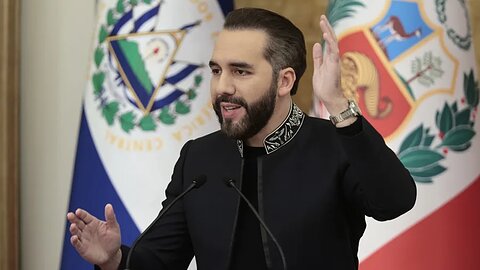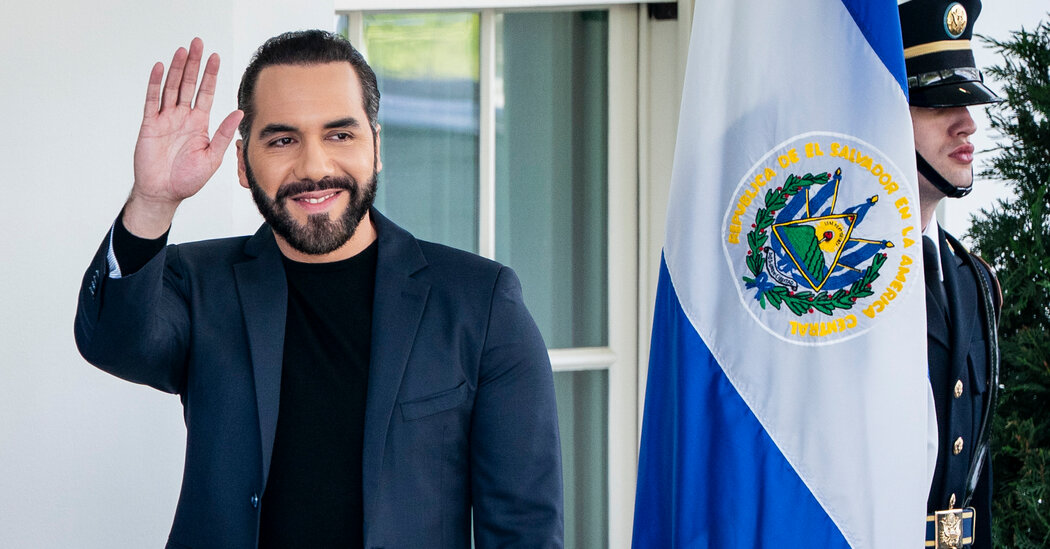

The President of El Salvador, Nayib Bukele, defended this Tuesday the indefinite presidential reelection, enabled in the country since July 2025 in a controversial constitutional reform, as he seeks a third term at the head of the Executive branch.
The president responded to a message on the social network X, in which Carolina Jiménez Sandoval, president of the Washington Office on Latin America (WOLA), questions indefinite reelection.
“Countries with indefinite reelection in Latin America: Venezuela, Nicaragua, El Salvador. Let it be very clear which club Nayib Bukele is now joining,” wrote Jiménez.
In response, Bukele posted that “it is also held by Canada, the United Kingdom, Germany, Australia, New Zealand, Ireland, Italy, the Netherlands, Belgium, Sweden, Norway, Denmark, Finland, Iceland, Luxembourg, Austria, Switzerland, and Japan, among many other countries. But the idea is to make it sound bad,” along with a laughing face emoji.

Bukele’s Nuevas Ideas (NI) party reported on Monday that the head of state won the presidential nomination for the 2027 elections in primaries held on Sunday.
Bukele, 42, has not publicly referred to this internal process, in which he apparently had no opponent.
As a next step ahead of the general elections in February 2027, the Salvadoran president must register his candidacy with the Supreme Electoral Tribunal (TSE) during the period between October 1 and November 19, 2026, in accordance with the collegiate body’s electoral calendar.
The Legislative Assembly (Parliament), dominated by Bukele’s NI party, approved and ratified in a single session on July 31, 2025, without prior analysis or debate, the reform of articles 75, 80, 133, 152, and 154 of the Constitution, giving President Bukele a clear path to seek a third consecutive term.
This reform includes extending the presidential term from the current five to six years and eliminating the runoff in elections.
According to various recently published polls, Bukele maintains high popularity ratings, mainly due to the reduction in violence and the fight against gangs, but with growing economic demands from the population.
Bukele assumed his second consecutive term on June 1, 2024, despite the fact that it was prohibited by the Constitution at the time, and it was supposed to conclude in 2029. However, the reform endorsed by Congress moved the presidential elections forward to 2027, when voting for legislative seats and mayoralties will also take place.