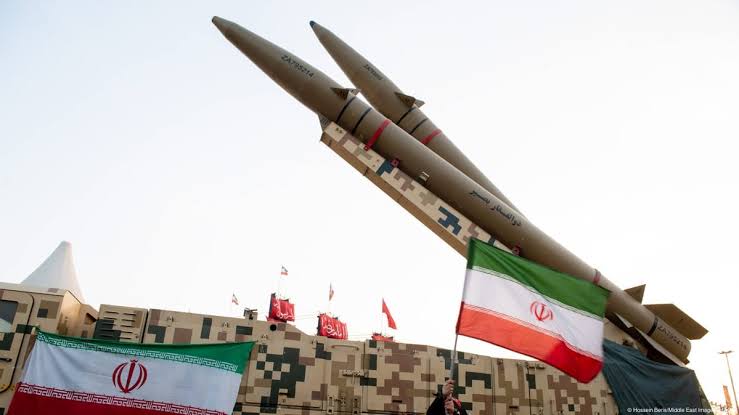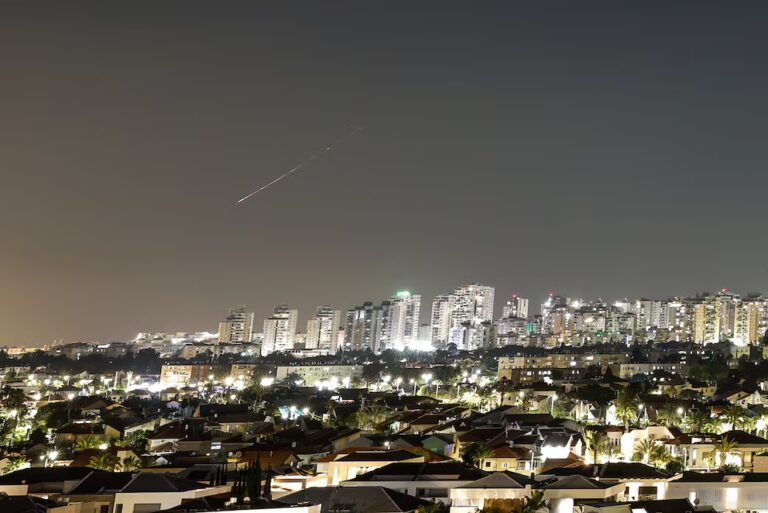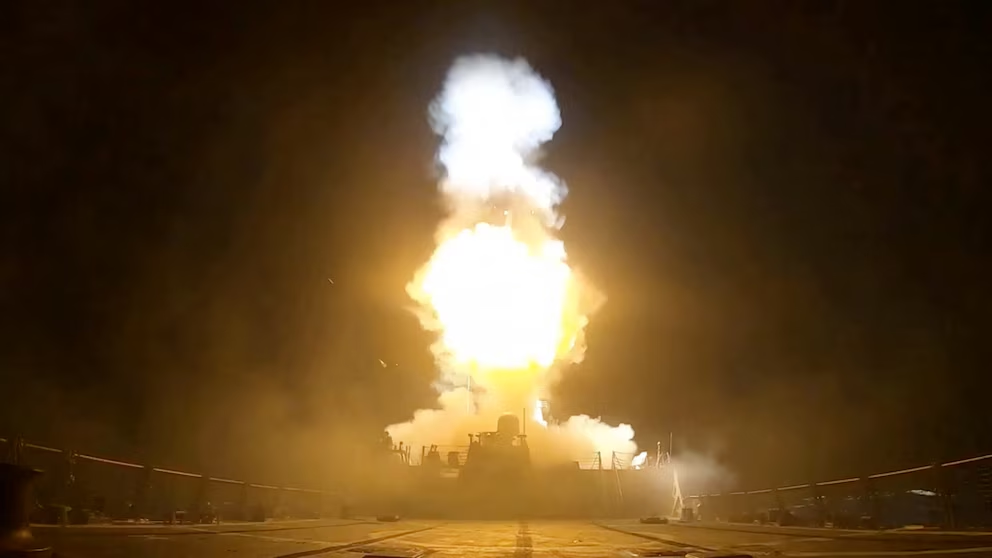

The United States Central Command Forces (CENTCOM) executed a new series of airstrikes against military targets of the Iranian regime this Tuesday, in an offensive that lasted for the eleventh consecutive night and is part of the military campaign initiated following the resumption of hostilities between Washington and Tehran.
In a statement, CENTCOM reported that operations began at 7:00 p.m. (Eastern Time) and explained that the strikes seek to further weaken Iranian military capability to jeopardize commercial navigation in the Strait of Hormuz, one of the most important maritime routes for global oil transport.
“CENTCOM forces began striking military targets in Iran at 7 p.m. ET today for the eleventh consecutive night. The strikes are designed to continue degrading Iran’s ability to threaten commercial shipping in the Strait of Hormuz,” the U.S. military command noted.
As the offensive unfolded, various Iranian media outlets reported explosions in several regions of the country. The semi-official agency Tasnim indicated that detonations were heard west of the city of Tabriz, in northwestern Iran.

We recommend reading: Lebanon deploys troops after partial withdrawal of Israel
In parallel, the Fars agency reported several explosions in the vicinity of Sirik, a town located in southern Iran, while Nour News claimed that anti-aircraft defenses were activated in Tehran to respond to what it described as “hostile targets”.
A tweet from the United States Central Command (CENTCOM) reports on the eleventh night of strikes against military targets in Iran, aimed at degrading the ability to threaten commercial shipping in the Strait of Hormuz.
So far, U.S. authorities have not specified which facilities were hit during this new phase of the campaign, nor have they offered an official assessment of the damage caused.

The offensive occurs in a context of increasing military pressure on the Iranian regime and just hours after Secretary of Defense, Pete Hegseth, appeared before the Senate to defend the strategy of President Donald Trump’s administration and request additional resources to sustain operations.
During that hearing, Hegseth reported that the cost of the war against Iran has already reached $37.5 billion, compared to the $29 billion estimated at the beginning of May.
The Pentagon chief asked Congress to approve nearly $70 billion in additional funding to finance the military campaign and maintained that these resources are essential to sustain operations. “Without these funds, we face critical shortfalls,” he declared before lawmakers.
In the same appearance, Hegseth stated that China and Russia are helping Iran “at different levels,” although he avoided offering details about the type of assistance that, according to Washington, both countries are providing to Tehran.

The Fars agency reported several explosions in the vicinity of Sirik, a town located in southern Iran (UKMTO)
The Secretary of Defense also revealed that the United States has maintained an operation since May to protect the transit of commercial vessels through the Strait of Hormuz. As he explained, that mission has made it possible to facilitate the passage of approximately 500 million barrels of oil.
The hearing was also marked by questions about the possibility of the United States attacking underground Iranian nuclear facilities, especially after Trump warned that he could order an attack on the so-called Peak Mountain, a complex that, according to U.S. authorities, is linked to the Iranian regime’s nuclear program.
When asked about the U.S. military’s ability to destroy underground facilities, Hegseth avoided offering details.
“Many of our capabilities are classified, senator”, he replied. However, he added: “If anyone in the world can reach anything on the face of the Earth, it is the United States armed forces”.
Since the ceasefire between Washington and Tehran became ineffective on July 8, both countries have intensified their attacks.
United States Secretary of Defense, Pete Hegseth, appears before the Senate Appropriations Committee in Washington.
The Pentagon confirmed this week the death of three U.S. service members during the current escalation, bringing the number of personnel killed since the start of the military campaign on February 28 to 17, while nearly a hundred have been wounded in recent weeks, according to official figures from the Department of Defense.