Santo Domingo.- The National Association of Young Entrepreneurs (ANJE) considers that the accountability presented by President Luis Abinader
exposes a broad vision of public policies aimed at economic growth, productive transformation, and the modernization of the State.
In a context of macroeconomic stability and accelerated changes in the global environment, the main challenge for 2026 will be to ensure that announcements and strategic guidelines
translate into implemented reforms, with verifiable impacts on productivity, formalization, and institutional quality.
From ANJE’s perspective,
the country is at a point where public debate must move from the formulation of objectives to the effective and evaluable execution of key policies, especially in those areas that determine the generation of opportunities for young people, the strengthening of MSMEs, and trust in institutions.
Regarding youth-led MSMEs and productive formalization, we highlight that the discourse recognizes the central role of MSMEs in job creation and proposes measures aimed at facilitating formalization, expanding access to financing, and reducing administrative friction. These lines are relevant in a country
where more than 85% of MSMEs operate informally, despite employing 61.6% of the total employed and more than 98% of the productive and business units.
ANJE underlines that the real impact of these initiatives will depend on their regulatory design and consistent implementation, particularly for MSMEs led by young people, who face greater barriers to entry to credit, markets and regulatory compliance. Formalization will only be sustainable if accompanied by clear incentives, predictable rules and an environment where growing does not imply assuming disproportionate costs or legal uncertainty.
Regarding technical-vocational education and employability, we highlight the emphasis of the speech on education as the axis of development towards 2036. ANJE particularly emphasizes the importance of strengthening technical-vocational education, not only in coverage, but in quality, relevance and articulation with the labor market, and above all with a view to supplying the necessary human talent in the face of the agreements for the technological and digital economy projects announced, such as NVIDIA, Google, Lod Holdings, among others.
For education to be a true engine of social mobility and competitiveness, it is
essential to guarantee performance standards, permanent curricular updating, and an effective link between the education system and the productive sector. Youth employability and business productivity depend, to a large extent, on
the country’s ability to train talent aligned with the demands of a more diversified, more global, and technologically demanding economy.
Regarding effective justice and legal security, it is important to highlight that the modernization of the State and the references to institutional reforms in the discourse placed a structural issue for development on the table: effective and predictable justice. ANJE emphasizes that without legal security, reasonable deadlines, and coherence in the decisions of government bodies, the costs of doing business increase and the incentives to invest are weakened.
Beyond regulatory changes, the central challenge is to ensure consistent application of the rules, which strengthens the trust of citizens and businesses, and contributes to a stable and competitive business climate.
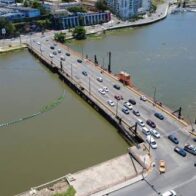
Regarding sustainable mobility and territorial planning, ANJE has presented, in various forums, the challenges associated with urban growth and mobility, especially in Greater Santo Domingo. “We emphasize that sustainable mobility is a key component of the country’s systemic competitiveness, with direct impacts on productivity, logistics costs, and quality of life.”
While the speech included relevant announcements regarding infrastructure and transportation, the topic was not addressed comprehensively from a sustainable perspective: Infrastructure investments must be accompanied by integrated planning, inter-institutional coordination, and sustainability criteria, avoiding fragmented and short-term solutions. Likewise, although we welcome the expansion and improvement of the energy generation and transmission matrix, the reduction of losses in distribution remains pending to achieve greater sustainability of the electricity sector and reduce its impact on public finances.
ANJE reiterates its commitment to public-private dialogue and to a proactive participation in the national debate. At the same time, it reaffirms its role of critical observation and technical demand: the country needs the announced policies to become concrete, measurable, and sustainable results. In that sense, we await the pending reforms in the fiscal and labor areas, not addressed in the speech. As mentioned in the same speech, the growth expectation for the Dominican Republic in 2024-2034, according to the Atlas of Economic Complexity report,
is only 3.8%, below the usual potential of the Dominican Republic and insufficient to achieve the RD 2036 Goal in relation to the size of the economy. Therefore, we advocate for implementing the structural reforms that can boost the economy in the long term.
ANJE values that the President reaffirmed the commitment to the RD 2036 Goal, aimed at turning the country into a developed economy through sustained increases in productivity, human capital, and innovation. This vision coincides with the aspirations of the young business sector, but requires accelerating the pending structural reforms in fiscal, labor, and institutional matters, so that the announced growth effectively translates into more formal jobs, and a competitive and predictable business environment.
The year 2026 represents an opportunity to advance business formalization, youth entrepreneurship, relevant education, effective justice, and sustainable mobility. ANJE will continue to monitor the implementation of these policies, convinced that only through solid institutions and well-executed decisions will it be possible to transform economic growth into inclusive and lasting development.