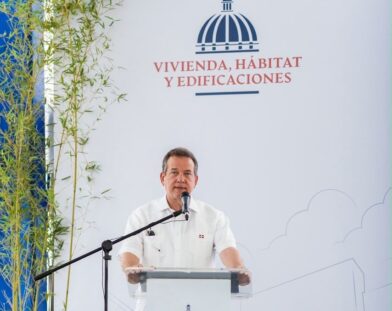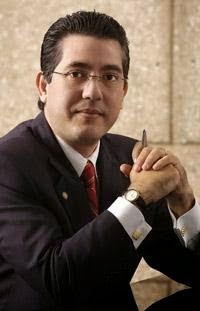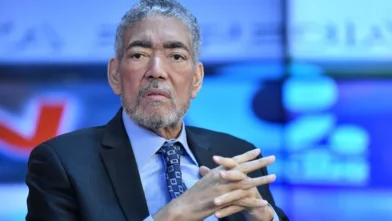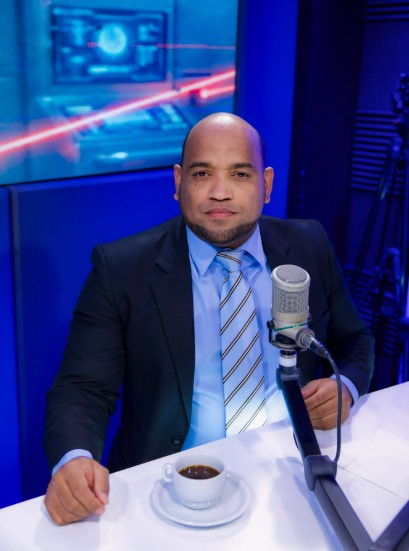
Municipalist Jonatan Familia, a member of the radio program Politikal, expressed this Wednesday the idea of businessman Santiago Matías to found his own political organization ahead of the 2028 elections. During his speech, Familia stressed that this project is not born with the intention of being a “swing party”—a term used for smaller organizations that seek to negotiate with large parties—but rather as an electoral option with its own identity.
Jonatan Familia was emphatic in differentiating this new proposal from other emerging parties in the Dominican Republic. “I respect Santiago Matías and I urge people to understand that this recognition of this party is not a common or ordinary recognition, this is not a hinge party, this is not some thing being done to negotiate, this is a party that will run its own candidate,” the communicator stated.
The panelist criticized the existence of parties that act as “scavengers” that only seek to “smell power” in order to negotiate benefits. In contrast, he defended the legitimacy of a young person who “comes from the bottom” and presents a serious proposal to the electorate.
“You support the candidate, you support the proposal that you believe is viable for your country,” added Familia, highlighting that he prefers to follow proposals and candidates rather than traditional party structures.
You can also read: Jonatan Familia clarifies that Guido Gómez Mazara will not join David Collado’s project
Call to the citizenry: “Signing is not joining“
More Read

Faced with the start of the legal process to obtain recognition from the Central Electoral Board (JCE), Jonatan Familia made a direct request to the population to collaborate with the necessary signatures without fear of compromising their current political affiliation.

“What I urge is that starting today we have to begin working on that by telling people not necessarily that you are going to belong to that party, but that you do not oppose Santiago Matías having a party,” he explained. Familia clarified that citizens registered in other parties such as the PLD or the PRM can sign the “no objection” form without this affecting their original party affiliation.
Support on the Politikal panel
More Read

The coordinator of the political analysis program, Hansel García, also identified with the project, based on the success story of the Alofoke Media Group platform.
“I identify with many things about Santiago Matías and this company because I am like this company, because it is a company that comes from the bottom, from a little camera, and has been growing, and I cannot say that that is not my case,” expressed García.
Familia provided the technical-legal analysis, recalling that Law 33-18 requires 2% of the valid votes cast in the last process to recognize a new organization. Manuel Rojas also agreed that the most convenient path for a figure like Matías was to create a party “from scratch,” since joining structures like the Reformist Party—which initially made him offers—usually leads to structural and leadership problems.
Finally, Hansel García made himself available to the project to fill any position where he might be needed. “I will be where the party needs me,” he concluded, as the team discussed the possible districts for which the communicator could aspire to a candidacy in the future.