Government will submit a project to eliminate obsolete taxes and digitize fiscal processes

8:13 pm
Santo Domingo.– The Minister of Finance and Economy, Magín Díaz, informed that in the coming weeks he will submit to the National Congress a legislative initiative aimed at eliminating tax burdens that he described as outdated and correcting distortions that, in his opinion, disproportionately affect taxpayers.
The official explained that the proposal is part of a structural review of the tax system, which will focus on identifying flaws together with the business sector to introduce regulatory and administrative adjustments that allow for greater balance and transparency in collection.You may be interested in: New York State Attorney General
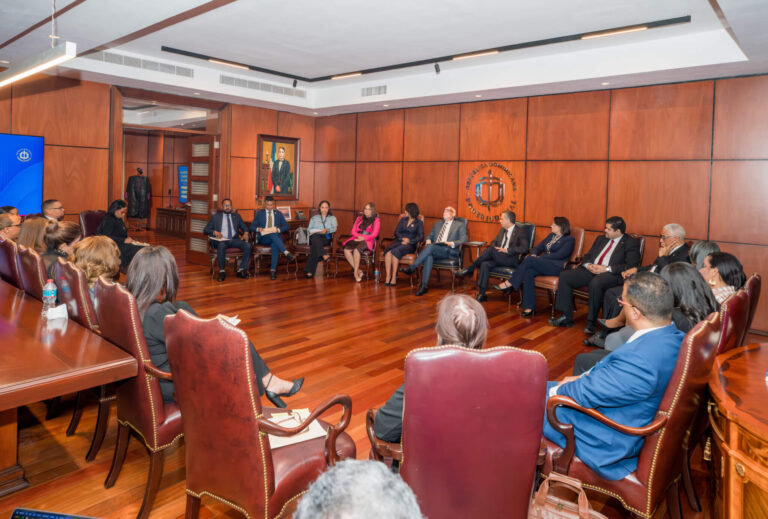
While participating as a guest speaker at a luncheon of the American Chamber of Commerce of the Dominican Republic, Díaz announced that a technological modernization process will also be implemented between the General Directorate of Internal Taxes and the ministry, with the purpose of streamlining procedures and reducing response times. Within this plan, the automation of tax exemption requests is contemplated, starting in May with a first phase of 12 digital services. Furthermore, it was indicated that the application of exemptions from the Tax on the Transfer of Industrialized Goods and Services (ITBIS) in local operations will be optimized through electronic invoicing and tax assessment tools. Díaz acknowledged that fiscal limitations have conditioned the pace of state investment, which is why the Government will focus on streamlining current spending, making public transfers more efficient, and simplifying processes that today represent obstacles to private investment. In that context, he maintained that it is not advisable to continue expanding tax incentives that, in many cases, have become permanent. The minister highlighted that last year it was possible to reduce current spending by half a percentage point of the Gross Domestic Product (GDP), which allowed an increase in public investment from 2.4% to 2.6% in 2025. In his view, the challenge now is to increase spending efficiency to maximize results with limited resources and strengthen the execution of priority works.
Redacción de De Último Minuto



#Most read
- 1.Lula leads Flávio Bolsonaro in first results of the 2026 Brazil elections
- 2.NASA launches three missions to map the heliosphere and study the solar wind
- 3.Apple equips its AirPods with translation in English, Spanish, Portuguese, French, and German
- 4.Nvidia: From Video Games to the World’s Summit as a Colossus of Artificial Intelligence
- 5.Roberto Ángel Salcedo heads the first preparatory meeting for the 2026 carnivals
- 6.84% of teenage girls in Spain fear that AI will use their photos to create fake sexual content
- 7.VIDEO: Tourists stranded with suitcases amid violent protests in Paris
- 8.Mexican student creates sound-based fire extinguisher and wins gold medal
- 9.Man confesses to murder of lawyer and former political activist in Puerto Rico and then takes his own life
- 10.Haitian gang leader challenges Bukele as search for missing Salvadorans continues

Newsletter
Subscribe to our newsletter to receive our latest articles instantly!