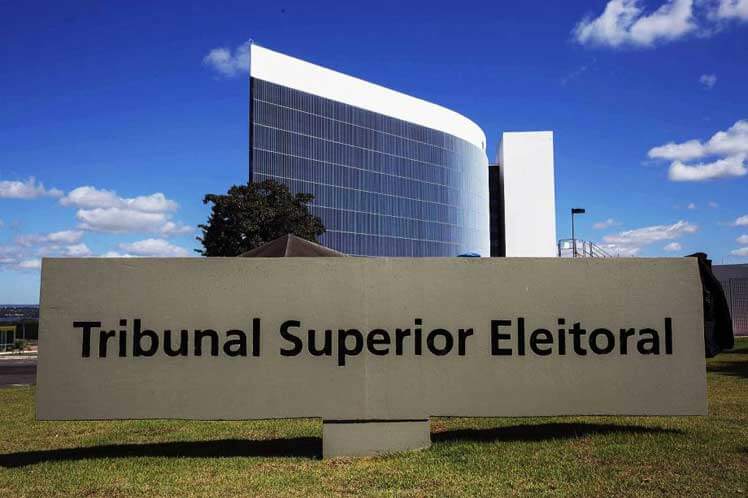

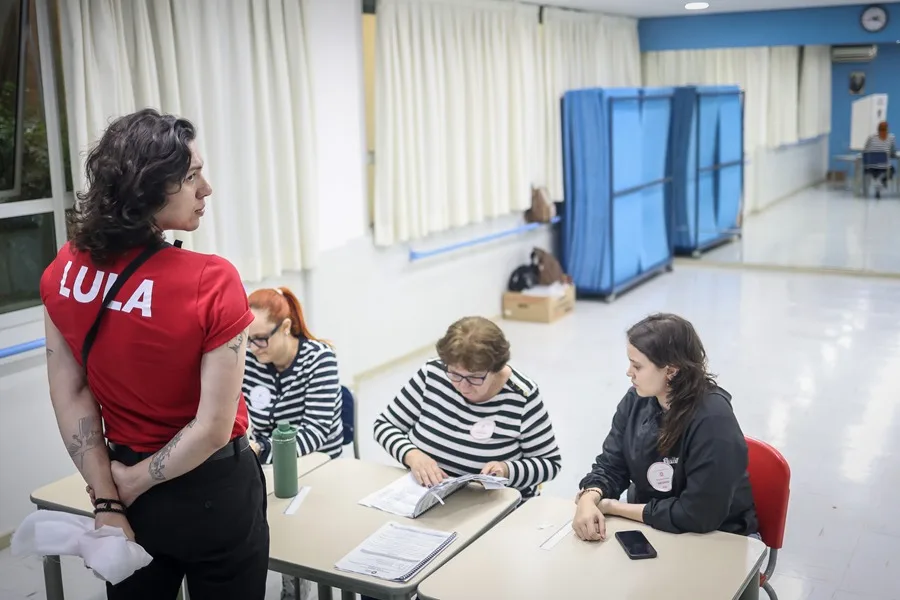

The electoral confusion in Brazil marked the final hours of the presidential runoff, after Supreme Federal Court Justice Cristiano Zanin ordered the voting process to be extended by two hours when electoral authorities had already begun the count.
The decision modified the established closing time for polling stations, initially scheduled for 5:00 p.m. local time (20:00 GMT), and moved its conclusion to 7:00 p.m. (22:00 GMT).
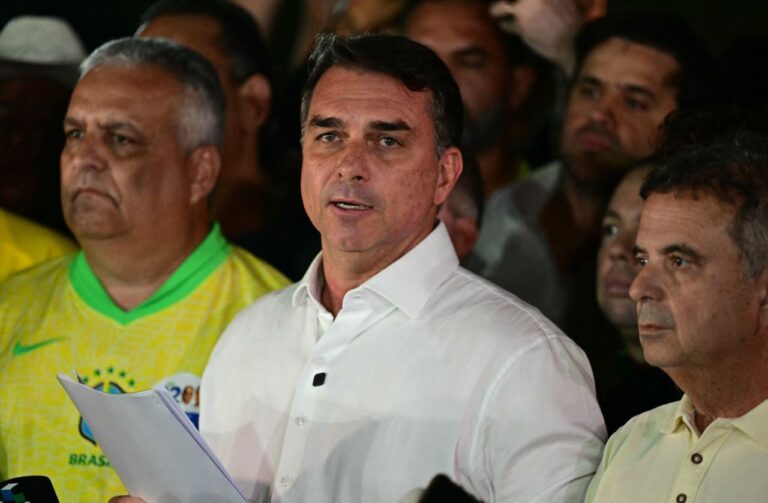
The measure came after presidential candidates, Luiz Inácio Lula da Silva, of the Workers’ Party (PT), and Senator Flávio Bolsonaro, requested to extend the time available for citizens to exercise their right to vote.
Although both applicants agreed on requesting an extension, their requests responded to different circumstances and proposed different scopes.

Lula and Bolsonaro requested to extend voting hours
Lula da Silva’s campaign team requested that the extension be applied throughout the Brazilian territory, arguing that difficulties related to the transport of voters had arisen in several states.
According to the Workers’ Party’s request, those situations could prevent part of the population from reaching the polling stations before the established closing time.
For his part, Flávio Bolsonaro, son of former president Jair Bolsonaro, proposed extending the workday only in certain states affected by rainfall.
The senator’s request was based on mobility issues caused by the rains, which reportedly hindered the movement of voters to different polling stations.

The two requests were submitted during the final phase of the day, when there was little time left to conclude the voting process.
Cristiano Zanin ordered two additional hours of voting
In response to requests from the candidates, Justice Cristiano Zanin ordered that polling stations remain open for an additional two hours.
Zanin, who previously served as Lula da Silva’s personal lawyer, has been a member of the Supreme Federal Court since 2023, when he was appointed following a nomination made by the Brazilian president.
The judicial resolution established that the voting should continue until 7:00 p.m., a modification announced when the Superior Electoral Tribunal (TSE) had already begun counting the ballots.

This coincidence between the start of the vote count and the decision to extend the voting hours caused electoral confusion in Brazil, as both procedures were affected by the new schedule.
Initial results gave Lula da Silva the lead
Before the update of the results was suspended, the Superior Electoral Court had released the first figures corresponding to the presidential count.
Initial data placed Lula da Silva with 57.6% of the votes, while Flávio Bolsonaro accumulated 42.3%.
However, these percentages corresponded only to 0.25% of the ballot boxes counted, so they represented a fraction of the total votes cast.
After Zanin’s resolution was made known, the percentage of counted polling stations remained unchanged in the electoral disclosure system.
The interruption prevented the publication of new results from continuing during the additional period granted for voting.
Superior Electoral Court suspended the count
Sources from the Superior Electoral Court subsequently confirmed that the vote tallying had been halted as a consequence of the decision adopted by the magistrate.
The suspension of the scrutiny occurred while some polling stations were in the closing stage and others had to adjust to the extension of hours.
This situation generated uncertainty regarding the development of electoral operations and the resumption of the publication of official results.
The electoral confusion in Brazil was also reflected in different polling stations, where the change in schedule coincided with the procedures planned to end the day.
At the moment, the information provided does not establish when the updating of results would resume or how the counting of votes would be organized after the additional time concludes.
The presidential runoff was thus marked by a judicial intervention that altered the voting calendar and temporarily halted the count, while electoral authorities had to implement the Supreme Federal Court’s ruling.