


The Ministry of Health confirmed a new case of hepatitis A related to the outbreak recorded in the districts of Aserrí and San Juan de Dios de Desamparados, bringing the total number of people affected by this disease to 14.
The authorities are maintaining active epidemiological surveillance and are conducting visits in the communities where cases were identified with the goal of detecting individuals presenting symptoms, investigating potential chains of transmission, and applying measures to reduce the risk of new infections appearing.
According to the health ministry, none of the affected individuals have required hospitalization and so far no deaths associated with this outbreak have been reported.
One of the main focuses of attention for the authorities has been the quality of the water received by the communities involved. For this reason, an extraordinary technical inspection of the supply systems that provide water to the affected areas was carried out.

The evaluation was carried out in coordination with the Aserrí Municipal Aqueduct, the ASADA Poás and Barrio Corazón de Jesús, in addition to the support of an accredited laboratory. In total, 10 water samples were analyzed, distributed between both supply systems.
The results showed a significant difference between the two networks evaluated. The authorities analyzed 10 water samples from the systems that supply the communities involved.
In the case of the Lourdes System of the Aserrí Municipal Aqueduct, the analyses detected deficiencies in the disinfection process, including residual chlorine levels lower than those recommended. The presence of sediments was also identified in some points of the network.
The most relevant finding was the detection of fecal coliform contamination, both from the source and at various points up to the water distributed to subscribers.

We recommend reading:
The situation led the Ministry of Health to issue provisions for the Aserrí Municipal Aqueduct to implement, as a priority, the necessary corrective measures to ensure adequate disinfection and comply with health regulations.
The institution subsequently indicated that the aqueduct complied with the issued provisions and that, after the corresponding verifications, it was determined that the water is suitable for consumption.
In contrast, the samples collected in the system managed by the ASADA Poás and Barrio Corazón de Jesús did not show microbiological contamination in the water distributed to the population.

The authorities also maintain coordination with the Costa Rican Institute of Aqueducts and Sewers (AyA) and with local authorities to follow up on the implemented measures.
The objective is to verify that corrective actions are maintained and that the quality of the water supplied to the communities meets the established parameters.
How is hepatitis A transmitted?
Hepatitis A is a disease that can be transmitted mainly through the consumption of contaminated water or food. For this reason, the Ministry of Health reinforced the call to the population in the affected areas and recommended extreme hygiene measures.
One of the main recommendations is to wash your hands after using the restroom, before preparing food, and after changing diapers. Proper hygiene should also be practiced after coming into contact with feces, blood, or other bodily fluids from an infected person.
The authorities also advise washing food well before consuming it and avoiding raw or undercooked meat and fish.
In case of not having access to drinking water, the Ministry of Health recommends chlorinating the water with four drops per liter or boiling it for 20 minutes.
It is also requested to avoid purchasing food from street vendors or establishments of unknown origin. The recommendation is to acquire packaged products that have the corresponding sanitary registration from the Ministry of Health.
Likewise, consuming food in establishments that have a sanitary operating permit offers greater guarantees, because those who handle food must be aware of the sanitary risks associated with improper preparation or handling.
Hepatitis A is primarily transmitted by consuming contaminated water or food, as well as through contact with infected individuals when proper hygiene measures, especially handwashing, are not maintained.
These are the symptoms to watch out for
The Ministry of Health asked the population to pay attention to the appearance of symptoms compatible with hepatitis A and to go to the nearest health facility if they occur.
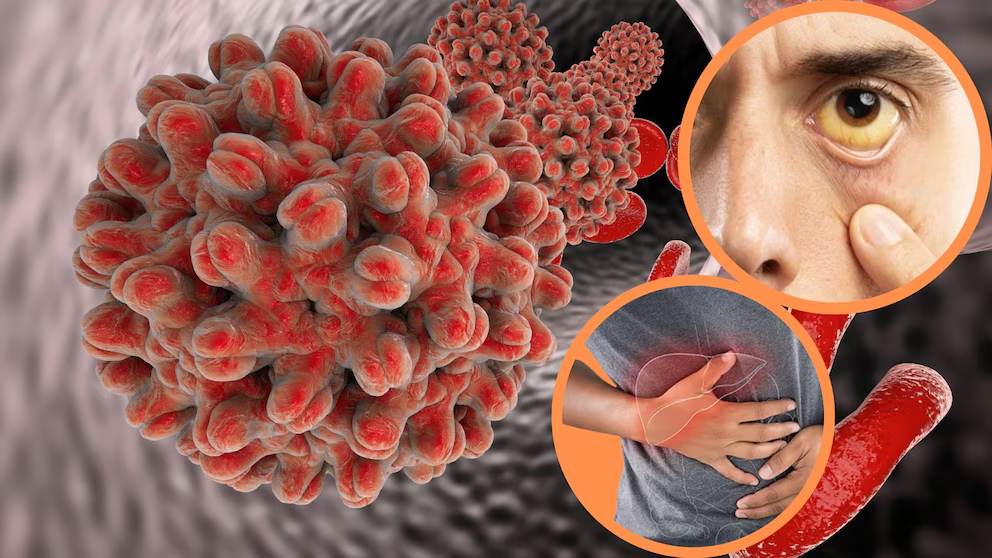
Among the warning signs are fever, general malaise, abdominal pain, dark urine, and yellowing of the skin and eyes.
The recommendation takes on special importance as surveillance actions continue in the communities where the cases were identified.
Health authorities assured that they will maintain permanent monitoring of the situation through epidemiological surveillance, water quality monitoring, and coordination with the involved institutions.
The objective is to timely identify new cases, prevent the spread of the disease, and ensure that water supply systems meet the necessary sanitary conditions.
For now, the official report states that the outbreak totals 14 cases, with no hospitalizations or deaths, while the water system that presented the reported deficiencies has already undergone corrective measures and was subsequently verified as fit for consumption.