


Public health officials in New York believe the state’s measles outbreak may be more widespread than official figures indicate, as infections continue to spread in rural communities with low vaccination rates. Health authorities in Otsego and Seneca counties said additional cases may remain unreported.
As of October 10, the New York State Department of Health had confirmed 26 cases, including eight newly reported infections. The figures are based on cases reported by local health departments, but officials say the actual number could be higher as they identify additional infections among family members and other close contacts.
Scott King, Seneca County’s public health director, warned that reported case counts can be misleading because one confirmed infection may lead investigators to discover several other sick people in the same household. He said local teams are interviewing patients and investigating probable cases, although some families have been reluctant to cooperate.
The outbreak prompted Governor Kathy Hochul to declare a state of emergency last week to expand measles testing and vaccination efforts. State health officials reported that more than 1,200 doses of the measles, mumps and rubella (MMR) vaccine had been administered in rural areas of New York.

Unvaccinated communities face greater exposure
Heidi Bond, public health director for Otsego County, said the state dashboard showed 21 measles cases in the area. She reported that all identified patients were unvaccinated and that many were adults. State Health Commissioner James McDonald previously said that approximately two-thirds of confirmed cases at that point involved unvaccinated adults.
Health teams have been going door to door to offer MMR vaccinations in affected areas. Bond said some residents believe they do not need the vaccine because they or their families have already had measles. Officials are trying to reach people who remain unvaccinated and have not yet been exposed, while also encouraging those who have had measles to protect themselves against mumps and rubella.
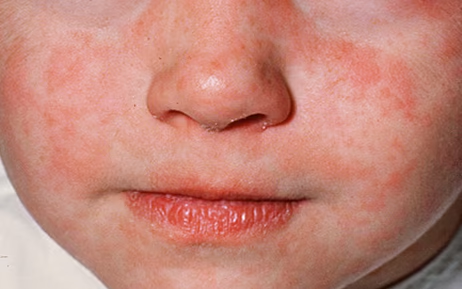
Measles is highly contagious and commonly causes a skin rash, high fever, watery eyes and a runny nose. In severe cases, it can lead to brain inflammation, hospitalization or death, according to the Centers for Disease Control and Prevention.
The outbreak is affecting communities with low vaccination coverage. Measles has also spread among Amish communities in Pennsylvania and Ohio, and some New York counties reporting cases, including Seneca and Otsego, have significant Amish populations.