Moscow.– The President of Russia, Vladimir Putin, exercised his right to vote this Friday through electronic voting in the Russian legislative elections, a method he also used in the 2021 parliamentary elections and the 2024 presidential elections.
The Kremlin released a short video of the Russian leader in front of a computer in his office, in which the moment he casts his vote can be seen.
Putin had already voted remotely in 2021, during the legislative elections; in 2022, to elect the deputies of Moscow; in 2023, during the mayoral elections of the Russian capital, and in the 2024 presidential elections.
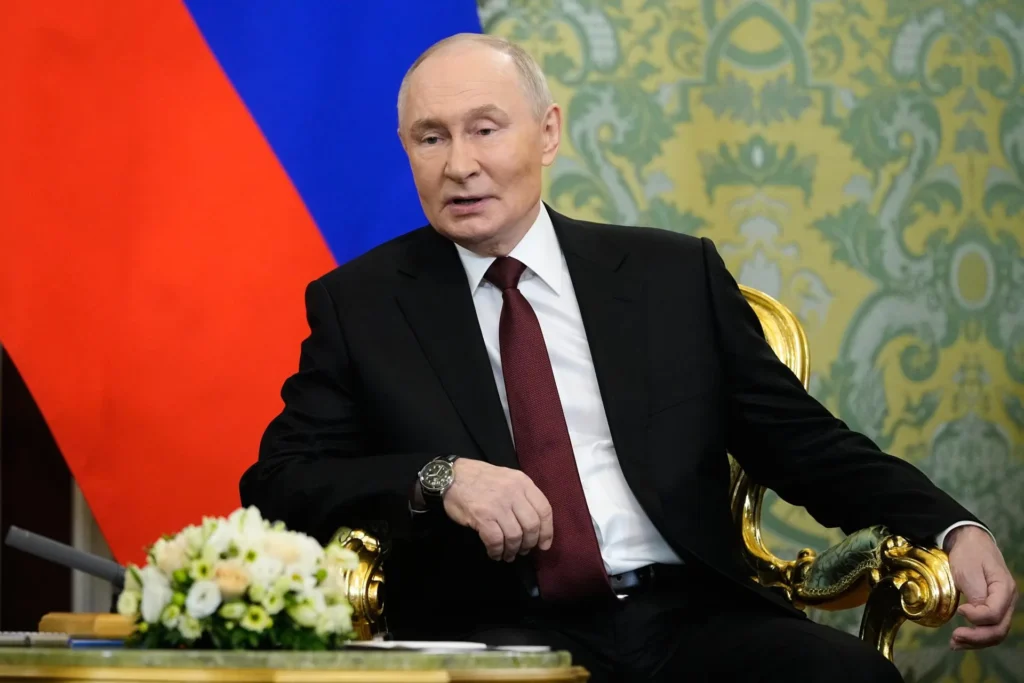
This week, Putin called on Russians to participate in the legislative elections and linked voting to support for the war effort in Ukraine. Ten of the eleven parties running in these elections agree on supporting the military campaign, according to EFE.
Electronic voting in Russia
10% of Russian voters had already exercised their right to vote, according to the latest data from electoral authorities cited by EFE.
More Read

Regarding electronic voting, participation among citizens registered to use that method exceeded 50% during the first hours of the day.

Polling stations opened in Moscow at 08:00 local time (05:00 GMT), nine hours after those in the Chukotka district and the Kamchatka Peninsula, the country’s two easternmost regions.
More than 111 million Russians in 89 regions are called to the polls over three days to elect the 450 deputies who will make up the Duma, the lower house of Parliament, in more than 90,000 polling stations.
More Read

Russian citizens residing in 152 countries will also be able to exercise their right to vote, where the Ministry of Foreign Affairs has set up 333 polling stations, many of them in diplomatic missions.
Questioned electronic voting
The United Russia party seeks to maintain the constitutional majority it obtained in 2016, while other groups aspire to gain representation in the Duma.
Among them are the communists, who have questioned electronic voting, considering that it can be used to manipulate the results. Sectors of the Russian opposition in exile have also expressed criticism of this method of voting.
Yabloko, an opposition group against the war in Ukraine, was excluded from the elections by a decision of the Russian Supreme Court. However, candidates linked to the party are still competing in electoral districts.