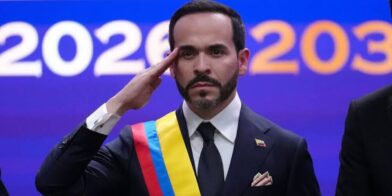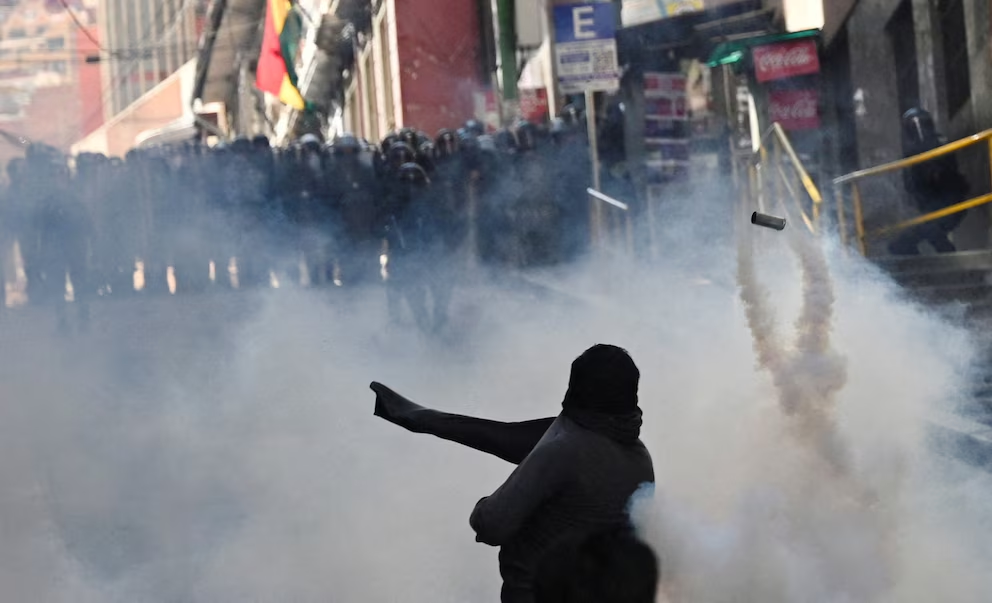
Bolivia registered a new day of massive protests in La Paz that left clashes between protesters and riot police, with tear gas, stones and dynamite cartridges, in an escalation of pressure to demand the resignation of President Rodrigo Paz, as confirmed by the AFP agency.
Farmers, workers, miners, transporters, and teachers —many of them with helmets, ponchos, and indigenous flags— set off from El Alto towards the center of the political capital, where access to the main square remains guarded with fences and hundreds of troops. AFP registered at least three detainees during the days.

Paz, with barely six months in power, faces what the mobilized sectors describe as the worst economic crisis in the Andean country in four decades. Year-on-year inflation reached 14% in April, according to official data.
The initial claims —salary increases, quality fuels, and price stabilization— radicalized into a demand for resignation. “Six months of government and it has not been able to solve the basics, the prices of the family basket. We have to choose between buying meat or buying milk,” Melina Apaza, 50, originally from the mining region of Oruro, told AFP. A protester throws a tear gas grenade towards the police during a march demanding the resignation of the Bolivian president, Rodrigo Paz, while the country’s economic and energy crisis worsens due to the shortage of US dollars and the fall in national energy production, in La Paz, Bolivia, May 18, 2026. REUTERS/Claudia Morales Omar Sandor, a 47-year-old miner, added another accusation: “He is trying to privatize state-owned companies and our natural resources, such as lithium”, according to the agency. Faced with social unrest, the government announced this week a cabinet reshuffle with officials with “listening skills”. On Thursday, it appointed a new Minister of Labor as the first move in that restructuring. The measure did not stop the mobilizations. Road blockades were close to fifty throughout the country, according to official data, and the marches continued on Friday with the same intensity as on Thursday. The government claims that radical groups seek to disrupt the democratic order and accuses former President Evo Morales —a fugitive in a case of alleged trafficking of a minor— of orchestrating the protests. A police officer on a motorcycle fires tear gas at protesters during a march demanding the resignation of the President of Bolivia, Rodrigo Paz, while the country’s economic and fuel crisis worsens due to the shortage of US dollars and the fall in national energy production, in La Paz, Bolivia, May 18, 2026. REUTERS/Claudia Morales Political scientist Ana Lucía Velasco warned the agency that the negotiation became structurally difficult: “You can’t give up a little or give up for a few days. Once the demands escalated to that, the negotiation is already complicated. Now it’s a war of attrition”. Peace came to power after the electoral collapse of socialism in the 2025 presidential elections, in which Morales was prevented from running. He gathered the majority of the votes from rural and popular sectors, ending 20 years of left-wing governments headed by Morales (2006-2019) and Luis Arce (2020-2025). Protesters say they feel defrauded and unrepresented. In a parliament of 130 deputies, the left has barely 10 representatives.