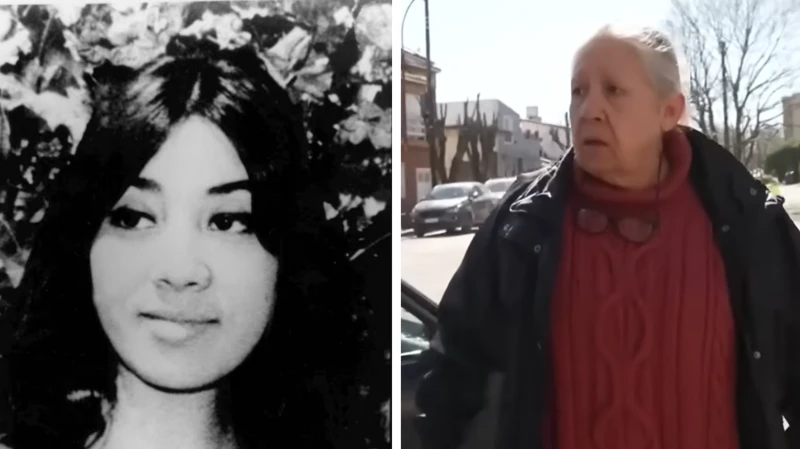
The Chilean woman Bernarda Rosalba Vera Contardo was not actually a disappeared detainee.
The woman, who for decades was considered one of the victims of forced disappearance during the Augusto Pinochet dictatorship in Chile, is alive and resides in Argentina.
Since he was last seen in October 1973, shortly after the coup d’état, he remarried, had children, obtained Swedish nationality, and lived for years in the province of Buenos Aires.
There, living in a seaside resort in Miramar, she was found in the middle of last year by a team from Chilevisión, a Chilean television station.
And now, justice has confirmed that it is the same person who was believed to be dead for years.
More Read
The DNA expert report commissioned by the visiting judge for Human Rights cases, Álvaro Mesa Latorre, allowed for the confirmation this Monday of the true fate of the now 80-year-old woman.
The scientific background, corresponding to the genetic profile and the samples of their relatives available in the Genetic Bank of Relatives of Detained and Executed Politicians of the Legal Medical Service, accredited an identification probability of over 99.9999%, the Chilean justice system reported.
Sources from the Chilean Judiciary tell BBC Mundo that the woman was asked to undergo a test, to which she reportedly agreed.
More Read
The official version
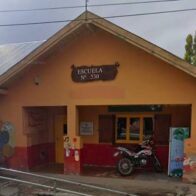
She was married and had a 5-year-old daughter. She worked as a teacher at a public school in Puerto Fuy, within the Panguipulli Forestry and Lumber Complex, in the Los Ríos Region, in southern Chile.
She was an active political militant. She was part of the Movement of the Revolutionary Left (MIR) and the Revolutionary Peasant Movement (MCR).
The Truth and Reconciliation Commission, formed in the first months of Patricio Aylwin’s government (1990) to reconstruct the human rights violations committed after the end of the Chilean dictatorship, received the testimony of Bernarda Vera’s parents, who had lost track of her shortly before the 1973 coup.
The Rettig Report, which in 1991 published the work carried out by said commission, included her then as one of the 1,469 victims of forced disappearance in Chile.
The report established that she had been detained by military personnel on October 10, 1973, in Liquiñe, in the Andean foothills area in the south of the country.
Then, the report points out, she would have been allegedly executed along with 15 other people.
More Read
“It is presumed that she was executed on the Villarrica bridge over the Toltén River, along with the other detainees from Liquiñe. Since the moment of her arrest, she remains disappeared,” states the official document published 35 years ago.
“According to what was reported by other witnesses, she was hiding somewhere in the Lumber Complex, as she was being intensely sought by the military authorities.”
“Her relatives had been informed that she had been sentenced to death in absentia in the proceedings that would have been initiated for the assault on the Neltume Police Station, in which she was accused of having participated,” adds the Rettig Report.
The report maintains that the state agents “acted divided into several groups, which met at the Coñaripe junction, close to all the places where the arrests were carried out. There, they took the road to Villarrica and on the bridge over the Toltén River, located at the entrance to the city, they killed them and threw their bodies into the waters”.
The alternative version
The first doubts about the veracity of the events surrounding Vera’s disappearance came from one of her fellow activists.
According to a testimony that is in the Neltume Museum archive and was also broadcast by Chilevisión, former MIR member José Manuel Bravo recounted that a large group of people allegedly managed to escape from the military in October 1973 and went deep into the mountains.
Among them, he stated, was Bernarda Vera, whose code name within the organization was “Anita”.
“Anita was a thin woman, but with enough vitality to endure that life of walking in the mountains… she had to suffer all the harshness of being in the mountains, with thousands of soldiers on her tail,” it says in the record.
In his book De Carranco a Carrán: las tomas que cambiaron la historia, Bravo reveals as early as 2012 that he and Bernarda Vera stayed in the mountains until December 1973.
That is to say, two months after the date the alleged arrest of alias “Anita” was reported.
It is around that time that it is believed the young woman managed to escape clandestinely from Chile to Argentina, with the help of the Swedish MIR member Svante Grände.
After a period in the South American country, according to local press, Bernarda Vera left with her Argentine husband and a newborn son, heading to Sweden.
In that country, Bernarda Vera received her first visa and residence permit in 1978.
From there, he built a life and had two more children.
Already in 1984 she would become a Swedish citizen and would return to Argentina at the end of the 90s.
“He just wants to live a life in peace”
Bernarda Vera managed to escape the cameras the day the press teams arrived at her door.
His son Maximiliano, however, spoke with them off the record.

“She says she always imagined this moment would come, that someone was going to find her.”
“That she is not going to give up the life she has always led, that she is a strong woman and is not afraid of anything,” stated journalist Florencia Valenzuela from Chilevisión, who found Bernarda Vera and spoke with Maximiliano on that occasion.
And he added: “Bernarda says she does not want to talk about her past, her son reaffirms that she only wants to live a life in peace”.
The search for his daughter
The daughter that Bernarda Vera left in Chile was only 5 years old in 1973.
In the report published by Chilevisión in 2025, Ida Sepúlveda, president of the Association of Detained-Disappeared and Executed Political Prisoners of Valdivia and a close associate of Bernarda, spoke out.
The woman said that for years they had no news about her whereabouts, that they searched for her tirelessly, and that her daughter had no idea she was alive.
“I looked for her for a long time, so, I am certainly very confused. I am really now in a situation where I really don’t want to believe it either… that she is alive,” said Ida Sepulveda.
The press team that revealed this case contacted Bernarda Vera’s daughter and told her that they had found her in Argentina.
On that occasion, the 58-year-old woman did not want to give an interview, but she reportedly expressed disbelief.
“She is convinced that if her mother were alive, she would have contacted her,” Valenzuela stated in his report.
In conversation with BBC Mundo, the journalist says that “when I went to talk to her we spent a long time talking, it was super hard because you go as a journalist, I needed to tell her what we were doing; that we had found her mom. And she didn’t believe it. It was hard because you don’t know what the family history is. We did know that she as a daughter had been looking for her for a long time.”
This Monday, the visiting minister confirmed the truth to the daughter by revealing the results of the DNA expert report.
Whether or not the family had knowledge of Vera’s destination is now a question that the authorities in Chile are asking themselves.
Bernarda’s mother received a lifetime reparation pension as a relative of a victim of human rights violations, which she was entitled to by law. Her daughter, who also has a disability, also receives benefits.
After it was confirmed that Bernarda Vera is not actually a disappeared detainee, members of the Chilean right have requested an investigation into whether a crime has been committed or if those funds were received in bad faith.
Deputies aligned with the government of right-wing President José Antonio Kast demanded that these resources be recovered by the State and called for accountability.
The judicial case regarding the disappearance of Bernarda Vera was opened in 2009, after the Human Rights Program of the Ministry of the Interior filed a complaint for her disappearance.
That case was temporarily dismissed in 2014 because the circumstances of his disappearance could not be proven.
According to the lawyer who filed the lawsuit, Vladimir Riesco, Bernarda Vera’s daughter testified in that case and stated that she had no contact with her mother since 1973.
In 2025, the National Search Plan, an initiative promoted by the government of former leftist president Gabriel Boric to find the final whereabouts of the disappeared detainees, contacted her daughter after confirming inconsistencies in the case of Bernarda Vera.
Before that, Riesco stated to the newspaper El País Chile, his daughter “knew what some of her mom’s friends had said, old people from that era. But they were all hearsay witnesses and there was no one who had seen an arrest. She never in her life had contact with her mom.”
“I know that the daughter always acted in good faith, because she had no prior record and only knew what was in the Rettig Report,” he added.
The political and judicial edge
The television report not only provided clues about the true whereabouts of Bernarda Vera.
He also noted that various State authorities had been aware for years of inconsistencies regarding their destination and did not act diligently.
After the background information became known in 2025, the case opened a flank for then-President Boric.
Former police officer Sandro Gaete, who was part of the Search Plan and later resigned, accused that the authorities of that administration had evidence of this fact in 2024 and did not report it to the justice system.
According to their version, the Chilean State handled information dating back to 2007.
Boric’s government stated at the time that it had submitted the information it had in a timely manner to Minister Álvaro Mesa, who opened the investigation that has now provided the definitive answer regarding the case.
The current government has reported that they will order summary investigations to establish potential administrative responsibilities and will officially notify the State Defense Council so that legal actions may be pursued.
What still remains unanswered are Bernarda Vera’s reasons.