

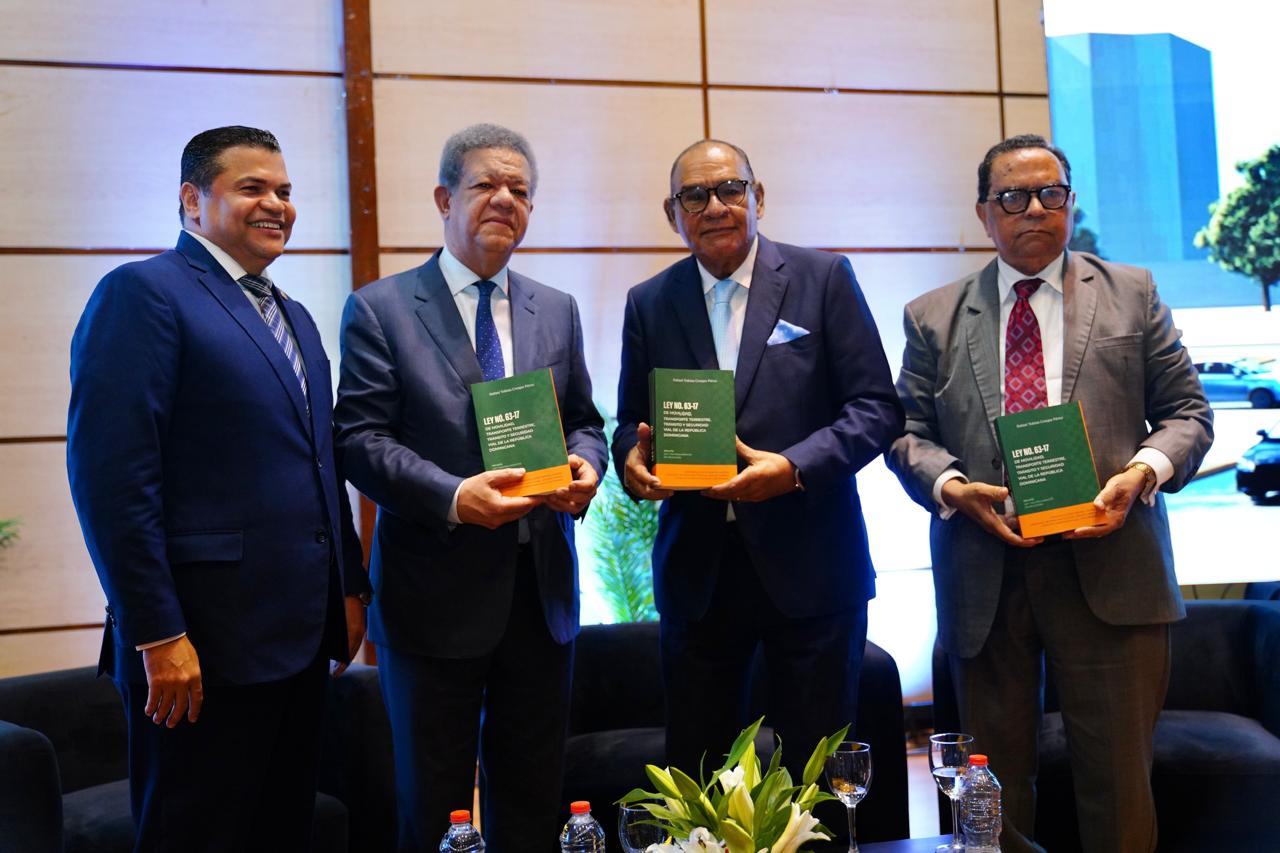

Fuerza del Pueblo (FP) deputy Tobías Crespo, former director of the defunct General Directorate of Traffic and Land Transportation, lamented that in the Dominican Republic, more money is spent on attending to the fatalities and injuries of traffic accidents than is invested in the education sector.
“The World Health Organization estimates that medical care, rehabilitation, and productivity losses (man-hours and years of life lost due to deaths or disability-adjusted life years from road accidents) represent approximately 3% of GDP in most countries, and up to 5% in low- or middle-income nations (RD$ 332,030.5 Million, 4% of Education in 2026),” he explained.
The congressman, who delivered a speech at the launch of his work “Law No. 63-17 on Mobility, Land Transportation, Transit and Road Safety of the Dominican Republic: History, Transformation and Institutional Legacy”, with the presence of former President Leonel Fernández Reyna, highlighted that the more resources the authorities invest in education for prevention, the less would be spent on the care of victims, injured family members, and the deceased.
“The local impact, according to the Dominican Association of Health Risk Administrators (ADARS) and the healthcare sector, estimates that the direct cost of treating a polytraumatized patient due to a traffic accident ranges between RD$300,000 and over RD$2,000,000 pesos. These medical expenses place massive financial pressure on the Dominican Social Security System (SDSS), generating millionaire deficits in the system, which requires frequent actuarial studies,” he noted.

We recommend reading:
Tobías Crespo indicated that payments from the insurance sector for traffic accidents have experienced a sharp increase, recording RD$16.957 billion in one year. “In total, claims (accidents and other events) cost the insurance market RD$62.842 billion, with an average of RD$46 million daily allocated specifically to road accidents.”
“Traffic accidents represent a major pandemic with more deaths than even Covid. Every day, eight to nine people die in the Dominican Republic, and more than three thousand per year,” he lamented.
“This book that we are putting into circulation is a work that gathers the historical, institutional, and legislative process that gave rise to one of the most important reforms for the organization and modernization of the land mobility and transport system of our country,” its author pointed out.

The congressman said he hopes the work will be embraced as part of the curriculum in public and private schools and universities so that students not only learn the details of the important law, but so that every day we have more conscious and better-educated citizens on the subject.
The prologue of the work was in charge of the director of the newspaper Listín Diario, Mr. Miguel Franjul, who made a brief reflection on the contribution of the publication; to the legal framework, mobility, and road safety in the Dominican Republic.
The welcoming remarks were delivered by the general director of the National Library, university professor and writer Rafael Peralta Romero, who emphasized its importance in current times.
The launch of the work, held at the Professor Juan Bosch Auditorium, was also attended by magistrates of the Constitutional Court, the Supreme Court of Justice, representatives of the Superior Electoral Court, the Attorney General’s Office, the Central Electoral Board, senators, deputies, relatives of Deputy Tobías Crespo, and other special guests.
The release of this work, which includes a diagnosis of the sector at the time of the start of the first official consultation processes, the history of the sector, the legislative process of the law’s formation where the so-called spirit of the legislator can be expressed, contributions on the projected institutional reform, and a legal analysis of the most structural normative aspects in the content of this regulation.
Also the public policies still pending to be fulfilled and applied, doctrinal and jurisprudential aspects that occurred after its enactment on February 21, 2017, the full text of Law No. 63-17 on Mobility, Land Transport, Transit and Road Safety of the Dominican Republic and the 20 regulations out of a total of 32 that to this day the Board of Directors of the National Institute of Transit and Land Transport (COD-INTRANT) has approved and which for the most part have not been put into practice or application.
It is worth remembering that Law No. 63-17 on Mobility, Land Transport, Traffic and Road Safety, authored by Tobías Crespo, constitutes one of the most transcendental and important laws that are part of the legislation of the Dominican Republic.