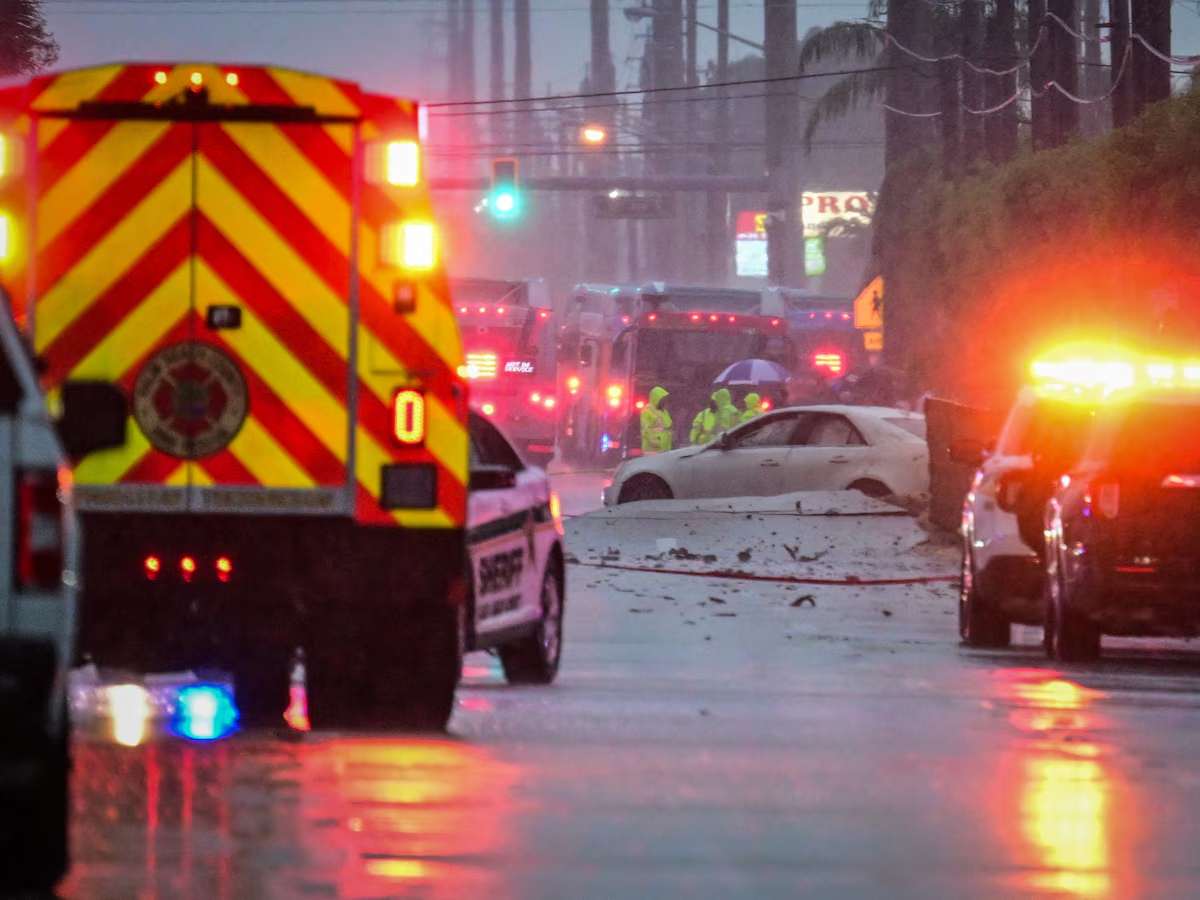

The final moments of the Learjet 60 flight that crashed in a residential area of Palm Beach County, Florida, were recorded in the communications between the crew and air traffic controllers. In the audio, it can be heard how the pilots reported turbulence and precipitation, requested authorization to climb, and subsequently alerted that the plane was losing altitude at an extreme speed.
The recording ends with screams and expressions of despair, including: “We’re going to crash into the ground” and “We’re running out of time!”.
The accident occurred on Sunday near Cresthaven, in the vicinity of West Palm Beach. The nine people on board died, as confirmed by U.S. Secretary of Transportation Sean Duffy.
The aircraft had taken off from Austin-Bergstrom International Airport, in Texas, and was bound for North Eleuthera Airport, in the Bahamas.

Pilots reported turbulence and possible icing
In the first recorded exchanges, the crew reported that they were experiencing moderate turbulence and mentioned difficulties related to icing. They also communicated that the outside temperature was 47 degrees below zero.
The air traffic controller replied that they were working to incorporate the aircraft into their airspace and asked the pilots to inform them if they needed assistance.
The conversation initially proceeded normally. One of the crew members requested to be informed if they encountered more favorable flight conditions. From the ground, the controller indicated that they could expect an improvement once they entered their airspace.
However, the situation changed when the pilots reported precipitation and requested authorization to climb to flight level 370, equivalent to 37,000 feet of altitude.

The controller authorized the maneuver and instructed them to maintain the established heading, without turning further to the right due to the presence of another aircraft.
Communication became an emergency
Shortly after, one of the pilots reported that the aircraft was descending to 8,000 feet and issued the international distress signal: “Mayday, Mayday.”
Next, he communicated that the plane was losing altitude at a rate of 10,000 feet per minute. This figure corresponded to the speed of the descent and not to the altitude at which the aircraft was located.
The controller confirmed that they had received the message. The crew then declared an emergency and reported that the aircraft was in an overspeed condition.

According to the recording, the descent reached 20,000 feet per minute. From the ground, the controller indicated to the pilots that they could select whatever altitude they deemed necessary and asked them what type of assistance they required.
The response from one of the crew members was: “We are going to crash into the ground”.
Communication continued for a few moments. The pilot reported that the aircraft was descending at 22,000 feet per minute and was banked at approximately 60 degrees.
Amidst the shouting, another phrase was recorded: “Look outside! Holy…! We’re running out of time!”
The controller tried to maintain contact and repeatedly called the crew to see if they could hear him, but received no further responses.
An explosion was captured on video
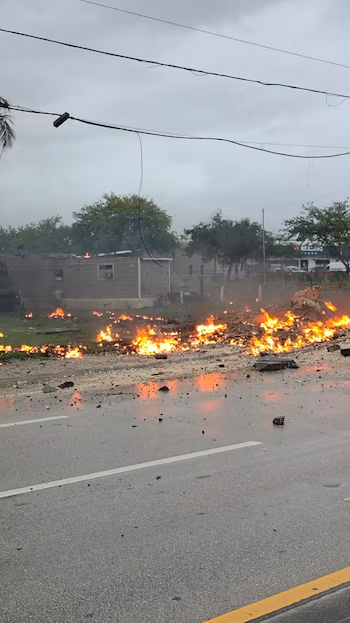
A dashboard camera recorded the moment the aircraft crashed next to an avenue in West Palm Beach. The footage shows a fireball on the side of the road and a plume of smoke that rose after the explosion.
Flight tracking data indicated that the Learjet lost about 8,230 meters of altitude in approximately one minute before the signal was lost.
Other videos released after the accident show the plane plummeting and exploding into a large fireball, near vehicles that were driving in the area.
The impact occurred in the vicinity of Military Trail, one of the main avenues in West Palm Beach. Authorities interrupted vehicular traffic on a stretch of that road while the corresponding work was being carried out.
Investigating what caused the fall
The Federal Aviation Administration (FAA) will send a team to collaborate with the National Transportation Safety Board (NTSB), the agency in charge of investigating aviation accidents in the United States.
The investigation must establish what happened in the cockpit, why the aircraft began to lose altitude abruptly, and whether weather conditions had any impact on the emergency.
Although the pilots mentioned turbulence, precipitation, and potential difficulties related to icing, it has not yet been determined whether these factors caused the accident.
Until now, the identities of the nine deceased individuals had not been publicly disclosed.
“We are running out of time”: the dramatic distress call from the Learjet 60 pilots before crashing in Florida