

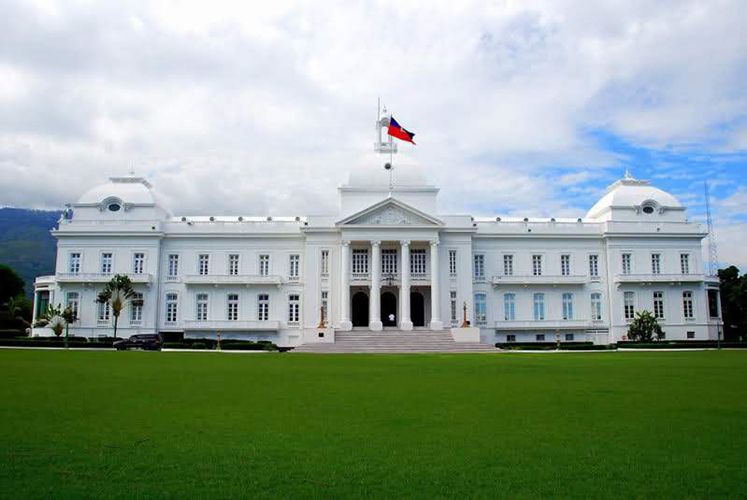

Haiti, officially known as the Republic of Haiti, is a Caribbean country with a unique and rich history. Located on the island of Hispaniola, which it shares with the Dominican Republic, Haiti is celebrated for being the world’s first black republic and the first country in Latin America to gain independence. Its legacy of the struggle for freedom, its rich cultural heritage, and its historical and contemporary challenges have positioned it as a territory of enormous relevance in world history.
Indigenous origins and European colonization
Before the arrival of the Europeans, Haiti was home to the Taíno, an indigenous group that called the island “Ayiti,” which means “land of mountains.” The Taíno lived in communities organized under a system of chiefdoms and practiced agriculture, fishing, and crafts. However, the arrival of Christopher Columbus in 1492 marked the beginning of a new era. Columbus claimed the island for the Crown of Castile, naming it “La Española.”
Spanish rule transformed the island, bringing disease, slavery, and forced labor, which led to the collapse of the Taíno population. As the indigenous people dwindled, Spanish colonizers began bringing African slaves to supply labor for sugar plantations and gold mines.
French colonization and the economy of Saint-Domingue
In the 17th century, France began settling the western part of Hispaniola, consolidating its control through the Treaty of Ryswick in 1697. This territory, known as Saint-Domingue, became one of the richest colonies in the world thanks to the exploitation of sugar, coffee, and other agricultural products. Its economy depended entirely on African slave labor, and by 1780, more than 500,000 African slaves worked on its plantations, making Saint-Domingue “the pearl of the Antilles.”

The Haitian Revolution: A fight for freedom
The economic boom of Saint-Domingue contrasted with the inhumane conditions of the African slaves. In 1791, inspired by the ideals of the French Revolution and led by figures such as Toussaint Louverture, the slaves rebelled against the French colonists. This revolution, known as the Haitian Revolution, is the only slave rebellion in history that resulted in the founding of an independent state.
After years of conflict, in 1804 Jean-Jacques Dessalines proclaimed the independence of Haiti, making it the first free country in Latin America and the Caribbean. Haiti adopted its name as a tribute to its indigenous roots. However, France imposed an exorbitant financial indemnity to recognize its independence, which marked the beginning of centuries of economic hardship.
19th Century: Internal struggles and conflicts with its neighbors
The 19th century was characterized by political instability and internal divisions between the black and mulatto elites. Furthermore, Haiti faced conflicts with the Dominican Republic, which gained independence in 1844 after 22 years of forced unification under Haitian rule.
Haiti also sought to consolidate its national identity while facing international pressures. Despite these challenges, its independence set a global precedent in the fight against slavery and colonialism.
20th Century: Foreign interventions and dictatorships
In 1915, the United States occupied Haiti under the pretext of stabilizing the country. This occupation, which lasted until 1934, modernized some infrastructure but left a legacy of resentment. Subsequently, the country suffered under the dictatorial regime of François “Papa Doc” Duvalier and his son Jean-Claude “Baby Doc”. These regimes were marked by repression, the plundering of resources, and the strengthening of the “Tonton Macoutes,” a feared paramilitary force.
2010 Earthquake and contemporary crisis
In the 21st century, Haiti faced one of the most devastating natural disasters in its history. The 2010 earthquake, with a magnitude of 7.0, left more than 300,000 dead and displaced over a million people. The international response helped alleviate the emergency, but reconstruction was slow and exposed the country’s structural weaknesses.
In 2021, Haiti faced a crisis once again following the assassination of President Jovenel Moïse. This was compounded by natural disasters such as the 2021 earthquake and the rise in gang violence, deepening political and social instability.

Haiti today: Cultural resilience and hope
Despite its challenges, Haiti remains a symbol of resilience and hope. Its rich cultural heritage, from compas music to folk art and Vodou spirituality, continues to stand out in the Caribbean and beyond. Haiti faces the future with a mix of challenges and possibilities, seeking ways to leverage its history and culture to overcome adversity.