


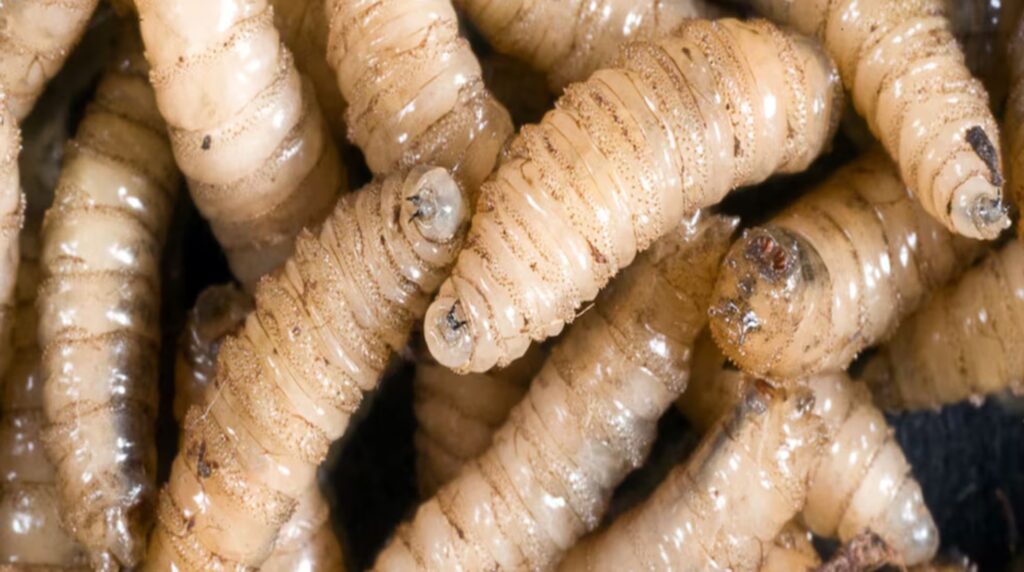
The New World screwworm (Cochliomyia hominivorax), also known as screwworm fly larva or screwworm, is a parasitic larva that can affect humans, although its main target is warm-blooded animals.
When we talk about myiasis, we are referring to a parasitic infestation caused by fly larvae that feed on living or dead tissue of mammals, including humans. In that sense, myiasis caused by the New World screwworm is usually a disease of livestock, but it can also affect humans.
The Centers for Disease Control and Prevention (CDC), report that New World screwworm infestation is a type of myiasis that occurs when the larvae of screwworm flies infest the living flesh of warm-blooded animals, most commonly livestock and less commonly birds, pets, and people.
The screwworm occurs in people with open wounds; it can also occur in other body cavities with mucous membranes (e.g., the nostrils).
The name screwworm refers to the feeding behavior of the larvae, which bore or perforate healthy tissues. The larvae of the New World screwworm cause great damage by opening the host’s tissue with their sharp mouth hooks.

The New World screwworm is endemic to the tropical and subtropical regions of the Americas, including countries in South America, Cuba, Haiti, and the Dominican Republic.
People at higher risk include:
- Those who live in rural areas in regions or countries where the New World screwworm is endemic and where livestock is raised.
- People who frequently work with livestock.
- Anyone with open sores or wounds, including from a recent operation, as flies lay eggs in open sores.
- Vulnerable populations, including immunocompromised individuals, those at the extremes of age, and malnourished individuals.
Symptoms in humans
- Intense pain and sensation of movement in the wound
- Foul-smelling discharge
- Swelling and redness
- Fever (in advanced cases or with secondary infection)
- Visibility of larvae in the wound
How it spreads
New World screwworm infestations begin when a female fly lays eggs in a wound or other opening on a live warm-blooded animal.
You may be interested in: Mexico confirms six cases of myiasis by screwworm in humans
The smell of a wound or an opening such as the nose or eyes, the umbilical cord of a newborn animal, or the genitals attracts female flies. Wounds as small as tick bites could attract a female fly to feed. A female can lay between 200 and 300 eggs at a time and could lay up to 3000 eggs during her lifespan of between 10 and 30 days.
Treatment
The only way to treat New World screwworm infestation is to physically extract the larvae from the infested tissue. All suspected New World screwworm larvae must be collected and placed in a leak-proof container with 70% ethanol.The volume should be sufficient to completely submerge the larvae, which will kill and preserve them for confirmatory diagnostic testing. If 70% ethanol (or more potent) is not available, 70% isopropanol (or more potent) or 5 to 10% formalin are acceptable alternatives, although they are not the preferred ones.

This is also treated with antibiotics to prevent or treat bacterial infections and in some cases, antiparasitic drugs (such as ivermectin) are used.