Hiroshima (Japan).- Eight decades after the
bombing in Hiroshima and Nagasaki, the memory of the survivors fades as their number dwindles.
Artificial Intelligence (AI) now emerges as a key tool to preserve the memories of the horror they experienced.
AI, increasingly present in our daily lives, could be a key tool in the near future, when there are no more “hibakusha” -survivors of the atomic bombings- to share their testimony with the world.
This is the proposal from the Japanese public broadcaster NHK, which has developed the
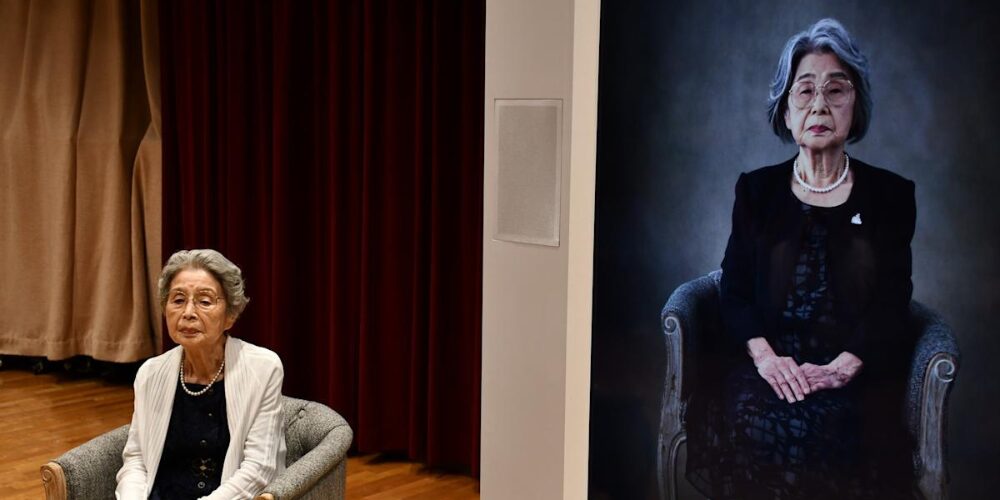
Hibakusha Testimony Simulator, a large high-definition video screen that allows users to ask questions to survivors through a microphone and receive an answer.
“As a public chain in Hiroshima, it is an important issue to imagine what a world without hibakusha will be like and we think about what to do to leave their memory,” explained NHK content producer Seiko Ikuta to EFE, during a press trip last July organized by the
Foreign Press Center of Japan (FPCJ, in English).
For Ikuta, there are already many witness videos, but these are “unilateral” and this causes listeners to “not concentrate”, therefore they decided to create a tool in which questions and answers could be asked and that generates a “realistic” feeling
The tool, which does not use generative AI, allows citizens to ask survivors any kind of question; from how they experienced the day of the bombing to what music they listened to on the radio at that time.
You may be interested in: Artificial Intelligence: What can we expect in the next 10 years?
Then, using keywords, interpret the question and search for the most appropriate answer among a file of about 900, creating the feeling that a real conversation is being had with the “hibakusha”.
The main difference with the recorded testimonies that exist in both the Hiroshima Peace Memorial Museum and the Nagasaki Atomic Bomb Museum is that the user adopts a prominent position and a more active listening is generated.
The Message of a Survivor
For the time being, the tool only allows interaction with the survivor
Yoshiko Kajimoto, 94 years old, who was in an ammunition factory at the time of the bombing about 2.3 kilometers from the hypocenter of the same.
Although he initially had some reservations about the project, Kajimoto wanted to participate in it because he is aware that there are fewer and fewer survivors alive and it is important that their memory passes on to the new generations.
“80 years have passed, a long time, and many people who suffered from the atomic bomb and the war have died, there are only a few elders like me left,” he told EFE, and added that it is precisely now that he wants to tell “as many people as possible about the tragedy and how hard it was.”
Kajimoto is aware that in 10 years, on the 90th anniversary, there will probably be no survivors left alive, so his only wish is that his message “reaches as many people as possible”.
The number of hibakusha in Hiroshima and Nagasaki has fallen below 100,000 for the first time since records began, according to data released last July by the Japanese Ministry of Health, Labour and Welfare.
At the end of March,
99,130 people held the official certificate of victim, 7,695 fewer than the previous year. The average age of the survivors increased to 86.13 years, compared to 85.58 the previous year, reflecting the aging of a population marked by the atomic tragedy that occurred almost eight decades ago.