
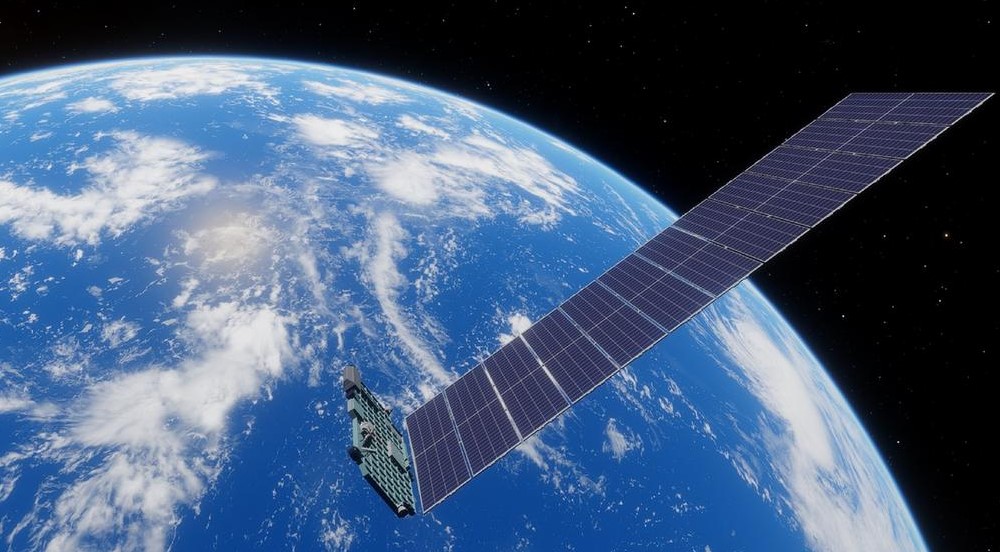
With over 7,000 SpaceX Starlink satellites orbiting Earth, scientists have found an unprecedented opportunity to study how the Sun affects these devices. The results are concerning: the Sun is accelerating their destruction.
During the solar maximum, a period of intense solar activity that occurs every 11 years (the most recent was at the end of 2024), geomagnetic storms increase. These storms heat the Earth’s atmosphere, expand it, and increase the resistance faced by satellites, causing them to descend from their orbit more rapidly.
You may be interested in: Trump and Elon Musk, members of the PLD

Denny Oliveira, from NASA’s Goddard Space Flight Center, led an investigation that confirmed this phenomenon. “When there are geomagnetic storms, satellites re-enter earlier than expected,” he explained to New Scientist. In these periods, the lifespan of satellites can be reduced by up to 10 days.
The unprecedented aspect of the moment is the scale: SpaceX launches new satellites every week with the goal of having more than 30,000 in orbit. This has allowed experts to observe previously invisible patterns. In fact, between 2020 and 2024, 523 Starlink satellite re-entries were recorded. In a recent event, 37 satellites orbiting below 300 km re-entered after only five days, when they would normally have lasted at least 15.
More Read

A warning sign emerged in August 2024, when a 2.5 kg piece of a Starlink satellite was found on a farm in Saskatchewan, Canada, after surviving re-entry. It is the only confirmed case, but raises questions about what other debris might be going unnoticed.
Samantha Lawler, from the University of Regina, emphasizes the importance of this stage: “It’s the first solar maximum we’re experiencing in the era of megaconstellations. It’s crucial to study these effects now.”