Lima.- A group of 150 social organizations from various guilds and collectives from all regions of Peru signed a national consensus in which they warn of a setback in human rights in the country, and warn that many electoral proposals threaten them, such as introducing the death penalty or withdrawing from the Inter-American Court of Human Rights (IACHR).
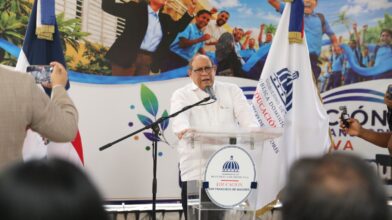
The document was presented this Monday by the executive secretary of the National Human Rights Coordinator (Cnddhh), Tania Pariona, and representatives of organizations that have signed it.
“This consensus consolidates all the proposals and claims of the sectors that have been highly affected in our rights, both individual and collective,” Pariona indicated.
The Human Rights Situation in Peru
The ‘National Consensus for Human Rights’ is signed by groups, networks, unions of transporters, farmers, entrepreneurs, feminist organizations, youth groups, LGBTQ+ community groups and indigenous peoples, among others.
They defined what has happened in the country over the last three years as “parliamentary authoritarianism,” referring to a Congress that has operated with the approval of the Executive to promote and modify numerous laws that have represented a serious setback in human rights, directly affecting the country’s democracy.
For example, in this period an amnesty was approved for police officers, military personnel, and self-defense committees during the internal armed conflict (1980-2000), a statute of limitations was legislated for crimes against humanity, the law on equal opportunities between men and women was eliminated, which removes sex education in schools; and therapeutic abortion has been restricted.
“The two parties that are currently leading the polls are precisely the ones that are proposing the greatest regression,” said Pariona, referring to the ultraconservative Renovación Popular, whose candidate is the former mayor of Lima Rafael López Aliaga, and Fuerza Popular, of Keiko Fujimori, daughter and heir of former president Alberto Fujimori (1990-2000).
“Iron fist”
The consensus indicates that the “tough hand” for criminals, promised in the electoral campaign by most parties to combat the rise in crime, threatens human rights, as many formations are betting on militarizing spaces, the non-accountability and judicial shielding of the Police and the application of military justice for common crimes.
Furthermore, it indicates that four parties have as an electoral proposal to incorporate the death penalty, five include the withdrawal or restriction of the IACHR, and 14 the elimination or merger of ministries.
The Cnddhh highlighted that several parties do not even mention indigenous peoples in their programs and some of them propose the advancement of infrastructure in virgin rainforest and mining and energy expansion without prior consultation with the communities that inhabit the territories.
In addition, representatives from the feminist organizations Manuela Ramos and Flora Tristán warned of the normalization of gender and sexual violence in high political circles.
They cited as an example the acceptance of child marriage by the current interim president, the leftist José María Balcázar, and the archived complaint of rape against his predecessor, the right-winger José Jerí.