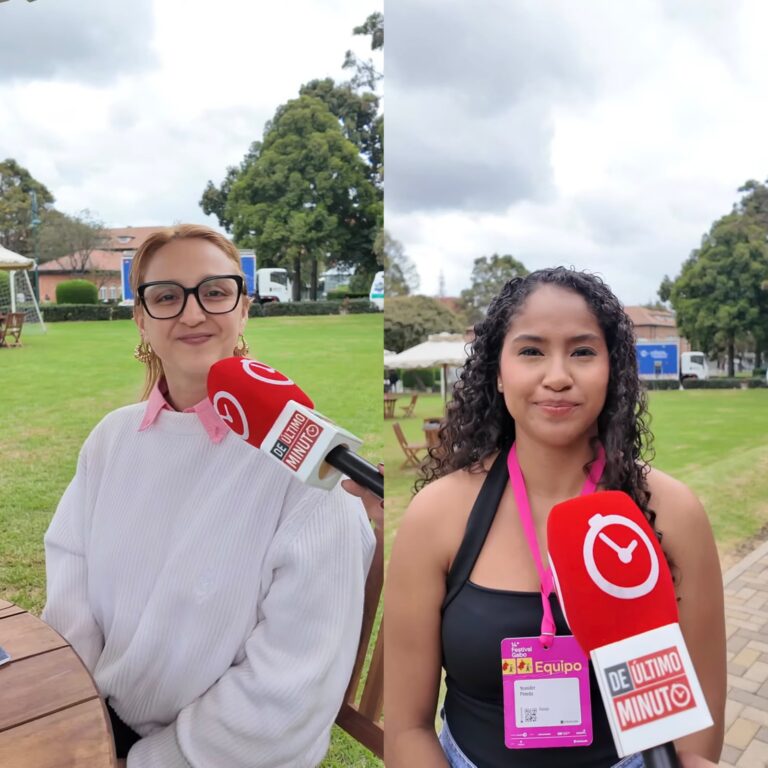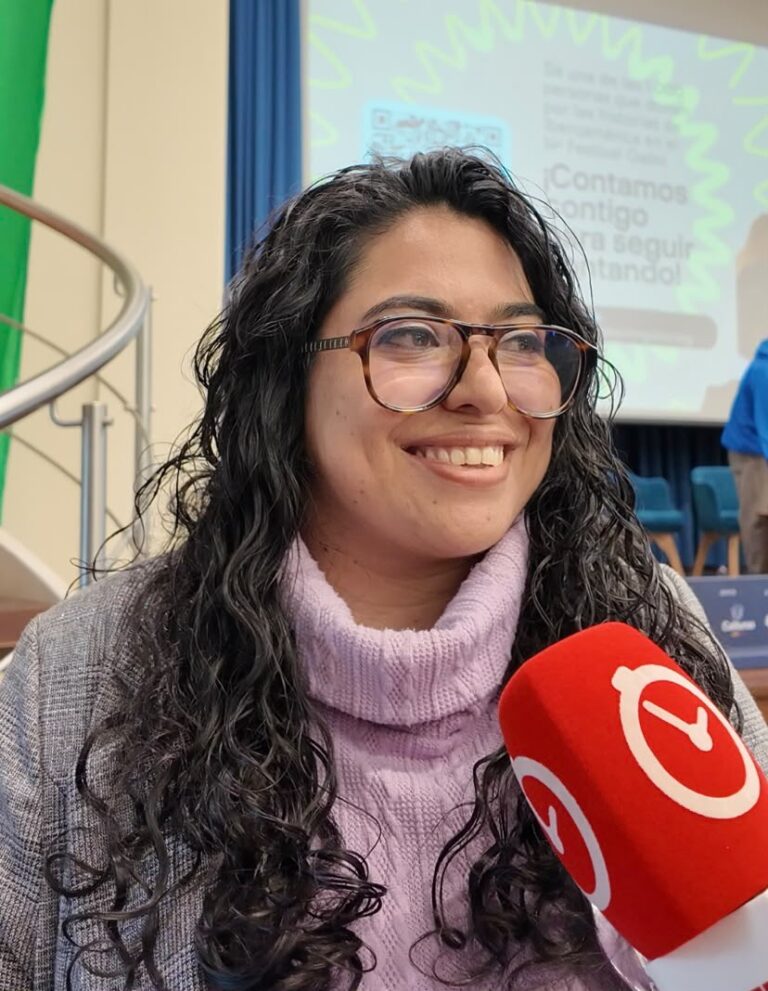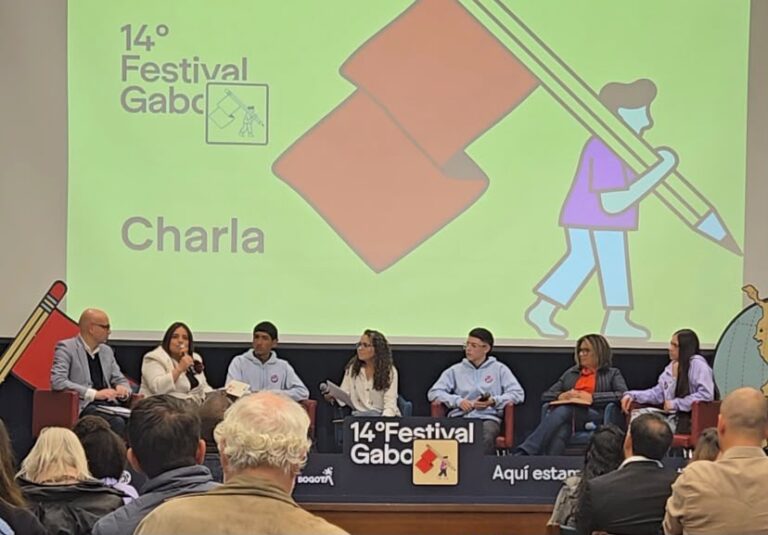


Bogotá, Colombia. Within the framework of the fourteenth edition of the Gabo Festival 2026, journalists Jimena Aguilar, co-director and co-founder of Alharaca; Carolina Bazante, director of Lupa Media; and Carolina Morales, director of Mataperrea, participated in the conversation “Journalism one-on-one,” a space dedicated to analyzing how new journalistic formats can generate impact beyond virality and contribute to social transformation.
During the meeting, the speakers highlighted that the value of current journalism should not be measured solely by reach on digital platforms, but by the ability to create quality content, educate audiences, and connect with the realities of communities.
The speakers explained that independent media face major challenges related to economic sustainability, job insecurity, and the conditions in which new generations of journalists work, noting that the passion for storytelling must be accompanied by structures that allow the profession to be practiced with dignity.
“We must think about how to ensure journalism does not become more precarious,” stated Carolina Morales, referring to the need to find models that allow for sustaining journalistic projects without losing their independence.

The director of Mataperrea also addressed the issue of the emotional toll involved in covering complex stories and the importance of creating support networks among journalists to face the most difficult moments of the profession.
In his speech, he explained that the media outlet has gone through a process of institutional organization and strengthening, defining its identity, mission, and new sustainability strategies through cooperation and community-building projects.
We recommend reading:
“We must return to the streets, be where things happen, look at each other face to face, converse, and go back to the territory,” Morales maintained, while explaining the essence of Mataperrea as a project that seeks to tell stories from the communities.
In turn, Jimena Aguilar highlighted that one of the greatest lessons has been understanding that sustainability does not depend solely on obtaining financial resources, but on building bonds with people who trust in journalistic work.
“Funds may arrive, but the hardest part is creating community,” Aguilar expressed, highlighting the importance of maintaining a close relationship with audiences.
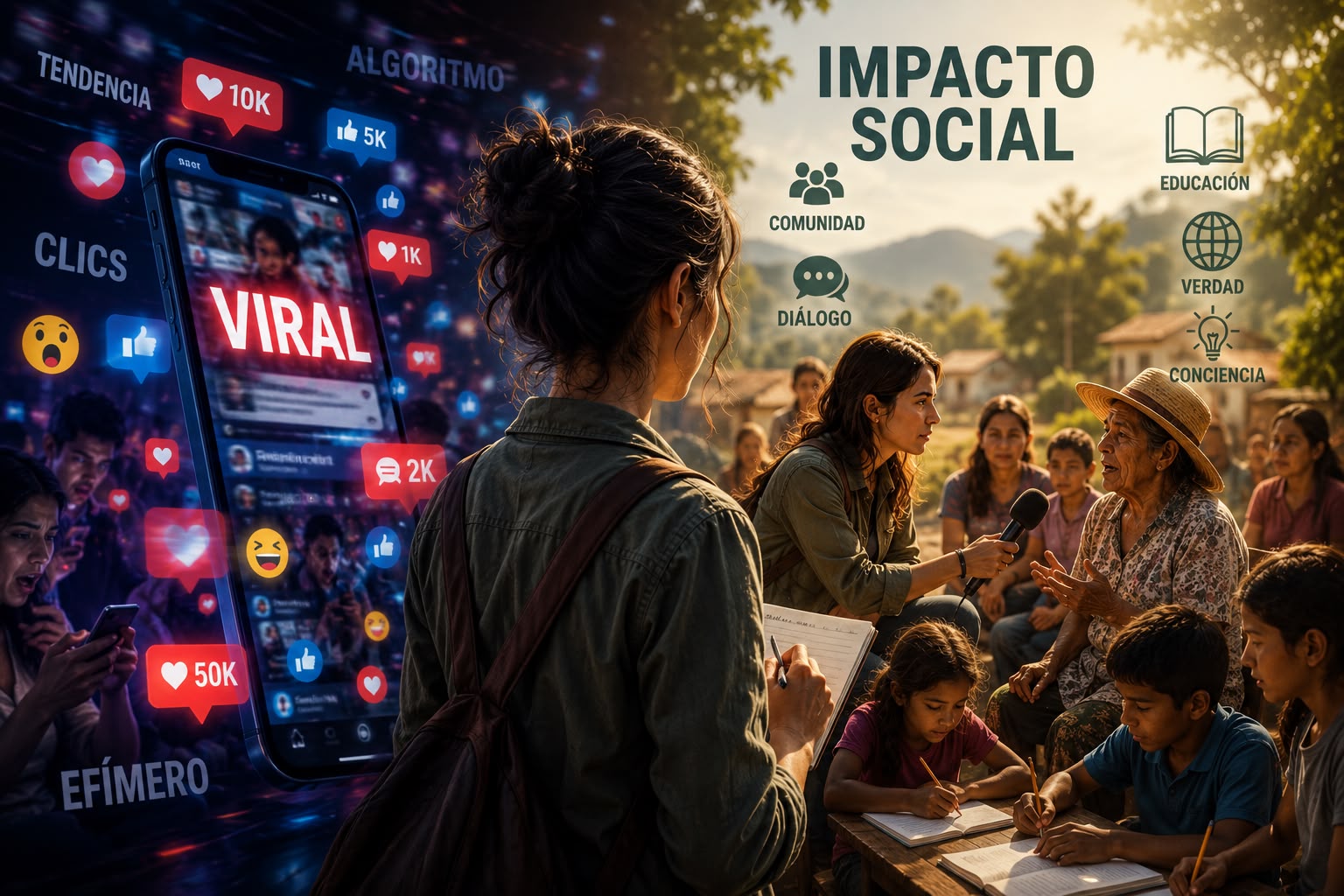
Likewise, the participants analyzed the role of social media and algorithms in content distribution. They warned that relying solely on these platforms poses a risk to media outlets, due to the constant changes in their policies and recommendation systems.
Faced with this scenario, they defended the need to recover street journalism, based on listening, direct dialogue, and closeness to people.

The speakers agreed that the future of journalism will depend on the ability to innovate in formats, but also on maintaining a commitment to the truth, civic education, and the creation of content that generates real impact on society.