

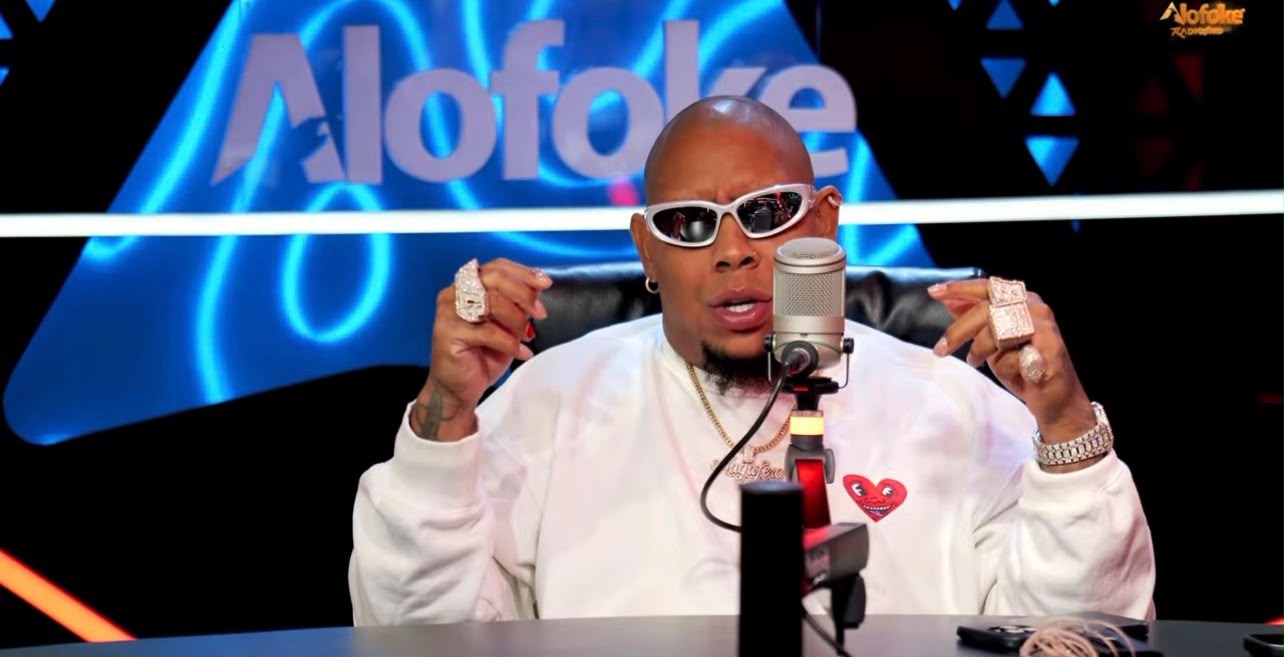

Santo Domingo.- Urban artist Bulin 47 addressed the interpretations generated by one of his recent collaborations and maintained that a song should not become a reason to question his principles or personal positions.
During his participation in the Alofoke Radio Show, the artist downplayed the controversy and considered that the project should be understood as a musical collaboration, without attributing any political meaning to it.
“At the end of the day it was a song, it wasn’t a vow I made or anything like that,” he expressed.
Bulin 47 also rejected that his decision to work with another artist could be used to label him as a person who acts against the interests of the Dominican Republic.

The urban artist explained that before recording, he took precautions to understand the content of the song and ensured that he tried to keep the project from incorporating elements that could give it a political connotation.
“I don’t want any so-called flag-waving, any weird stuff,” he stated during the interview.
The interpreter also questioned that a person be judged solely by their nationality and gave as an example a hypothetical situation in which several Dominicans commit crimes in another country.
“If five Dominicans are mugging in New York, I cannot judge the Dominican Republic because five Dominicans are mugging,” he argued.

Likewise, he stated that he respects the opinions of those who do not share his decision and clarified that he does not consider himself a racist person.
“Each person has their own criteria, has their own opinion, and I respect it,” he maintained.
Bulin 47 insisted that the collaboration was carried out professionally and without the intention of sending a political message. He also highlighted that the song managed to gain popularity among the Dominican public through social media.
We recommend reading: Bulin 47 defends his collaboration with the Haitian Afriken An, after receiving criticism for recording with the singer

The artist concluded by defending the separation between his musical work and the social or political discussions that may arise around the production, considering that an artistic collaboration should not be used as a measure to determine an interpreter’s personal positions.