The organization Cáritas Cuba began the distribution of hundreds of boxes with humanitarian aid products sent from the United States, in two municipalities near Havana, as reported by the entity that is part of the Catholic Church on Thursday. The distribution began in parishes and religious houses in Bejucal and Alquízar and is intended for Cuban families in the most vulnerable situations.
The shipment is part of a U.S. Department of State program valued at USD 60 million, out of a total of USD 100 million planned for the coming months. A plane with 700 packages departed from Miami on Tuesday, as confirmed by that federal agency.
Each module covers the basic needs of a family for 10 days, according to Cáritas. The packages include rice, beans, spaghetti, salt, brown sugar, cans of sardines and tuna, and oil; in addition to a solar lamp, water purification tablets, a plastic bucket, soap, detergent, a toothbrush, and sanitary towels.
Images released by the organization showed people unloading cardboard boxes labeled with the United States flag. Volunteers wearing Caritas apparel handed them out to residents after checking lists and verifying identity documents. It was not specified which parishes will participate in the following stages.
Jeremy Lewin, an official from the Department of State for Foreign Assistance, Humanitarian Affairs, and Religious Freedom, noted that the partnership with the Catholic Church is based on a previous program that, following Hurricane Melissa, channeled USD 9 million in direct support to the island last year. Lewin maintained that the distribution handled by local priests and Catholic groups eliminates any possibility of interference by the Cuban government.
More Read

We recommend reading: DR resumes egg exports to Cuba with shipment of 3.9 million units

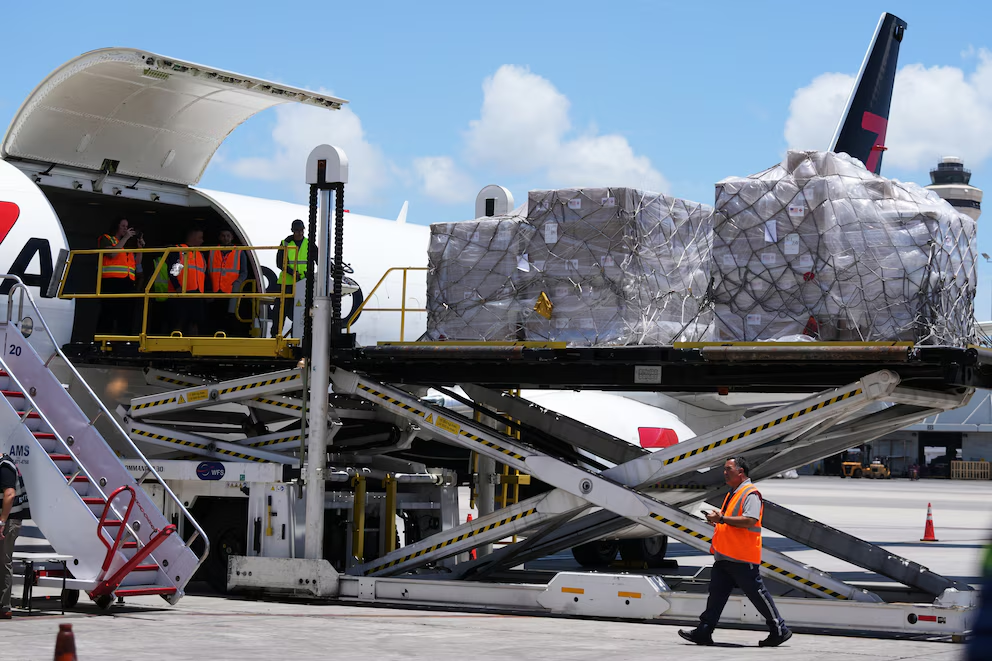
The United States humanitarian aid shipment to Cuba waits on the Miami airport tarmac, ready for the first flight of a USD 100 million plan.
Washington has reiterated on several occasions its distrust of donation mechanisms, which it accuses of being manipulated by the Havana authorities. A statement from the Cuban Ministry of Foreign Trade confirmed the presence of officials during the reception of the aircraft, although it did not specify their ranks. Attempts by The Associated Press to contact Caritas went unanswered.
Cuba authorized the entry of aid, but questioned the United States offering humanitarian cooperation while, in its view, being responsible for the economic deterioration through sanctions and an oil blockade. That energy blockade, imposed in January by President Donald Trump, deepened a crisis that had already been accumulating for five years and caused blackouts of more than 20 hours, shortages of medicine and food, transportation restrictions, and the suspension of flights.
A 7A Air Cargo freighter on the runway, ready for the first U.S. humanitarian aid flight to Cuba, part of a $100 million plan.
In that context, the Spanish hotel chain Meliá—an international partner of Cuba in the tourism sector—announced this week its withdrawal from the country after receiving pressure from the United States. Visa and Mastercard operations, several airlines, and companies with industrial activity went through a similar process.