Periodista egresada de la Universidad Autónoma de Santo Domingo (UASD). Le gusta escribir sobre política e historias humanas que puedan transformar vidas. Actualmente cursa un master...
Share
3 Min Read
SHARE
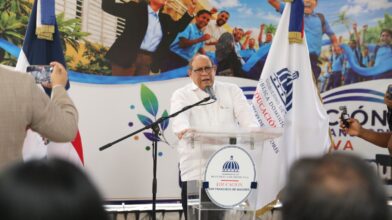
Santo Domingo.– The National Emergency and Security Attention System 911 of the Dominican Republic, as president of the Subsidiary Technical Group on Emergency and Security Systems (GTS-SES) organized together with the Organization of American States (OAS), through its Department of Public Security (DSP), as Technical Secretariat, the international discussion “From useful tool to essential resource: the use of drones in emergency response”.
The event brought together regional experts to share experiences and strengthen regional capacities in the safe and effective use of drones in critical situations.
The opening was in charge of the president of the GTS-SES and executive director of the 911 System, Colonel Randolfo Rijo Gómez, ERD, who highlighted that “drones, more than a complement, are an essential resource for saving lives”.
The day was moderated by the head of the Information and Knowledge Section of the Department of Public Security of the OAS, Karen Bozicovich, and consisted of two technical panels, entitled “Governance, regulation and institutional maturity of drone programs” and “Drone programs in emergency systems: capabilities, uses and available resources”.
The first panel featured the participation of Pablo Heredia Cantillana, coordinator of the Center for Competencies in Unmanned Systems and Data Management of the Berliner Hochschule für Technik (BHT), who addressed the regulatory frameworks, internal procedures, data protection, and risk management that underpin the governance of drone programs, as well as the innovation and continuous improvement mechanisms necessary for their institutional sustainability. Also participating were the Flight Standards technicians of the Dominican Institute of Civil Aviation (IDAC), Luis Neri Olivero and Santiago Tejada Flores, who presented the advances in the Dominican regulation of drones, highlighting a clear and modern regulatory framework developed by the IDAC, with the collaboration of System 911, aimed at ensuring the safe and responsible use of these aircraft in emergency response.
In the second panel, representing the 911 System, participated the executive sub-director, pilot colonel Harold Jiménez Polanco, ERD, and the pilot major Cristian Moquete Denis, ERD, in charge of the Division of Remotely Piloted Aircraft (911 Drones). During their intervention, the panelists presented in detail the drone operations of the 911 System in fires, searches for missing persons, and natural disasters, in addition to projecting a video compiling several events with real operations that have allowed saving lives in recent years. Also participating in this panel was Jorge Herrera, from the Integrated Security Service ECU 911 of Ecuador, who shared the experience of his drone program, highlighting tactical support operations in emergencies of various kinds, which allowed contrasting approaches and sharing good practices at the regional level.
For more information about the discussion and its reference materials, the official event page is available on the OAS portal https://portal.educoas.org/es/networks/pages/gts-ses-conversatorio-2025-de-herramienta-util-recurso-esencial-el-uso-de-drones-1.
Periodista egresada de la Universidad Autónoma de Santo Domingo (UASD). Le gusta escribir sobre política e historias humanas que puedan transformar vidas. Actualmente cursa un master en Comunicación Política y Marketing Digital.