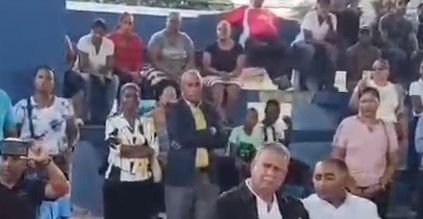
Bávaro, La Altagracia.– Community members of El Salado, in the Verón-Punta Cana Tourist Municipal District, expressed their rejection of the Territorial Planning Plan (POT) project, considering that the proposal would limit the use of their land and affect the economic and urban development of the community.
Residents claim that the plan contemplates classifying approximately 98.6% of the land as non-developable agricultural and forestry areas, a measure that, they state, would impact thousands of families who hold property titles and aspire to the development of their plots.
According to the community members, this classification would curb the growth of one of the fastest-expanding areas in La Altagracia province and would affect investment projects that could boost the local economy.
The inhabitants of El Salado pointed to the Minister of the Presidency, José Ignacio Paliza; the Minister of Tourism, David Collado; and the mayor of the Verón-Punta Cana Tourist Municipal District, Ramón Ramírez (Manolito), as being responsible for supporting a proposal that, in their view, ignores the real conditions of the territory.
They explained that a large part of the area is made up of rocky terrain and the presence of crags, in addition to facing prolonged periods of drought, factors which, they maintain, hinder the development of large-scale agricultural and livestock activities.
More Read

We recommend reading:
Instead, the community members consider that El Salado has a vocation for real estate, tourism, and investment development, due to its strategic location within the Bávaro-Punta Cana tourism hub.
Likewise, they expressed concern that the regulations could affect development projects in the area, including infrastructure and tourism expansion initiatives, while also denouncing that the proposal could respond to private interests that would limit the community’s growth.
Faced with this situation, the residents announced that they will continue to defend their rights through legal and social channels, and requested that any decision regarding the future of the territory include the participation of the owners and inhabitants of the area.
In addition, they called on the United States ambassador to the Dominican Republic, Leah Francis Campos, to learn about the situation that, according to their reports, affects thousands of property owners in El Salado and to follow up on the process, so that transparency and respect for their rights are guaranteed.