

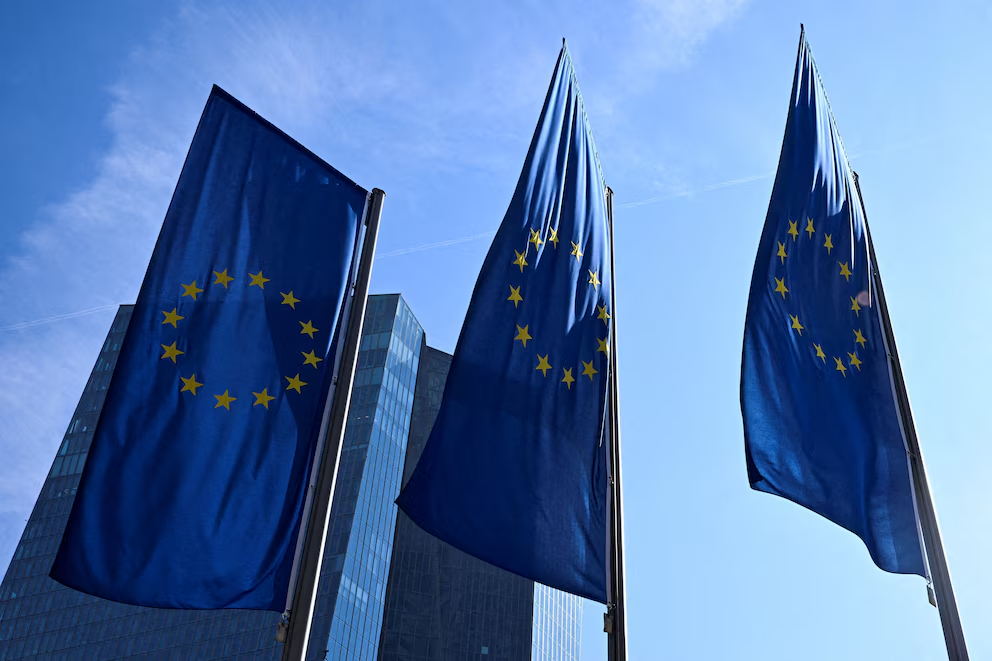

The European Union member states reached an agreement this Thursday for the adoption of the 21st package of sanctions against Russia, with the aim of strengthening economic pressure on Moscow for the invasion of Ukraine and limiting its ability to sustain the conflict. The Irish Presidency of the Council of the EU confirmed the understanding, highlighting that this new round of measures “further targets” Russia’s revenue sources, complicates the activity of the so-called “shadow fleet,” and disrupts Russian supply chains. “Europe stands with Ukraine in the face of Russia’s brutal war of aggression,” stated Ireland’s Minister for Foreign Affairs, Helen McEntee.
The political agreement was reached by the ambassadors of the Twenty-Seven, following months of negotiations that included the extension, for another twelve months, of the price cap mechanism for Russian oil. In addition, restrictions on the financial sector and cryptocurrencies are being expanded, new designations of vessels and facilitators used to circumvent sanctions are being introduced, and measures targeting the Russian military industry are being tightened.
This twenty-first package of European Union sanctions includes provisions that seek to further restrict Moscow’s revenues, limit the use of vessels, and disrupt the logistical channels used by Russia to sustain its economy and its war effort, as reported by the Irish Presidency of the Council of the EU.

The EU stated that the new sanctions target Moscow’s revenue sources, the shadow fleet, and Russian supply chains.
Over the last few days, the consensus among member countries was blocked by reservations expressed by Greece, related to measures on the transport of liquefied natural gas (LNG) from Russia to third countries. Greece argued that the restrictions would have a limited effect on Russian exports, mainly affecting the European shipping industry.
Finally, the agreement included a “compromise” that contemplates a limited exemption for LNG transfers to third countries and purchases associated with contracts signed before February 24, 2022. In addition, any expansion of these operations by European operators is restricted and an annual review by the EU Council is established, according to European sources.
The 21st package of European Union sanctions against Russia was approved after the main point of disagreement with Greece regarding LNG was resolved. The final text maintains restrictions on new operations and provides for an annual assessment of their impact.
Sanctions in the sports field
The European Commissioner for Intergenerational Fairness, Youth, Culture and Sport, Glenn Micallef, warned that the new sanctions package includes measures against the president of the Russian Olympic Committee and visa restrictions for former Russian combatants, including those participating in sports competitions.
The European Union also tightened measures aimed at the Russian military industry within the new package of sanctions.
Micallef stated that “the measures adopted today send a clear signal” and that the EU will maintain the possibility of adopting further restrictions, including the withdrawal of funding if circumstances justify it. He added that national Olympic committees and European sports federations must ensure that sport is not used as an instrument of state propaganda or to normalize Russian aggression, especially following the decision of the International Olympic Committee (IOC) to lift the suspension of the Russian Olympic Committee.
It is now up to national and continental sports entities to ensure that sport is not used to legitimize Russia’s aggression, as urged by the Maltese commissioner.