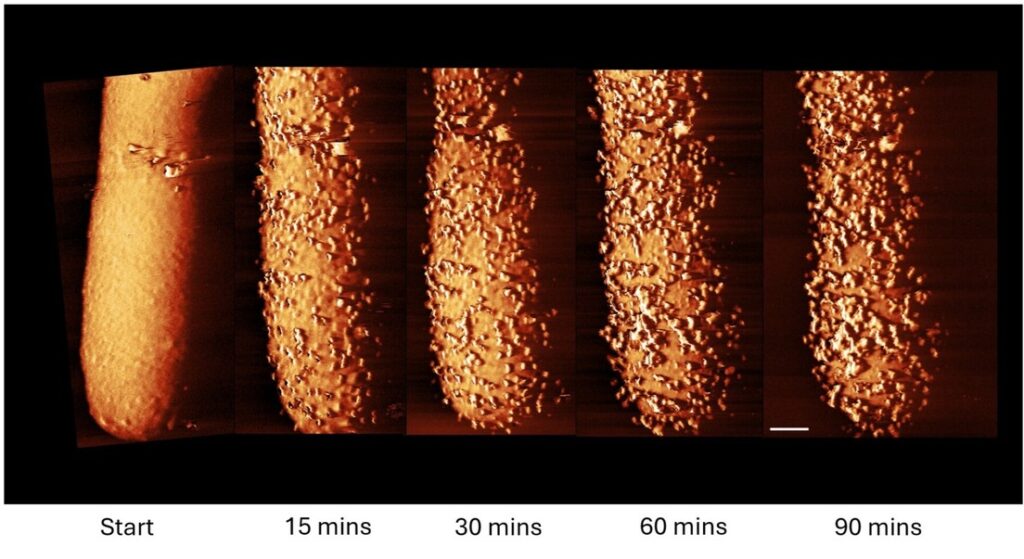
Researchers from University College London (UCL) and Imperial College were able to observe for the first time with high-resolution images how a class of antibiotics called polymyxins manage to penetrate the protective armor of the ‘Escherichia coli’ bacteria and kill the microbes.
According to the study, polymyxins cause the formation of lumps on the bacterial surface and stimulate the production and shedding of its outer layer. This process leaves gaps in its defenses and weakens it until the antibiotic can penetrate and kill the cell. “It’s as if the cell is forced to produce ‘bricks’ for its outer wall at such a speed that it breaks, allowing the infiltration of the antibiotic,” said Carolina Borrelli, co-author of the study, in a statement.
Researchers also showed that polymyxins stop working if the bacteria are not active. “We have been able to show that this class of antibiotics only works with the help of the bacteria itself; and if the cells enter a state of hibernation, the drugs stop working, which is very surprising,” explained Dr. Andrew Edwards, from the Department of Infectious Diseases at Imperial College London.
Scientists highlighted the importance of understanding the mechanism of action of these antibiotics and believe that images like these could pave the way for more effective treatments against drug-resistant bacterial infections. The team proposes that future therapies could combine the use of polymyxins with treatments that awaken dormant bacteria, to ensure their complete elimination.
We are a multiplatform outlet offering news and television content. The fastest-growing news outlet in audience in the history of Caribbean communication.