Santo Domingo.- Dominican politics is facing a shift in how citizens relate to their leaders. For political scientist and journalist Angely Moreno, voters no longer just want to know a candidate’s platform, but also the person behind the political figure.
Moreno believes that any politician aspiring to connect with new generations must show authenticity and build a relationship with the citizenry long before an election campaign arrives.
“The politician who is spontaneous, who has no facades, who seems authentic,” is the profile that, in his view, has the greatest chance of connecting with the masses today.
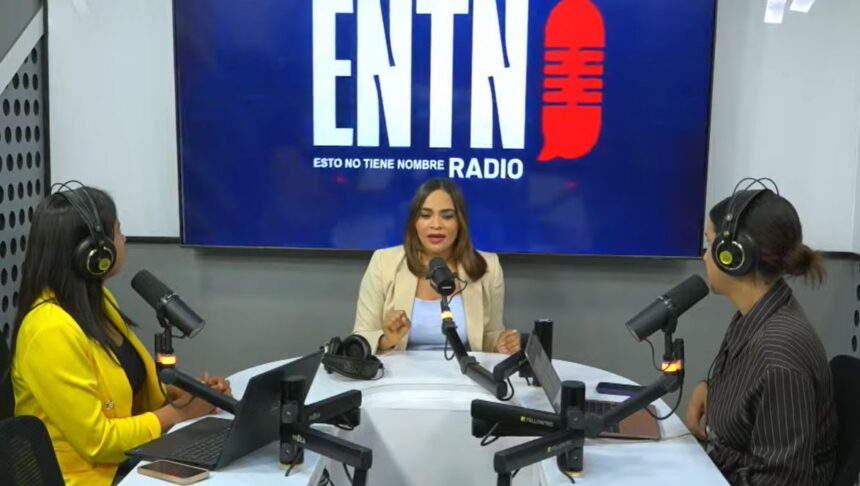
During an interview on the radio program “Esto No Tiene Nombre” on La Nota 95.7 FM, the specialist questioned traditional campaign strategies in which candidates appear during election periods performing activities designed to project closeness to the population.
In their view, that model has lost effectiveness because citizens have greater tools to observe the public and private lives of those who aspire to represent them.
That is why it proposes an evolution of so-called “storytelling,” based on telling a story, towards “storyliving”: permanently living and showing an identity consistent with the political message.
More Read

Moreno cited as an example the need for leaders to be able to present themselves as ordinary people, with families, problems, and experiences similar to those of the citizens.

We recommend reading: Can the PLD recover second place against the Fuerza del Pueblo?
The idea, he explained, is that the voter can feel identified and perceive that the person aspiring to represent them understands their daily concerns.
“I want to see the politician as I see him,” he maintained.
The political scientist believes that this closeness can be decisive in a scenario marked by disenchantment and distrust towards political parties.
More Read

In his view, citizens are increasingly less interested in figures constructed exclusively for campaigns and are demanding leaders capable of maintaining an authentic relationship with them.
This transformation also poses a challenge for new leaderships, especially those that have built their popularity outside of traditional politics.
For Moreno, Dominican politics is heading towards a stage in which personality, authenticity, and the ability to listen will have an increasing weight in the electorate’s decision.