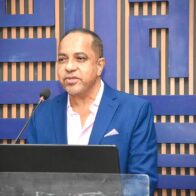
Santo Domingo. – The deputy of the Dominican Liberation Party (PLD), Gustavo Sánchez, stated that the National Congress acted with a “populist” vision by increasing the penalties contemplated in the new Penal Code, considering that during the legislative process, the idea of responding to social demands with more severe sanctions prevailed.
During an interview, the legislator explained that, although he supported several of the modifications incorporated into the legislative piece, he decided to vote against the Penal Code due to his disagreement with the permanence of the criminalization of abortion under the three exceptions.
“There was a kind of simplism, of populism in Congress to increase penalties, in everything,” Sánchez expressed when referring to the provisions that raise sanctions and incorporate figures such as the accumulation of sentences.
The deputy questioned the establishment of cumulative sentences that can reach up to 60 years in prison, without, in his view, the country having resolved the structural problems of the penitentiary system.
“60-year-old prisons accumulated, and I say, well, and here there is 80% of pretrial detainees that one doesn’t know where they are going to put them,” he stated.
Sánchez considered that there is a tendency to believe that toughening penalties is enough to reduce crime, when, as he maintained, education, crime prevention, and social reintegration mechanisms must also be strengthened.
“Prison must be a method of social reintegration and education,” he stated.
Denies the existence of a “gag law”
More Read


The deputy also rejected that the approved Penal Code represents a restriction on freedom of expression and denied that the legislation constitutes a so-called “gag law”.
We recommend reading: Gustavo Sánchez: “If I had to vote in the PRM, Carolina would be my candidate”
He explained that the concepts of defamation and slander have been part of the Dominican legal system for years and argued that there must be consequences for those who make false accusations that affect the reputation of others.
More Read

“It is one thing to inform and another thing to communicate. Everyone has the right to information, but the right to communication must have some filters,” he stated.
Sánchez cited as an example the damage that an unfounded accusation can cause to a person and their family environment, noting that those who spread allegations without evidence must assume responsibility for their actions.