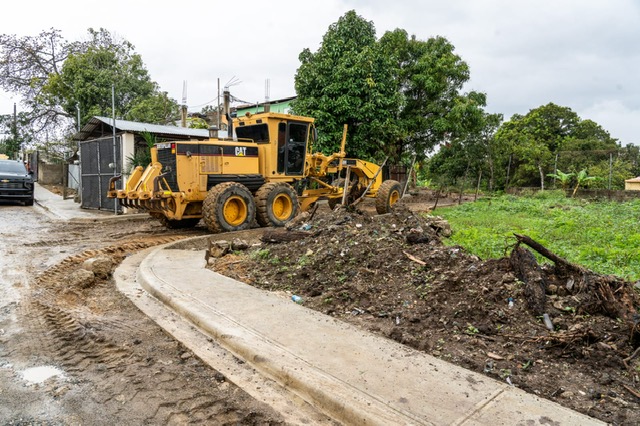
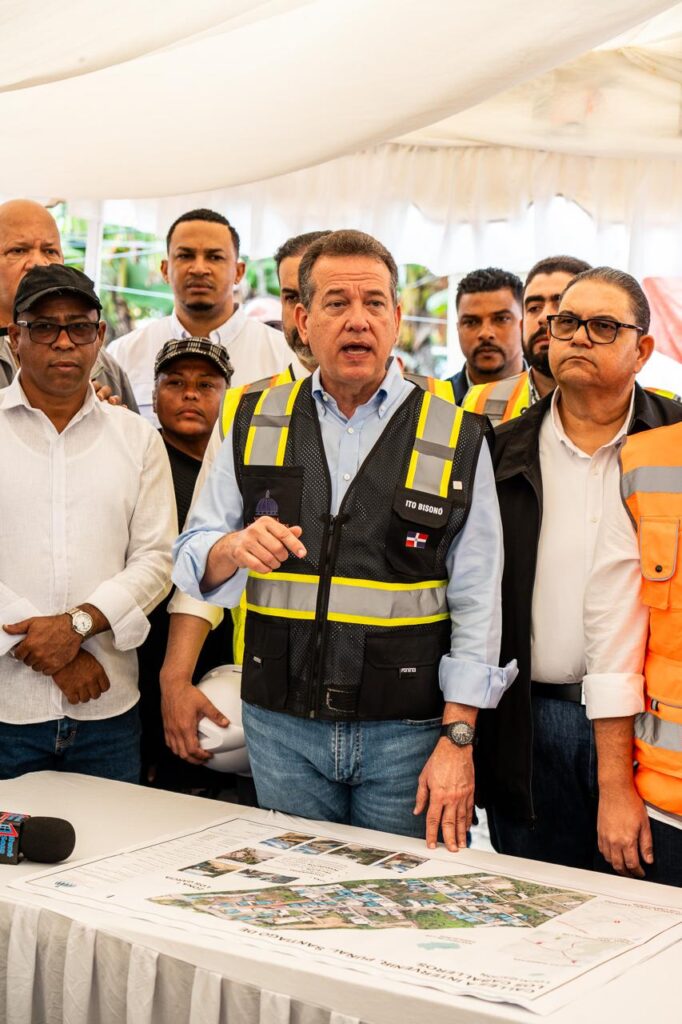
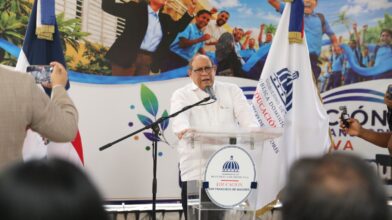
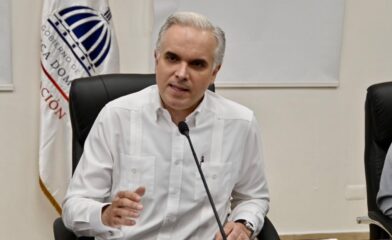
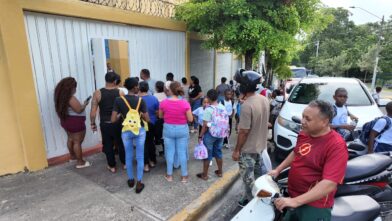
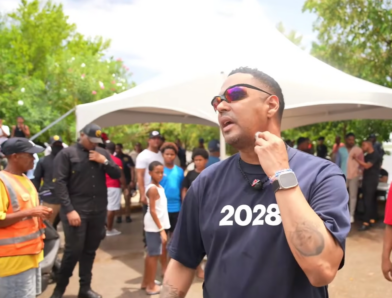
Santiago.- The Minister of the Ministry of Housing, Habitat and Buildings, Víctor -Ito- Bisonó, initiated the intervention and dignification works of the environment in communities of the province of Santiago, starting with the municipality of Puñal, as part of a process that will later continue in Hato del Yaque and Barranquita.
During a tour of the area, Minister Bisonó explained that these interventions are part of a strategy to improve the habitat that seeks to transform living conditions in vulnerable communities, through urban infrastructure works and housing rehabilitation.
The intervention in these first communities of Santiago contemplates an estimated investment of RD$307 million, destined for works such as street asphalting, construction of sidewalks and curbs, as well as the improvement of previously identified homes, with the aim of raising the quality of the environment where families live.
“If there’s one thing we’re clear on, it’s that Dominican families deserve to live in dignified, safe communities with adequate infrastructure,” the minister stated.
Bisonó highlighted that, as part of his management of the MIVHED, habitat interventions in vulnerable communities will be one of the priorities and has already begun in other areas of the country, including El Naranjo and the municipality of Guerra, as part of a national vision aimed at improving urban environments and guaranteeing more adequate living conditions for families.
The head of the MIVHED emphasized that the housing policy promoted by the institution seeks to transform entire communities, integrating improvements in streets, urban infrastructure, and housing.
“For us, it’s not just about intervening in houses, but about dignifying the environments where families live. That is the commitment we have from the MIVHED: to work so that every Dominican can live in a dignified environment,” he affirmed.
Authorities reported that, following the start in Puñal, interventions will continue progressively in Hato del Yaque and Barranquita, and subsequently in other communities in the province of Santiago, while similar projects are being implemented in different regions of the country.