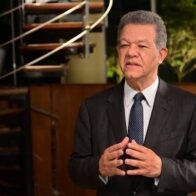
The President of Costa Rica Laura Fernández ordered this Wednesday to withdraw from the legislative agenda the project of electrical harmonization, approved in first debate on Tuesday but still without the 38 votes needed for the second. The president said she will seek to open negotiations with opposition blocs before resubmitting bill 23,414 to a vote. The initiative obtained 27 votes in favor in the first debate and requires 38 in the second to become law.
The call for the session will be canceled in extraordinary sessions, when the Executive Branch defines the agenda of Congress. Fernández asked the Minister of the Presidency, Rodrigo Chaves, to draft the decree during the afternoon.
In the press conference following the Government Council at the Presidential House, Fernández questioned legislators from the National Liberation Party (PLN) and the Broad Front who voted against. He called them “communists”, “vagabonds” and “enemies of the people”.The president maintained that those factions “sell smoke” about the effects of the initiative and defended that the reform does not weaken the Costa Rican Institute of Electricity (ICE). She also said that a legislative rejection could lead to electrical supply problems like those that, according to her, Cuba and Venezuela face.
We recommend reading:Laura Fernández’s government calls meeting to confront organized crime

The Government withdrew the bill to open negotiations before the second debate
Fernández said that he is temporarily withdrawing the project to “take a break in view of the second debate.” He proposed opening conversations with the opposing deputies to review adjustments and asked them to study the content of the file and the international context in energy matters.“Don’t fail the people of Costa Rica,” he affirmed at the closing of the conference. He also indicated that the deadline for the cancellation will be defined by the Government, with the expectation that the PLN and the Frente Amplio reconsider their vote.
More Read

What does the electricity harmonization reform and the new system operator propose?
The project proposes to move from a scheme concentrated in the ICE to a more open market, with the participation of public and private actors to generate, sell and buy electricity under new rules. It proposes an independent operator, a national wholesale market, auctions to contract energy and changes in the functions of the State, the ICE, the Regulatory Authority of Public Services and the Ministry of Environment and Energy.
The text foresees the creation of the National Electric Market, a scheme where state entities, cooperatives, municipalities, and private companies would participate in transactions through contracts, auctions, and daily markets. The design aims for regulated competition, with state supervision and priority for internal supply.One of the central changes is the creation of Ecosen, an autonomous institution that would assume functions currently handled by ICE. Among its tasks are operating the electrical system in real time, defining dispatch, managing the market, coordinating national dispatch, and representing the country before the Central American regional market.
The reform designs a wholesale market with three mechanisms: medium and long-term contracts through auctions, a daily spot market, and markets for ancillary services and capacity. Furthermore, distribution companies should contract at least 90% of their demand through annual auctions organized by Ecosen.