

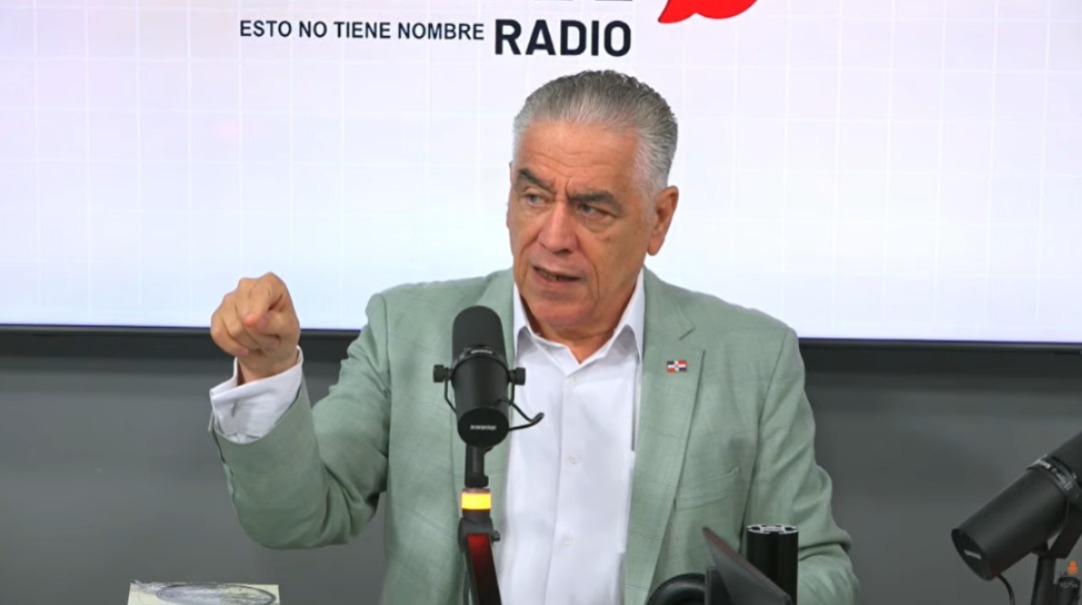

Santo Domingo. – Former Minister of the Armed Forces and historian José Miguel Soto Jiménez warned about flaws in basic education that, in his view, are weakening the historical training and national identity of the new generations.
Soto Jiménez made the statement when asked about the “patriotism thermometer” in the Dominican Republic and about the conditions in which the country’s sovereignty and cultural identity are found.
“There is a problem in education. In basic education,” he stated during an interview on the program “Esto No Tiene Nombre”, on 95.7 FM.
The also writer explained that there is a difference between the historical education he received in his youth and the one students currently receive.
“I compare what I was taught and what is taught today,” he maintained.
As part of that comparison, he recalled that during his school years, emphasis was placed on indigenous culture, chiefdoms, and figures like Enriquillo, content that, as he explained, helped strengthen a sense of identity from an early age.

“A boy had to recite the chiefdoms, Enriquillo… That gives you an identity strength,” he expressed.
For Soto Jiménez, knowledge of national history constitutes a tool to form citizens who are conscious of their belonging and their responsibility to the country. Therefore, he considered it necessary to correct what he described as an oversight in education.
We recommend reading: Soto Jiménez says Leonel will win in 2024: “You cannot cheat history”
“I think there has been an oversight and it must be corrected,” he stated.
The former military chief maintained that this task does not correspond solely to the Government, although he pointed out that the Ministry of Education has a fundamental responsibility in the recovery of those contents.
Soto Jiménez recalled that, after leaving public office, he participated in initiatives to bring activities related to national holidays and Dominican history to schools and colleges.
“We visited every public school and college in the country two or three times during those patriotic holidays,” he recounted.
However, he considered that patriotism should not be reduced to the learning of dates, names of heroes, or the formal respect of national symbols.

“The warrior of before must be the citizen of today”, he stated.
In his opinion, the defense of the nation today must be expressed through citizens committed to their responsibilities.
“The most important of all patriots is a citizen conscious of their rights and conscious of their duties”, he stated.
Soto Jiménez also called for bringing the spirit of the Restoration to the spaces where the country’s daily life takes place.
“We must return to Capotillo in the school, in the hospital, in the forge, in the workshop, in the sowing,” he said.
The historian made these considerations during a conversation about the significance of August 16th, the date that commemorates the beginning of the Restoration War, and about the need for new generations to know the historical processes that defined Dominican sovereignty.
For Soto Jiménez, strengthening the teaching of history from basic education is part of a larger task: preserving the benchmarks that contribute to forming national identity and turning patriotism into a civic practice, beyond ceremonies and commemorative dates.