

Tokyo.- The death toll from the 7.1-magnitude earthquake that struck southwestern Japan on Tuesday has risen to 28, as confirmed this Thursday by Japanese government spokesperson Minoru Kihara in a press conference.
Rescue teams are searching this Thursday for the second consecutive day and under a heat wave for survivors among the rubble of the destruction caused by the 7.1 magnitude earthquake that struck southwestern Japan on Tuesday, causing nearly twenty deaths and hundreds of injuries.
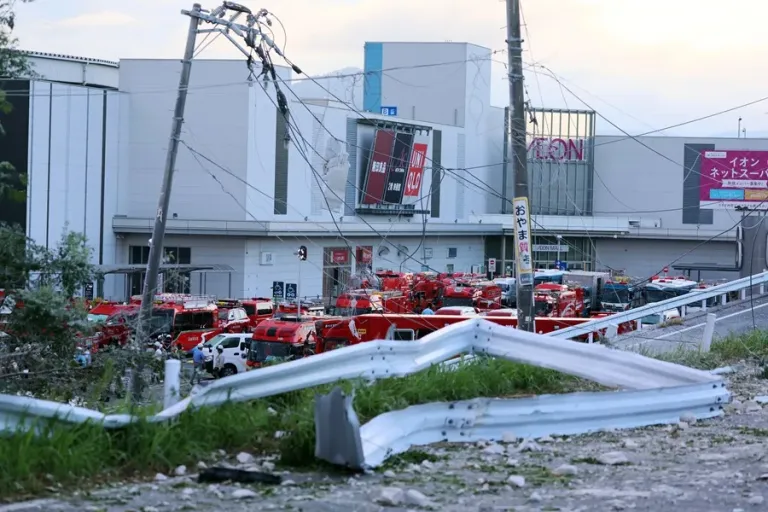
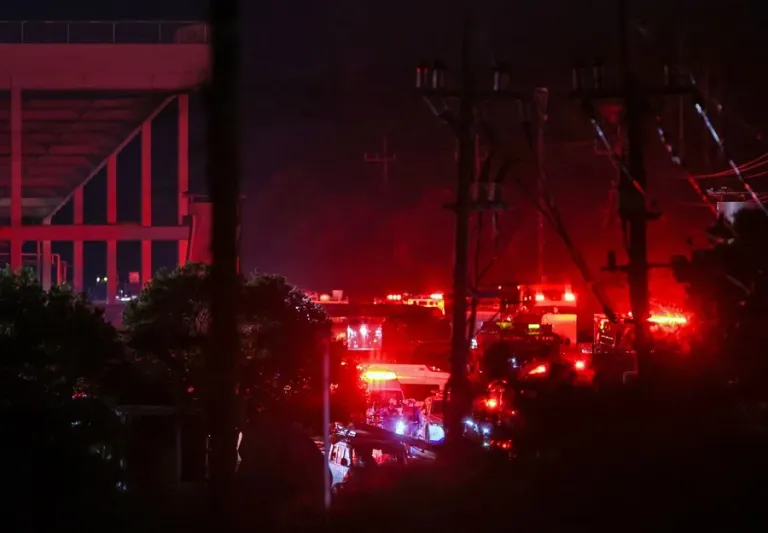
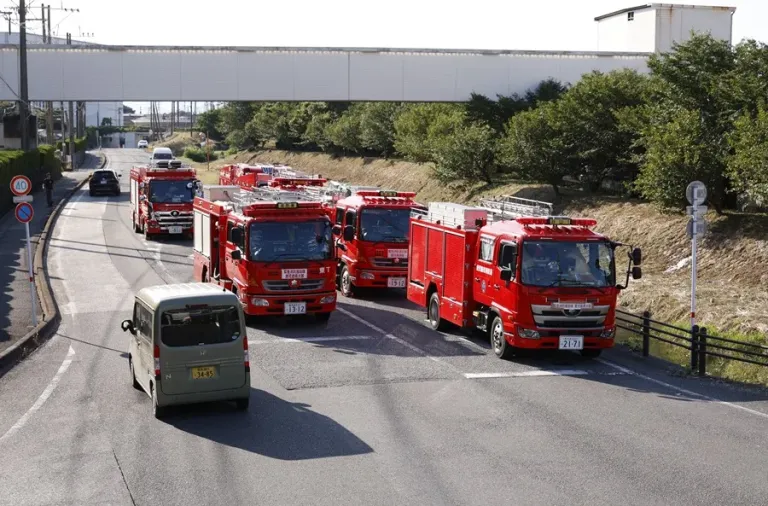
Under a high-temperature alert, search and rescue services continue to look for a person at a shopping center in the town of Kashima, operated by the Aeon Mall chain, where an explosion likely caused by a gas leak moments after the earthquake caused part of the building to collapse, with five confirmed deaths.
We recommend reading:Death toll rises to thirteen after 7.1 magnitude earthquake hits southern Japan

They are also trying to find a worker at the Nippon Paper Industries paper mill in the town of Yatsushiro, where the earthquake knocked down a large chimney, causing at least eight deaths, according to figures provided by local authorities early in the morning.
These efforts are being affected by water and electricity outages following the earthquake. This morning, some 74,800 households were without water due to damage to the pipes, so authorities are sending water tanker trucks while they work to restore the supply, while 22,900 homes remained without electricity.
Heat wave complicates the work
Added to this situation is the heat wave affecting the Kyushu region, with maximum temperatures forecast at 35 degrees and high humidity levels. Thus, on the streets of Kumamoto, pedestrians carry their sun umbrellas, wiping their faces with towels, while people gather in shopping centers.
People in areas without air conditioning due to power outages are at a particularly high risk of suffering from heatstroke. For this reason, the Ministry of the Environment has issued an advisory to Kumamoto and several prefectures, urging those participating in rescue efforts to avoid the heat and to hydrate frequently.

In this context, the Self-Defense Forces (Army) transported at least 300 air conditioning units to the shelters installed in the affected areas, as reported by Defense Minister Shinjiro Koizumi through his profile on the social network X.
The Kumamoto Crisis Management and Disaster Prevention Division confirmed in a televised meeting that 415 temporary shelters have been set up throughout the prefecture, and that the total number of evacuated people amounts to 10,500.
After Tuesday’s strong earthquake that briefly triggered a tsunami alert, hundreds of aftershocks have been recorded, including a 5.8 magnitude quake on Wednesday night, and authorities have warned of the possibility of a larger tremor occurring in the coming days.
Japan sits on the so-called Pacific Ring of Fire, one of the most active seismic zones in the world, and experiences earthquakes with relative frequency, which is why its infrastructure is specially designed to withstand tremors.