

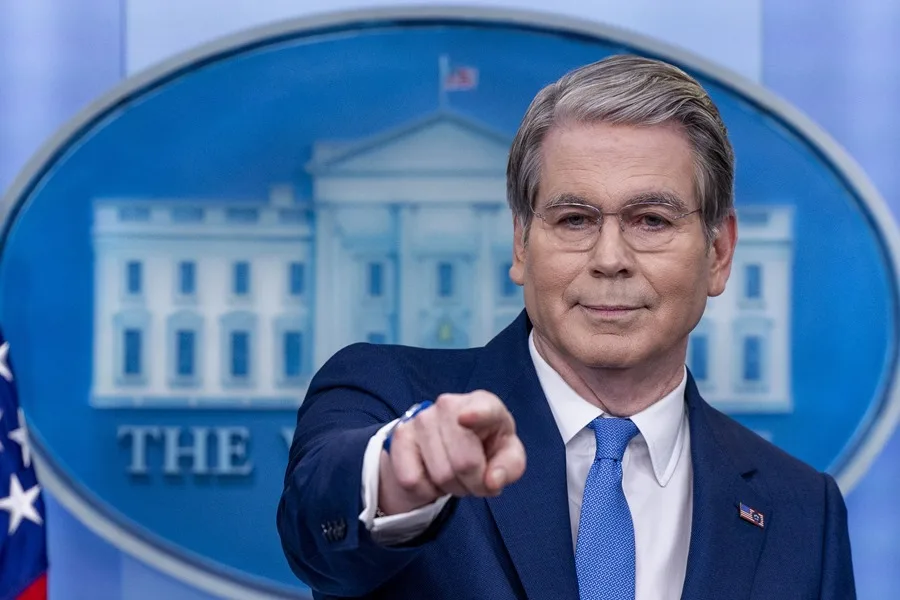

Washington.- The U.S. Treasury Secretary, Scott Bessent, stated this Tuesday that he hopes to work with the future government of Colombia and with international financial institutions to support the country’s “economic recovery” and attract investment, after meeting last week with the Colombian vice president-elect, José Manuel Restrepo.
“The Treasury Department looks forward to working with the next Administration to advance growth-promoting policies, attract investment, and collaborate with international financial institutions to support Colombia’s economic recovery and its long-term prosperity,” Bessent guaranteed in a message on X.
Likewise, he explained that this cooperation also seeks to combat corruption and drug trafficking.
The Treasury Secretary made these statements while reporting on the meeting he held last week in Washington with Restrepo, whom he congratulated, along with President-elect Abelardo de la Espriella, for his victory in the elections, in which he had the backing of U.S. President Donald Trump.

“We look forward to working side by side with the United States to seize this historic opportunity. As two nations united by our commitment to freedom and democracy,” the Colombian vice president-elect responded in a message on X.
Restrepo considered that the conversations with the Department of the Treasury reflect a partnership based on “shared values, mutual trust, and a common purpose.”
The good relationship of the U.S. with the future Government of Colombia
The vice president visited Washington last week along with the future government’s economic team to strengthen the relationship with the Donald Trump administration and seek financial support from multilateral organizations such as the World Bank.
Among them, the Inter-American Development Bank (IDB) confirmed last Saturday that it will make available to the incoming government of Colombia an active portfolio of approximately 63 million dollars in non-reimbursable funds.

During the election campaign, Trump publicly expressed his support for the far-right candidate De la Espriella, who defeated the leftist Iván Cepeda at the polls and will take office as president on August 7.
We recommend reading:
De la Espriella’s rise to power opens a new chapter in bilateral relations, which in recent years have been marked by tension between Washington and outgoing president Gustavo Petro, who has refused to recognize his successor’s electoral victory and has maintained a strained relationship with the Trump Administration.
During Petro’s term, the U.S. removed Colombia from the list of countries cooperating in the fight against drug trafficking and imposed sanctions on it after accusing it of maintaining ties to drug trafficking due to the increase in cocaine production, accusations that the president has always rejected.