The removal of Cuban dictator Miguel Díaz-Canel from power is one of the main points of the negotiations between the United States and the Havana regime regarding the political future of the island. According to sources consulted by The New York Times, the administration of Donald Trump has made it clear to its Cuban interlocutors that no agreement will be possible while Díaz-Canel remains at the head of the regime, although it does not demand —for now— the end of the communist system nor direct measures against the Castro family, which continues to control the main resources of power in Cuba. The United States strategy focuses on forcing a change in the Cuban leadership, without demanding the immediate dismantling of the communist system that has governed the island for more than six decades.
We recommend reading:Judge blocks changes made by the Trump Government to vaccination recommendations
Trump stated this Monday that it would be “a great honor” for him to “take Cuba”. “Taking Cuba, that would be a great honor. Taking Cuba, taking Cuba somehow, yes. Whether to liberate it or take it. I could do whatever I wanted with it,” he said in a press conference at the White House.
US officials believe that Díaz-Canel’s departure could open the door to economic reforms structural impossible under his leadership. The United States demands the departure of Cuban dictator Miguel Díaz-Canel to negotiate the economic future of the island (REUTERS/Norlys Perez/Archive)
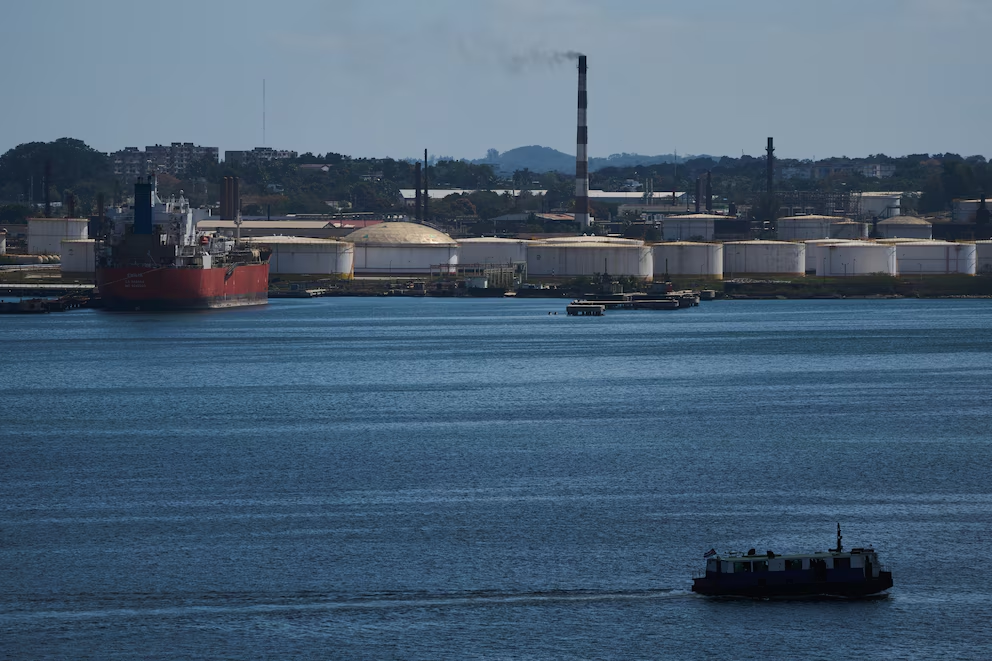
The Cuban regime, for its part, recognizes the political wear and tear of Díaz-Canel and the need to project some renewal, but seeks to avoid the impression of giving in to foreign pressures. Sources consulted by the American newspaper indicate that Havana is exploring alternatives to execute the dictatorial replacement without it appearing to be an imposition dictated by Washington. The conversations between both parties take place after months of energy crisis and economic asphyxiation aggravated by US sanctions. The Trump administration has restricted the arrival of foreign oil to the island, which has led to widespread blackouts and a sustained deterioration of living conditions. The fuel shortage and the collapse of the electrical system have been attributed by Díaz-Canel to the “energy blockade” imposed by the United States, as he stated in a recent press conference. In parallel, Washington has suggested to the communist dictatorship that it open the economy to American investment and commit to the release of political prisoners, historical demands in the foreign policy of the United States towards Cuba. Washington has suggested to the Cuban authorities that they open the economy to American investment and commit to the release of political prisoners, historical demands in the foreign policy of the United States towards Cuba (AP Photo/Ramón Espinosa) U.S. negotiators have also brought to the table the need to remove historical figures from Castroism, especially those officials who remain faithful to the ideas of Fidel Castro.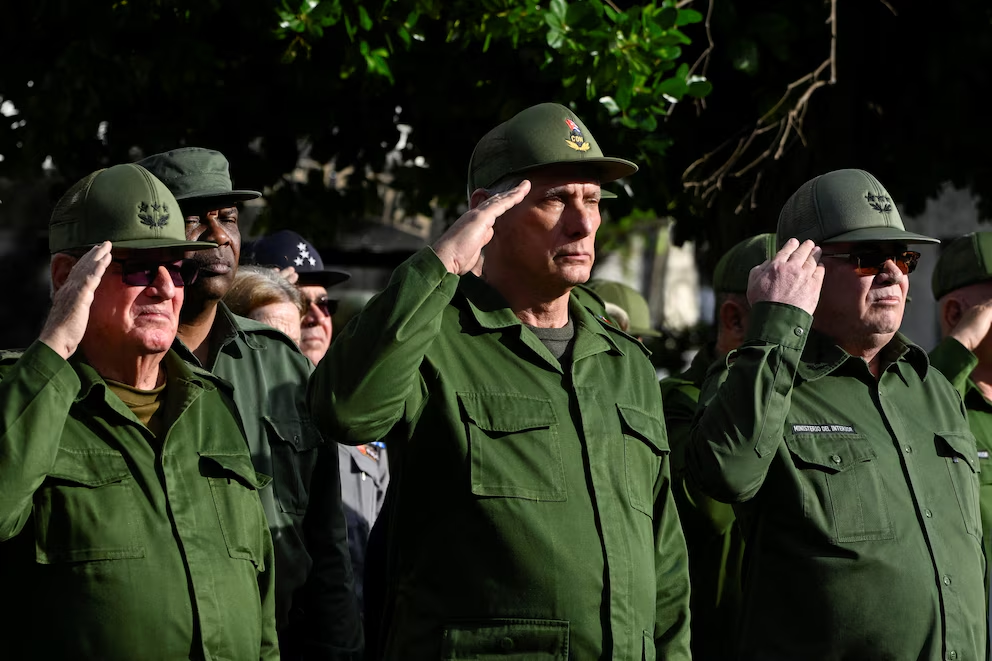
You can also read:U.S. Supreme Court to assess a Trump proposal to remove protections for citizens of Syria and Haiti
Díaz-Canel’s term has coincided with one of the worst economic crises on the island, marked by inflation, the scarcity of basic goods, and mass migration. The protests of July 2021, the largest in decades, were met by the regime with repression, arrests, and convictions of protesters, which intensified the Cuban regime’s isolation in the international community. Despite the pressure, part of the Cuban exile in the United States and the most critical sectors of Castroism consider Washington’s strategy insufficient if it is limited to a simple change of face in the regime’s leadership. Leaders of the Cuban-American community and legislators in Florida demand more forceful actions that include a total transformation of the political system and the dismantling of GAESA.The regime is exploring alternatives for the succession of Díaz-Canel and has begun to give public visibility to officials who until now operated in the shadows. Among them stands out Oscar Pérez-Oliva Fraga, great-nephew of Fidel and Raúl Castro and current deputy prime minister, who recently gave a rare interview to US media in which he addressed the possibility of opening Cuba to foreign investment.