
Costa Rica will adopt part of Bukele’s model to combat organized crime

Costa Rica9:28 am
The new president of the country stated that her priority will be to prevent prisons from continuing to be centers of criminal operation
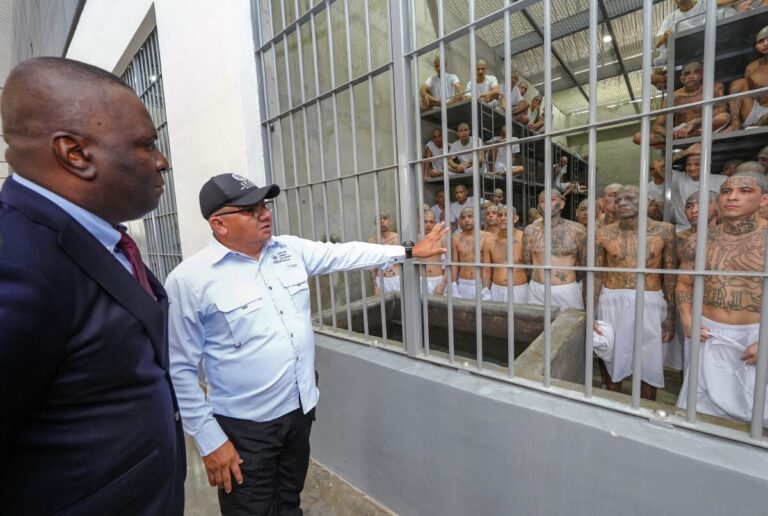
The president-elect of Costa Rica, Laura Fernández, announced that her government will partially adopt the security model implemented in El Salvador by President Nayib Bukele, with the aim of confronting the advance of organized crime.
During an interview with DW Noticias, the future head of state explained that “her administration will focus on replicating strategies related to prison control”, especially those that have allowed El Salvador to cut off communication between incarcerated criminal leaders and their structures abroad. Fernández pointed out that one of the main problems in Costa Rica is that inmates linked to drug trafficking and criminal organizations continue to operate from prison due to the lack of effective controls. In that sense, he expressed his interest in adapting mechanisms similar to those used in the Salvadoran mega-prison, known as CECOT.“I want to copy that part of how they managed to cut the link of those criminals with the outside,” he stated, while highlighting the results obtained by El Salvador in the reduction of violence.
You may be interested in: Costa Rica’s President-elect will adopt Bukele’s security model to confront drug trafficking
However, the elected leader made it clear that her government will maintain respect for constitutional guarantees and ruled out measures such as detentions without judicial backing, one of the main criticisms that the Salvadoran model has received from international organizations. “In Costa Rica, the human rights of all people will continue to be respected,” Fernández assured, although he questioned what he considers an imbalance in the protection of rights between victims and the accused. According to his explanation, many families affected by violence must pay for their legal defense, while the accused receive state assistance. The president-elect, who will assume power on May 8th, insisted that her priority will be to prevent prisons from continuing to be centers of criminal operation, in a context in which Costa Rica faces an increase in security challenges. The debate over Nayib Bukele’s strategy has gained relevance in the region, due to the significant reduction in homicides in El Salvador under hard-line policies, widely supported by the population, but also questioned for their impact on human rights.
Redacción de De Último Minuto


#Most read
- 1.Woman fined for sitting on playground bench while crying in Germany
- 2.84% of teenage girls in Spain fear that AI will use their photos to create fake sexual content
- 3.Roberto Ángel Salcedo heads the first preparatory meeting for the 2026 carnivals
- 4.Apple equips its AirPods with translation in English, Spanish, Portuguese, French, and German
- 5.Nvidia: From Video Games to the World’s Summit as a Colossus of Artificial Intelligence
- 6.NASA launches three missions to map the heliosphere and study the solar wind
- 7.Melissa Medina was accompanied by a 60-year-old man and a Venezuelan friend at the time of her death
- 8.Meet the 10 participants of “La Casa de Alofoke”
- 9.Alofoke’s House 3, return of an impact phenomenon
- 10.Santiago Matías announces Plací as the newest member of “La Casa de Alofoke 3”

Newsletter
Subscribe to our newsletter to receive our latest articles instantly!
This site is protected by reCAPTCHA and the Google Privacy Policy and Terms of Service apply.