

The displacement crisis, extortion, and international donor fatigue have become a fateful cocktail in Somalia exploited by the jihadist group Al Shabab, which seeks to topple the central government.
As of last September, the United Nations High Commissioner for Refugees (UNHCR) estimated that 3.3 million people had to seek refuge in informal settlements or displacement camps in the country, and that 1.6 million—almost half—fled due to the insecurity plaguing Somalia.
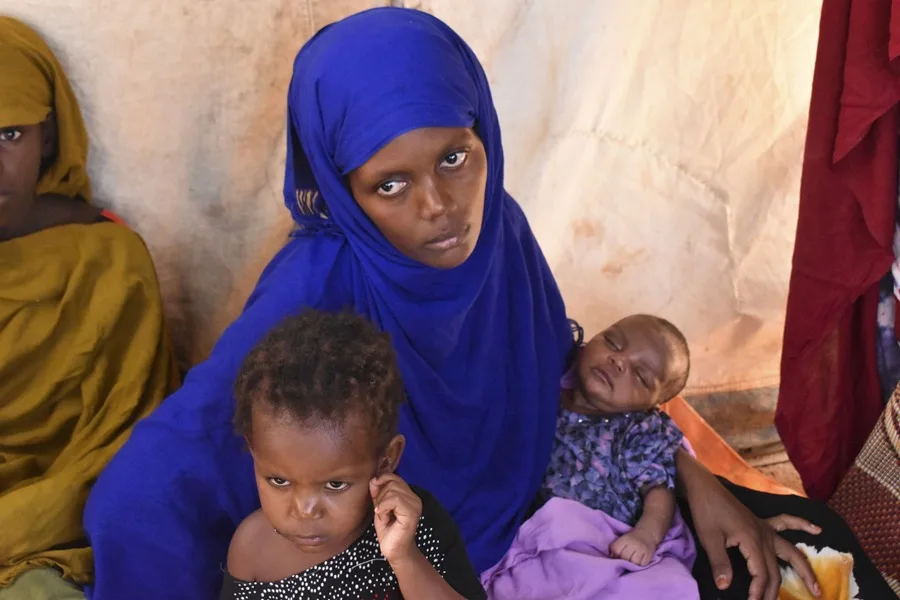
One of these camps, called Doomey, is in the city of Beledweyne (central-west), about 340 kilometers from Mogadishu -the capital-, where hundreds of families live, including displaced people escaping from areas where Al Shabab and the Somali Army are fighting.
Perpetrates attacks to overthrow the central Government
The terrorist group, affiliated since 2012 with the Al Qaeda network, carries out attacks to overthrow the central government, supported by the international community, and to establish an ultra-conservative Islamic state.

“The reason the newcomers are coming is the fighting against Al Shabab, which forced them to displace,” community leader of Doomey, Mohammed Abdul Hassan, who has lived in the camp since 2006, the year from which the jihadist group began to gain notoriety, told EFE.
To survive, he founded a school and teaches the children of the settlement. Over time, the community elected him “camp president” by vote, and since then, international organizations coordinate humanitarian assistance with him.
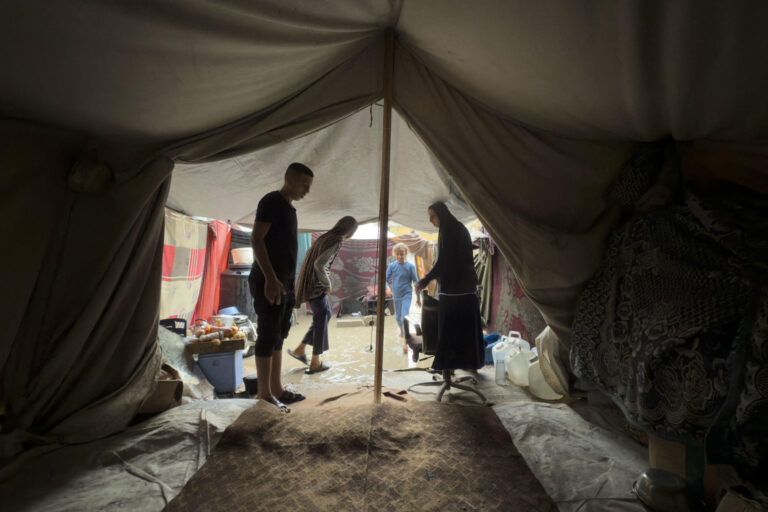
However, following cuts in aid from the U.S. and European countries, the situation has become even more precarious. The camp is overcrowded with people looking for any kind of work to bring food to their children.
“There are no families in this camp who manage to get three meals a day. Those who get nothing depend on going out to look for people to work for. So, if you return home with nothing and you have nothing to cook for the children, that is where the problems begin,” Hassan pointed out.

The researcher at the International Horn Strategic Studies Institute, Bravin Onditi, stated to EFE that the jihadists are taking advantage of this situation, as displaced and unemployed young people are vulnerable to recruitment.
“Overcrowded settlements are difficult to monitor. Aid in disputed areas has to pass through checkpoints and submit to their rules. Every displaced family is a sign of where the State has failed to maintain territory, and Al Shabab reads that map very carefully,” Onditi indicated.
Those who were forced to abandon their farms or villages because of the jihadists measure their words: they avoid mentioning the insurgents by name or resort to circumlocution when explaining why they ended up in Doomey.
Extortion in Mogadishu
A source from the camp, who requested anonymity for security reasons, told EFE that the population is afraid to speak out in public due to the risk of having a terrorist informant nearby and warned that, “if there are five people in the same place, three of them could have some connection” with Al Shabab.
Onditi considers that number to be “more an expression of fear than a credible figure” and that, “when people believe that the group can reach them in their own home, they remain silent. That is precisely the goal”.
Although their territorial control is concentrated in rural areas where they impose the collection of “taxes,” the jihadists retain the capacity to extort businesses in the Somali capital.
A United Nations sanctions monitoring report, published last August, revealed that its monthly revenue from extortion in Mogadishu was cut almost in half.
They went from earning between 12 and 15 million dollars to between five and nine million per month due to security operations by the federal government and the drought that struck the territories under their control.
Corrado Čok, an analyst at the European Council on Foreign Relations (ECFR) specializing in Horn of Africa security, explained to EFE that the jihadists “do not even need to enter the cities, thanks to their network of informants,” and that the money they extract from their “taxes” is enough to keep them operational.
Donor fatigue
Although the European Union has contributed nearly 2.8 billion euros since 2007 to successive African Union (AU) missions in Somalia and the U.S. supported extending the deployment of the current AU peacekeeping force, which assists the Somali Army in counter-terrorism efforts, for one year until 2027, Čok warned that this “offers no guarantees because there are no funding measures.”
“Europeans and Americans have other priorities: they call it ‘donor fatigue,’ while Somalia’s security will remain fragile a year from now, but the situation is likely to remain static,” the expert concluded.
The country is scheduled to hold parliamentary and presidential elections next year, something against which Al Shabab has historically directed attacks.
Onditi remarked that if security forces fracture along political or clan lines, jihadism will gain ground without firing a single shot.
“The threat -he concluded- is not that Al Shabab wins an election, but that a disputed election hands them the divisions they need”.